We are hardwired, as humans, to appreciate and admire a good pattern. I don’t mean this is some new trend, or something we’ve stumbled upon by chance- I mean that identifying and collecting patterns is an evolutionary imperative, so engrained in our psyche that it is a foundational quality of the human experience.
We are a product of our environment of evolution- an unforgiving, survival of the fittest, hunter-gatherer, nomadic and tribal system that formed our physical, mental, and social structure for hundreds of thousands of years.
Pattern tracking and categorization was, and is, a survival imperative- knowing the difference between what berries could sustain you, or kill you, knowing what animals could be hunted, what resources could be converted to shelter or fuel, what stones could be chipped into blade edges and who was a friend or a foe- this ability to sort the world around us into help and harm is so essential that it wound into our genetic code.
This imperative expresses itself in a myriad of ways in a world where basic survival, for many, isn’t under constant threat. Those who have their needs met by our society aren’t foraging or chipping obsidian into spear tips- they can source their meat at a grocery store and can find shelter in our cities. But that ancient instinct persists, and finds purchase in other behaviors- behaviors that have created entire industries around the act of collecting.
Trading cards, fine art, stamp collecting, pokemon, watches, and yes- typological photography- there are so many examples of this tendency that to list them all would do a disservice to the reader. For the purposes of making our point- we will focus on the topic at hand, and dive into the beautiful world of typologies- the history of this photographic practice and the contemporary iterations that have caught my own eye lately.
So what is a Typology? A typology is a group of related things organized by type so that differences become visible through comparison.
This applies to things far beyond photography- much of the wider art world operates in this realm, especially our peers in the code based generative art scene, but for this article, we will narrow our gaze to the lens based versions.
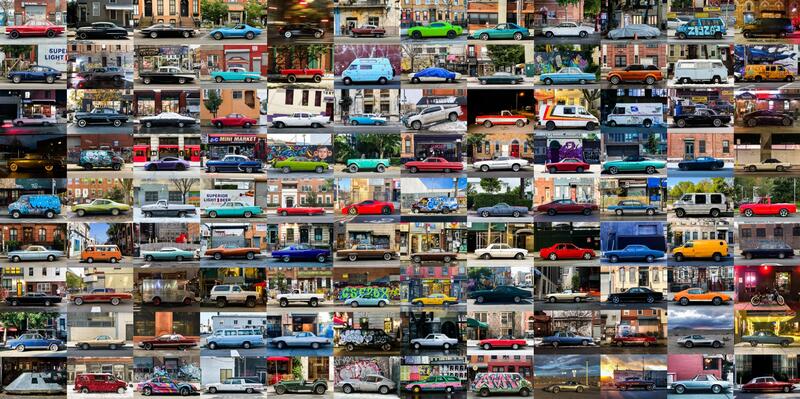
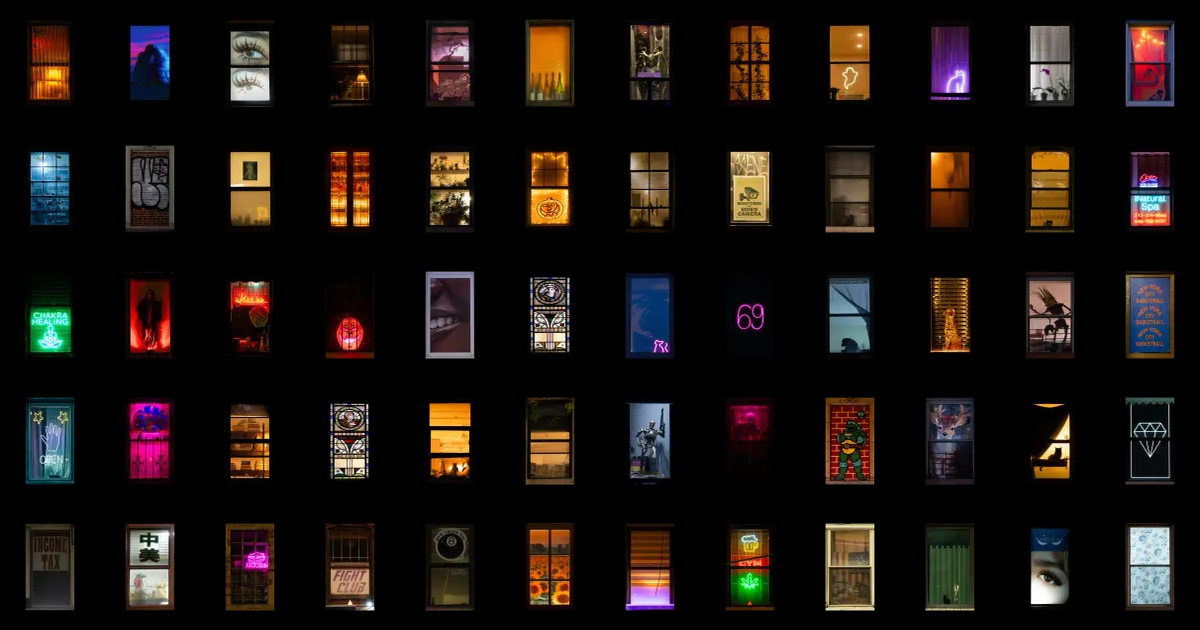
I’m obsessed with this subject because it is the keystone of my own photographic practice, and this systematic approach to photography is a perfect marriage for blockchain based collections- in a hypercollectable space, images that have individuality yet clear belonging to a wider set are an ideal offering- and working this way has helped me on my path here. My own three studies are DRIVE, a study of Americana through the lens of car culture, Drip Drop, a study of the unfolding physics of nature overlapping with flashing corporate advertising billboards in Times Square, and most recently, WINDOWS, a five year typological study of 1000 illuminated windows in New York City, a cross section of the city at the center of the world.
But of course, as with all things, we stand on the shoulders of giants. Let’s dive into a few of the titans of this photographic practice and then make our leap into work from some of my own peers, who are extending these concepts into the modern age and weaving their own patterns into the edge of the internet through blockchain based photography collections.
IThe Lineage
We stand on the shoulders of giants.
The Bechers
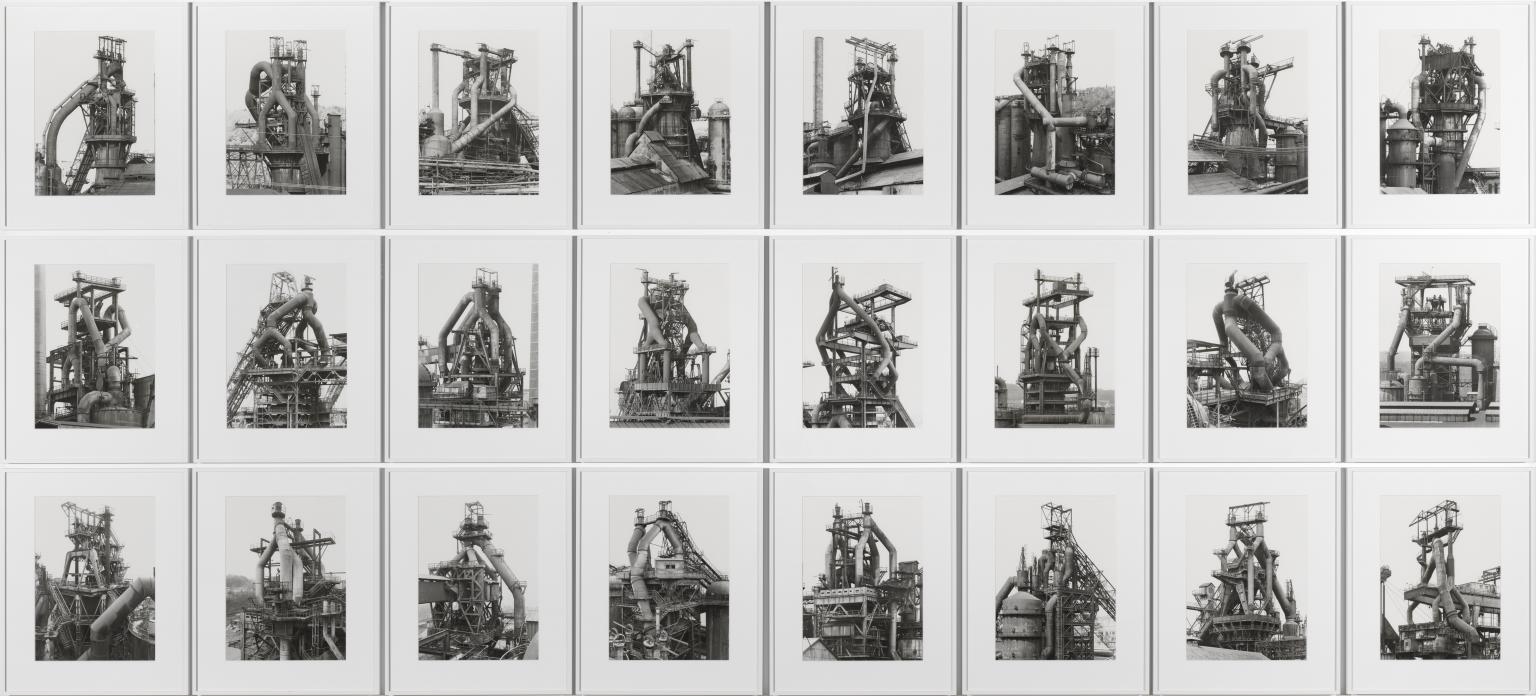
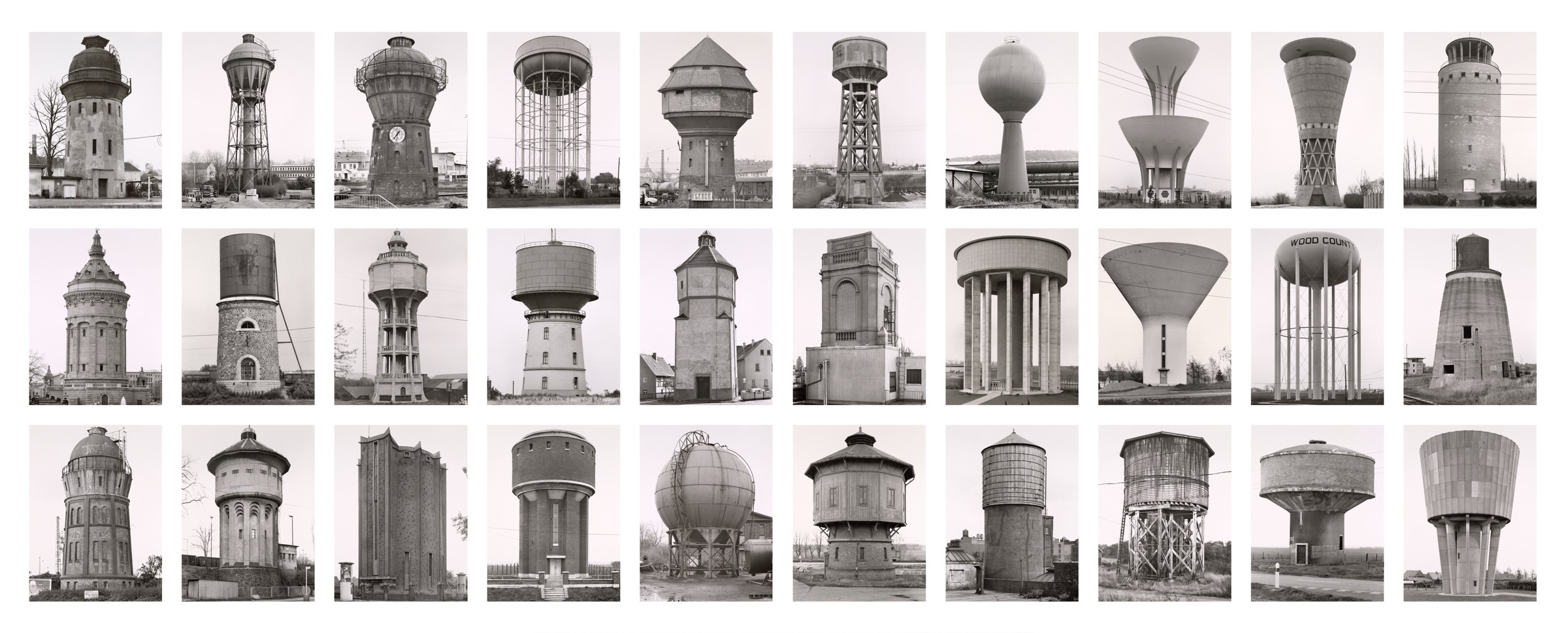
Bernd and Hilla Becher were a German artist-photographer duo who worked together from the late 1950s onward, making an extraordinary long-term record of industrial architecture in Western Europe and North America, including water towers, blast furnaces, cooling towers, winding towers, grain elevators, gas tanks, coal bunkers, and refineries.
In the post-war period in which they worked, many of these industrial sites were being decommissioned, falling into disrepair and abandonment, and they wanted to make a record of what they called “anonymous sculpture.” These sites were intended of course to be purely functional, but through the innovative lens of the Bechers, and their practice of systematically photographing these structures, they were turned into sets- individual sculptures within the uniting “whole,” that invited the push and pull and comparison amongst these patterns, sequencing them into grids that elevated them from inert industrial objects into artworks.
I think the MOMA put this best as a summary, that these works, “together transform the specificity of the individual towers into variations on an ideal form and, conversely, preserve their individual characteristics within a typology.”
The Bechers did a lot to define and crystallize the idea of photographic typology- but long before them, another photographer was already working systematically to create cross sections of society- that photographer was another German- August Sander.
August Sander
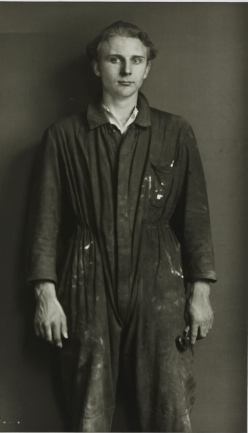
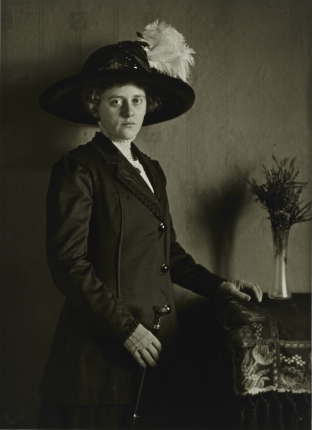
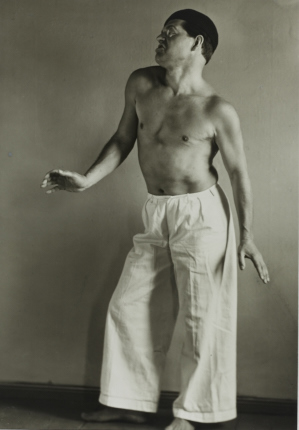
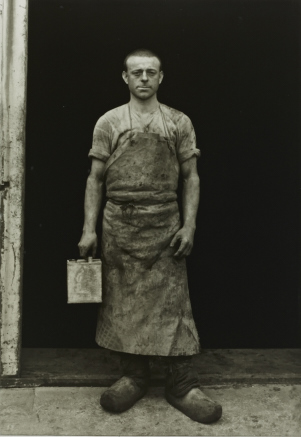
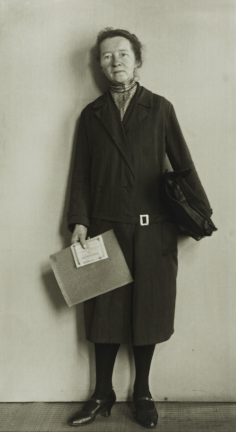
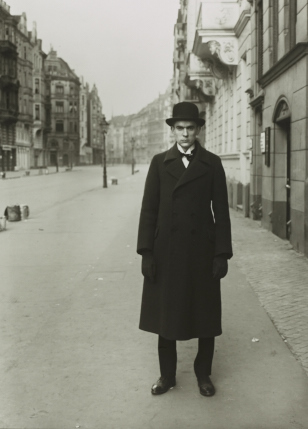
People of the Twentieth Century was a lifelong project of Sander’s, a documentation of the German populace through portraiture over fifty years. This system was well defined and meticulously explored- Again, from the MOMA, “The seven volumes Sander used as his organizing principles were The Farmer, The Skilled Tradesman, The Woman, Classes and Professions, The Artists, The City, and The Last People.”
Sander himself said, in a letter to painter Peter Abelen in 1951:
“Photography is like a mosaic that becomes a synthesis only when it is presented en masse.”
Again we see how the system creates the meaning- one portrait is a snapshot of an individual, 600 portraits in a cohesive body of work is a cross section of society, pinned to the time and place it was created, rich with meaning and depth of historic context. In aggregate, it is a meaningful time capsule of society, captured as if in amber.
Ed Ruscha
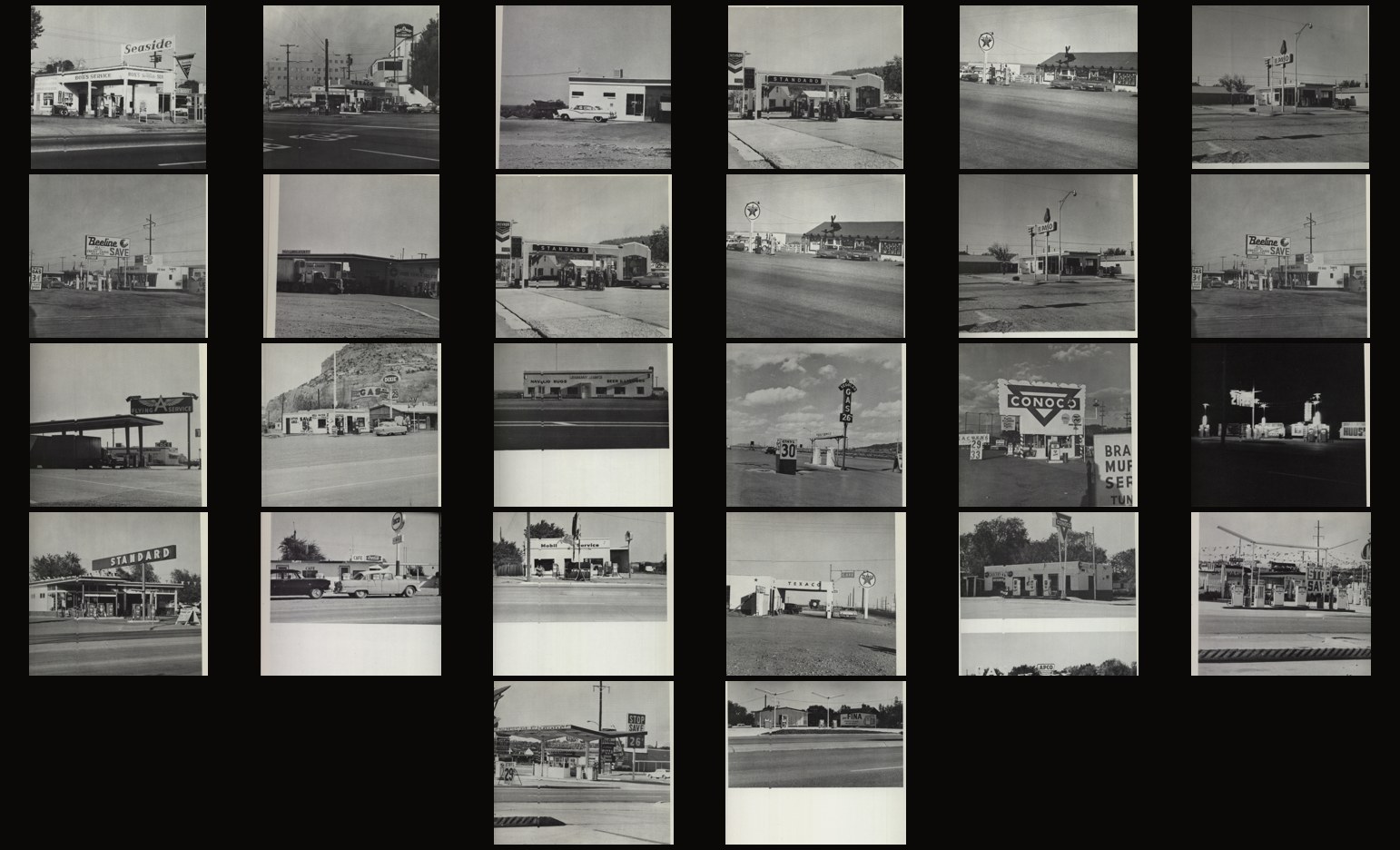
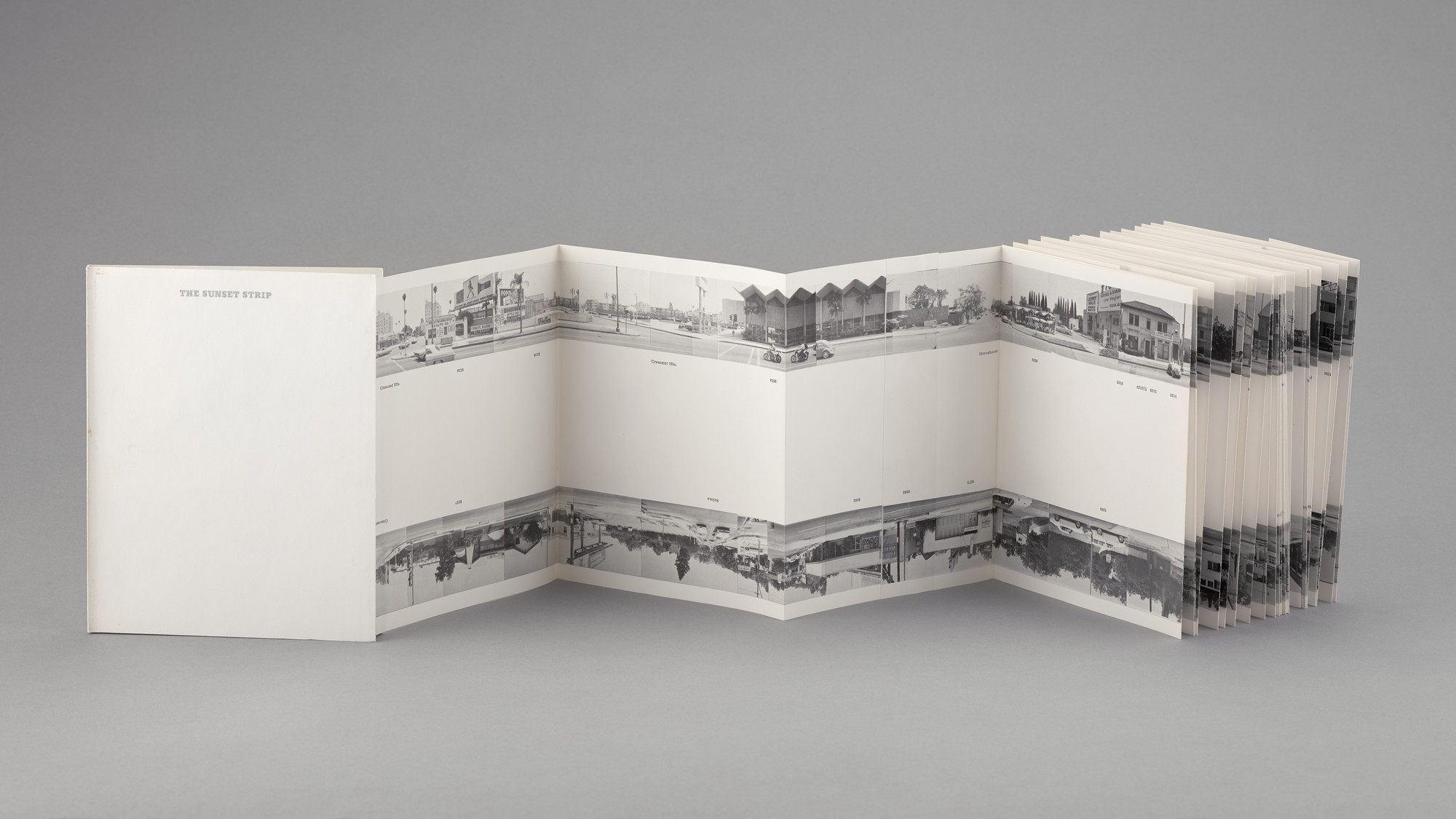
With a leap into the 1960s and an extension of the typological structure, Ed Ruscha is a bridge between Sander and the Bechers, a conceptual connective tissue tying their structural work into our modern age. Ruscha has many explorations to dive into, but for our angle today we will talk about just a few of those, namely, Twentysix Gasoline Stations from 1963 and Every Building on the Sunset Strip from 1966. Both are distinctly Americana, again an almost obsessive study of the shape and form of things, and each individual work enhanced by its cohesion in the larger set.
Importantly, the way that he presented these works, in very specific physical forms and with certain structure to the number of individual images within the set- helps us connect this storied practice of typology to our modern, productized age- creating collectable printed matter with limited supply that collectors covet and value very highly. As of this writing, a copy of Every Building on The Sunset Strip would run you north of $3700.00.
Photographers act on their instinct to collect patterns, and collectors add on their instinct to collect those collections. There are countless other examples of photographers working in those forms, but for the sake of brevity and to serve my desire to highlight some contemporary peers, lets speed into the present and take a look at some projects that expand upon this incredible lineage.
II
Contemporary Examples and Blockchain as a vessel for Typologies
Blockchain and photography are a perfect pairing- both are immutable timechains that create a distributed consensus of reality. I laid out this thesis in a video for my project ROLLS. Both are proof of work mechanisms that require inputs and produce unchangeable outputs. They are record keeping ledgers- one of bytes, and one of light and reality- and I think that blockchain has forever changed the landscape for photography moving forward, especially in the age of AI. But that is a different essay.
Naturally, typologies work especially well in cryptoart. Cryptopunks, arguably the most notable onchain artwork system of all, is a typology. A strict system of rules, by law of code, iterated and outputted 10,000 unique individual artworks that all fit into the larger set. This is one of the most highly valued typologies in the world.
Photographers have gravitated towards this form because it makes so much sense in a market of hypercollectable online objects. Lets walk through a few clear examples- and I will also link out to many more. Some are so clear that I will give them a bit of a spotlight and then summarize the rest on my list and you can explore them in your own time.
OpenSea50 worksOct 2024SubjectVernacular
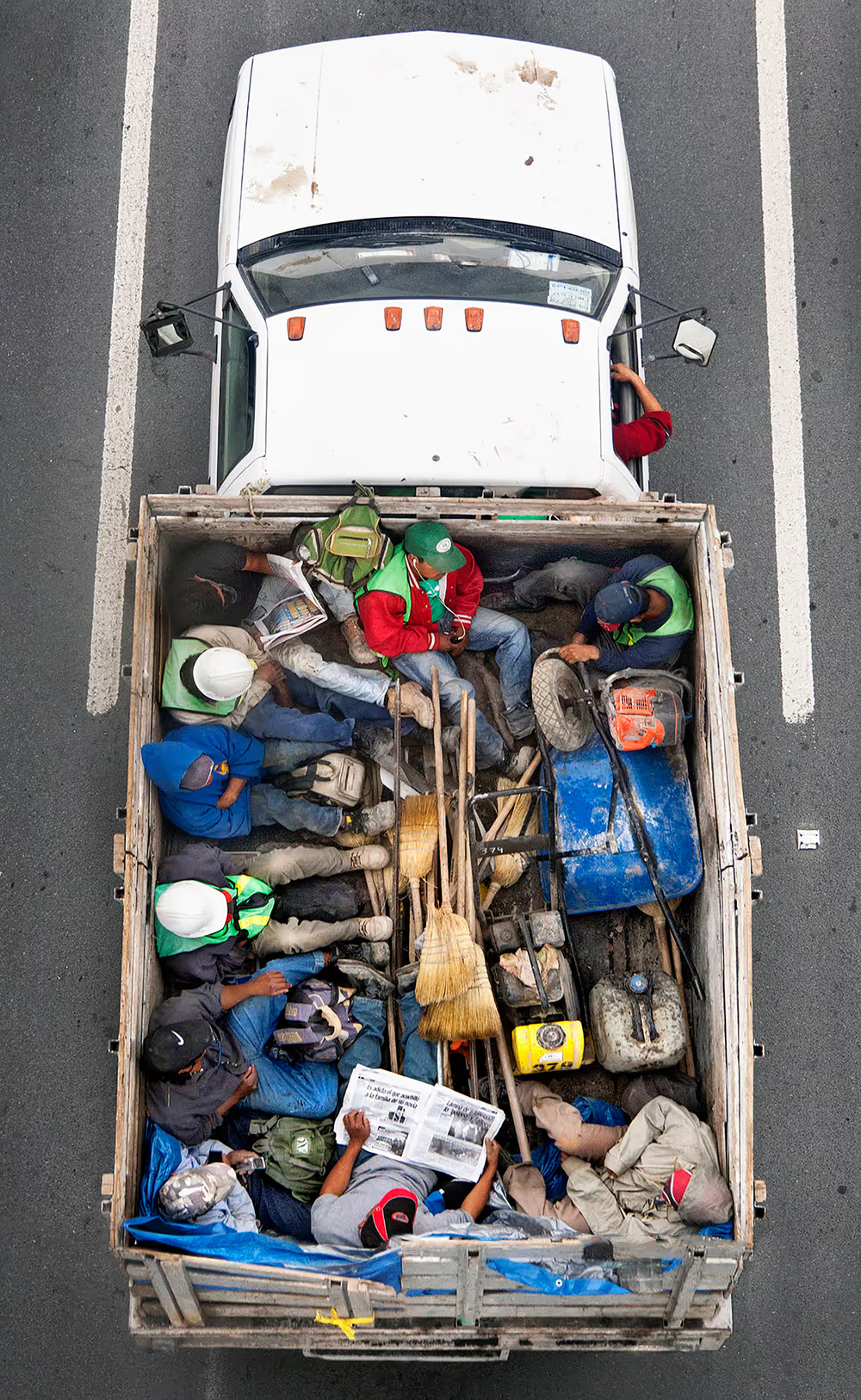
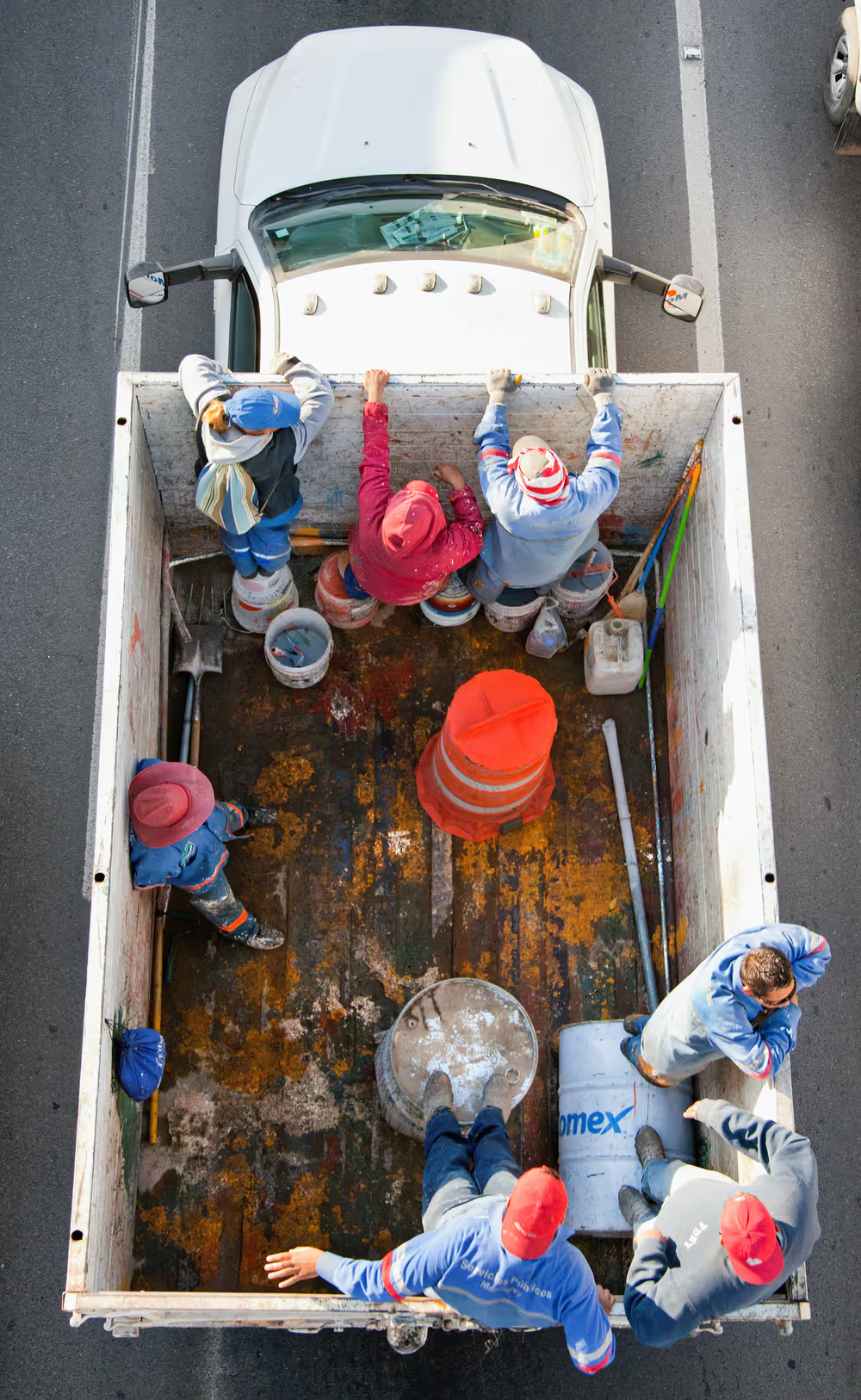
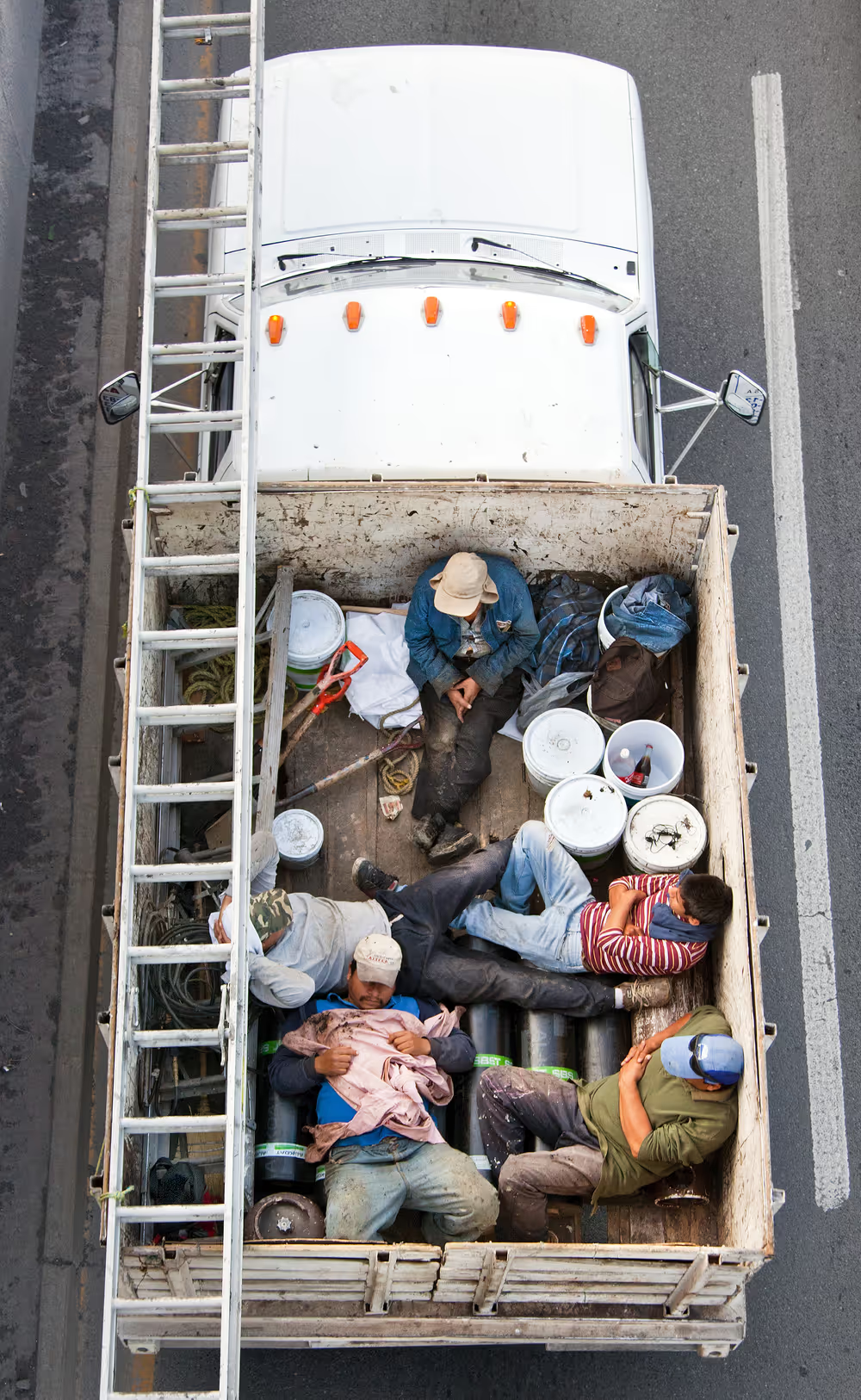
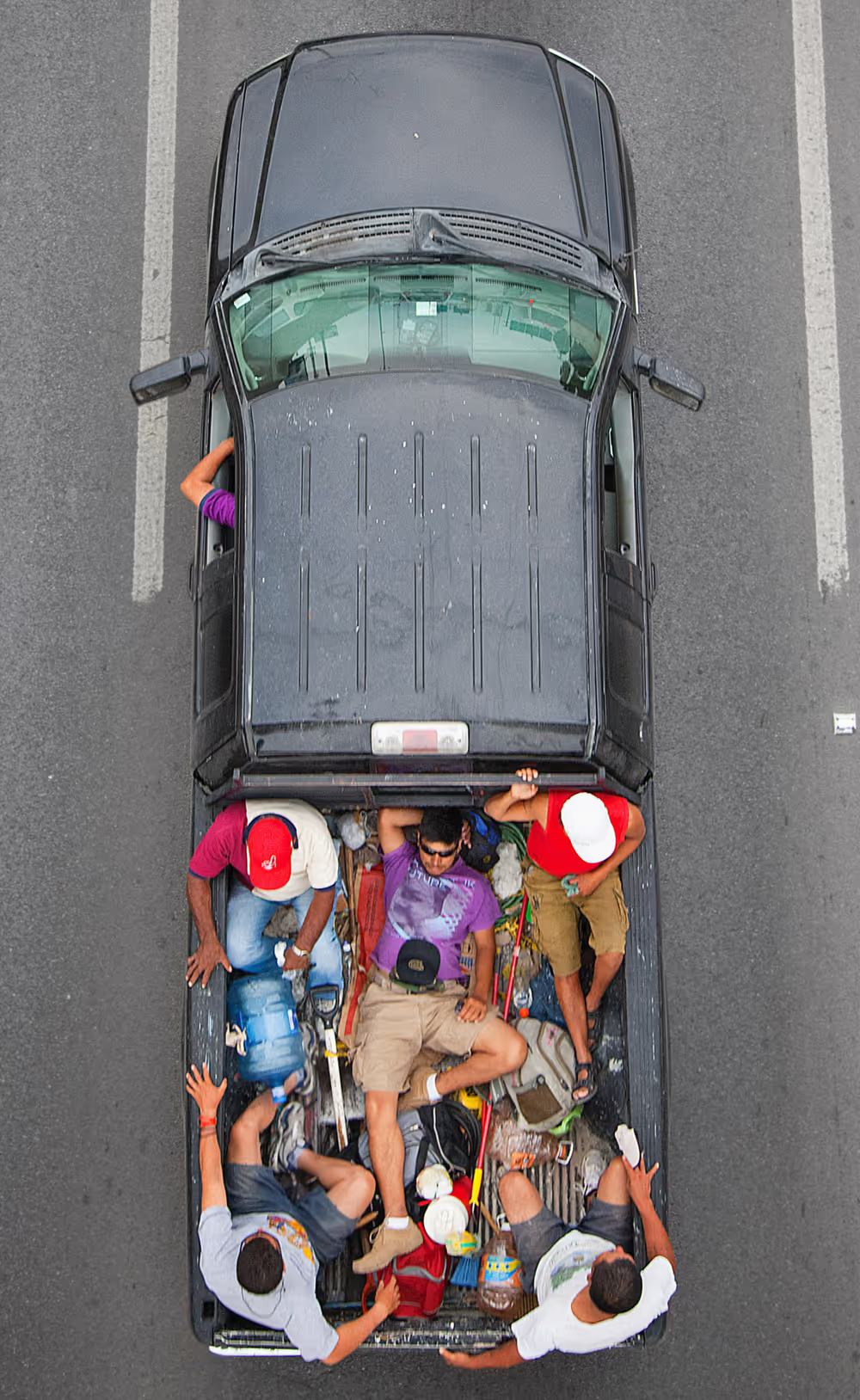
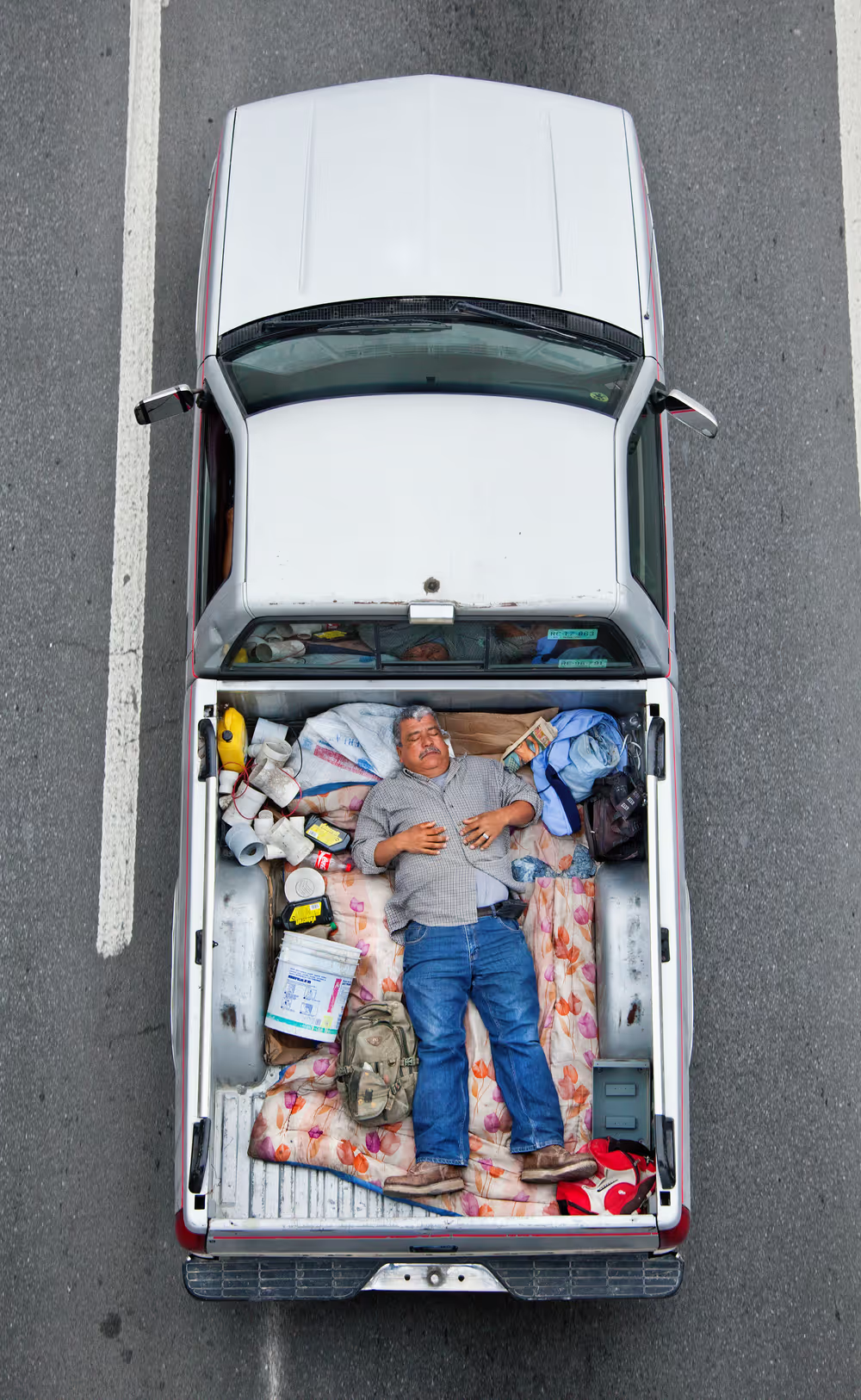
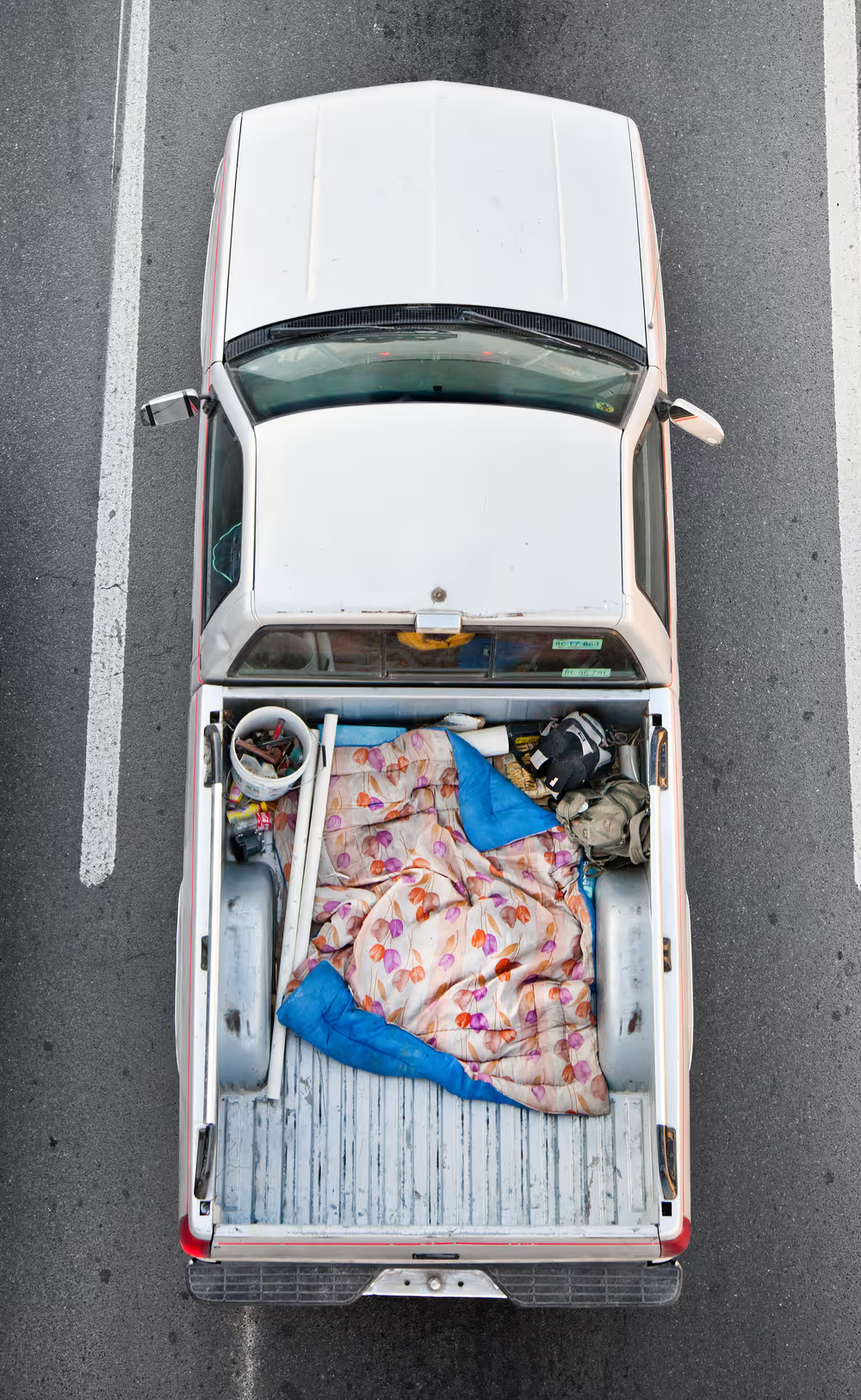
This photograph is part of my series, Carpoolers, which depicts laborers in México captured from an overpass, commuting between distant suburbs and urban centers. Like much of my work, this project comes from a desire to tell the story of the dramatic environmental, economic, and demographic changes playing out in my home city of Monterrey. This series has circulated the internet since 2011 and has been exhibited widely around the world.
Workers photographed from above, lying in the beds of pickup trucks on the highway into Monterrey — the same vantage, the same commute, repeated into a portrait of labor, sprawl, and economy. A documentary typology that has circulated since 2011.
OpenSea30 works25 collectorsAug 2021Subject
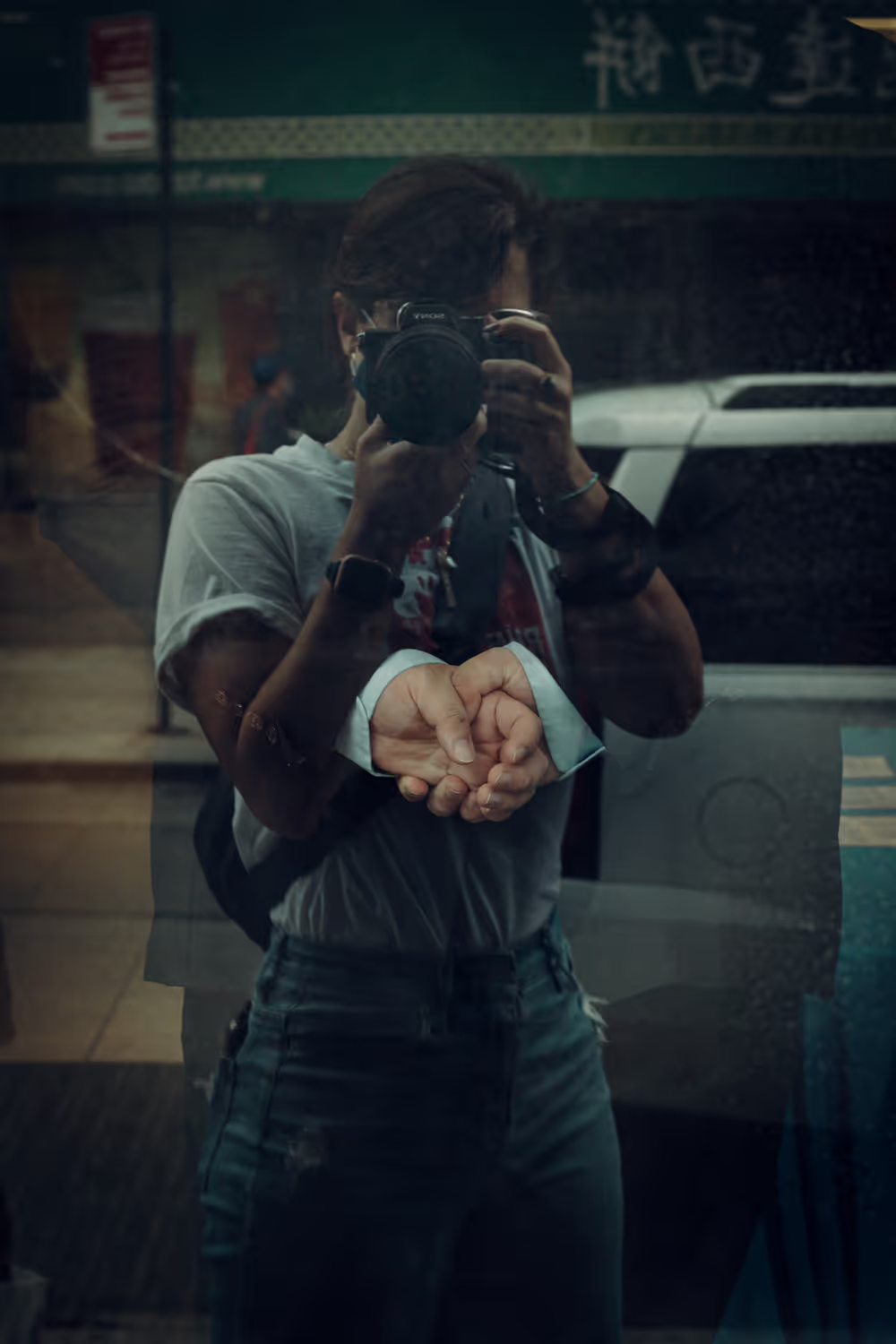
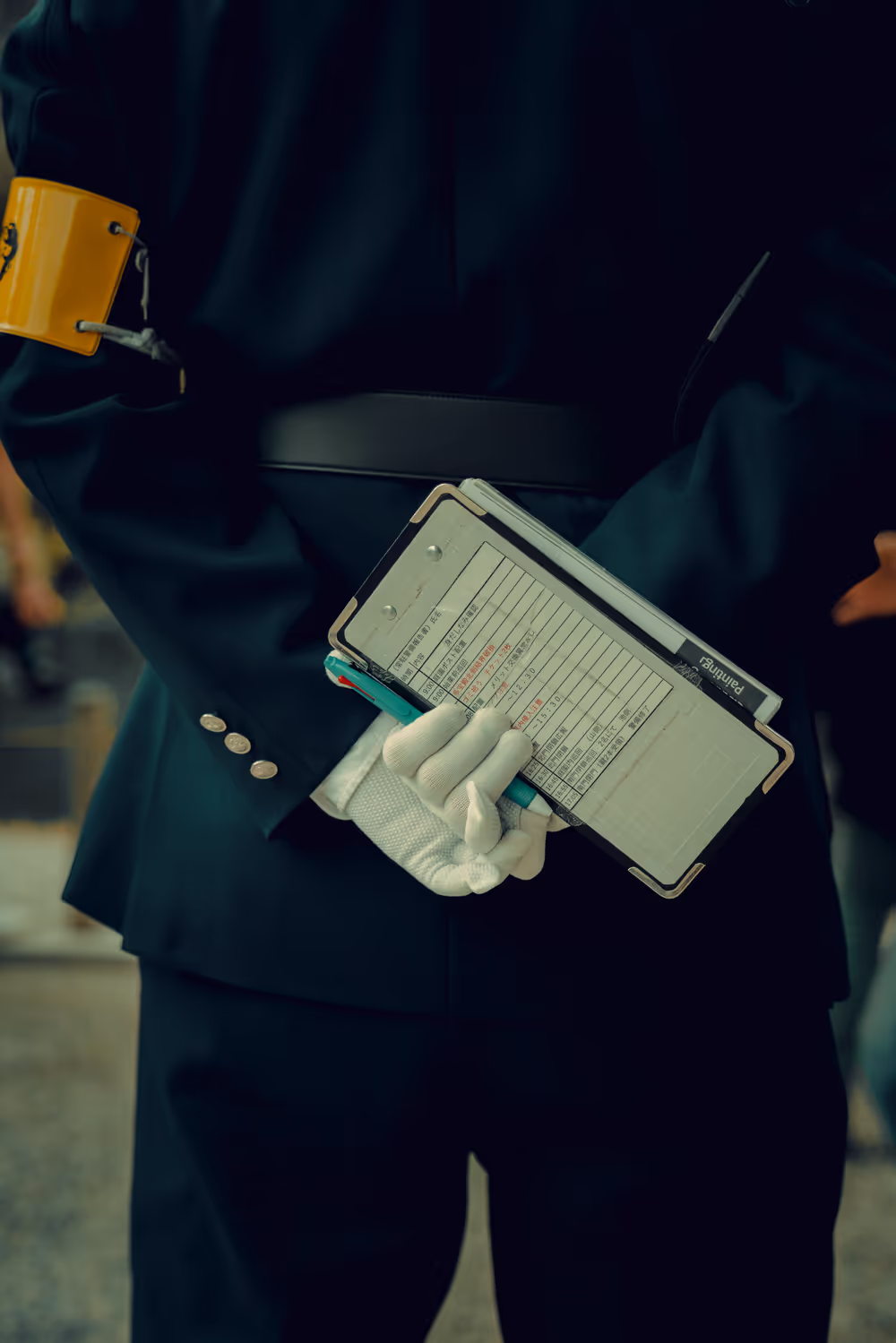
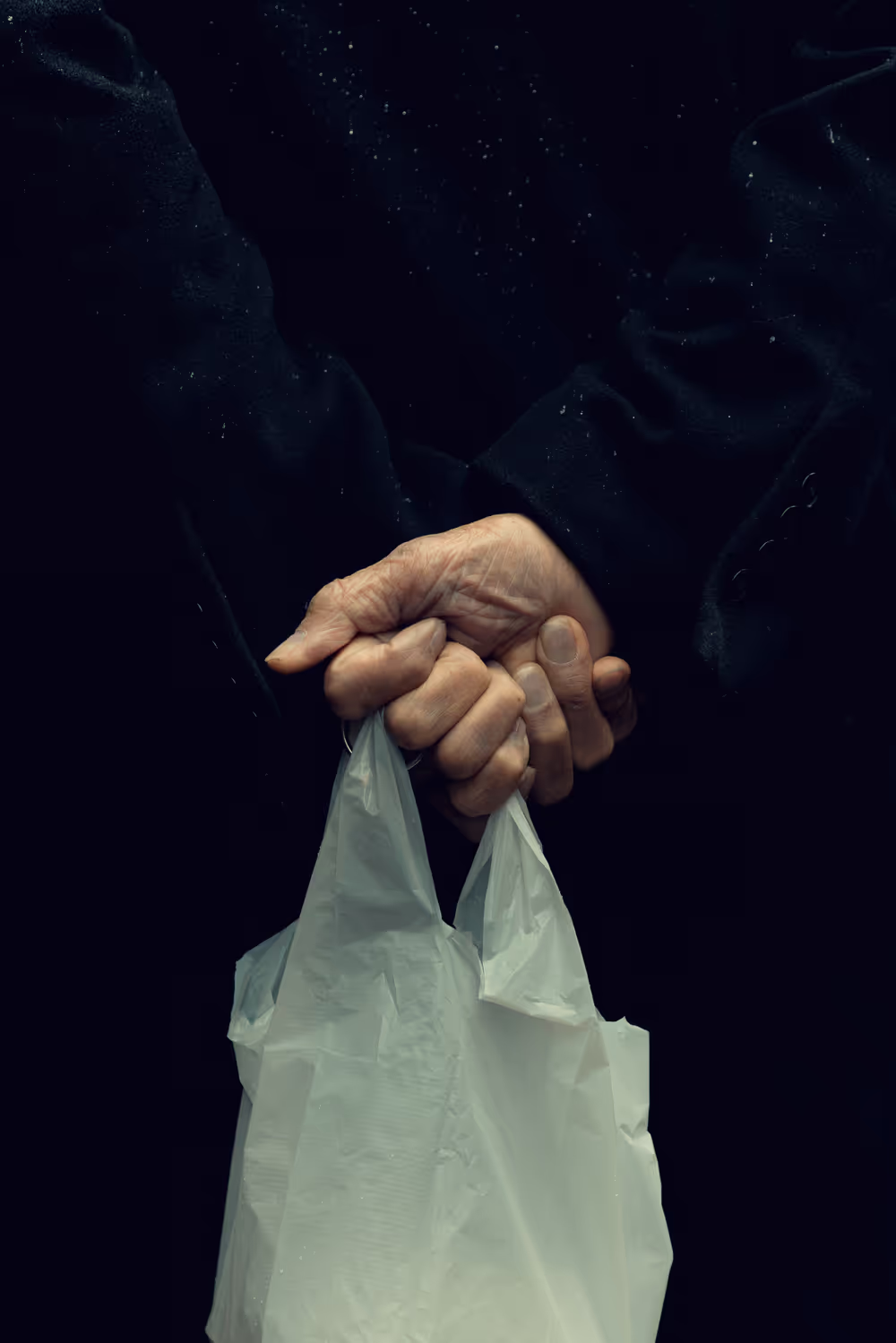
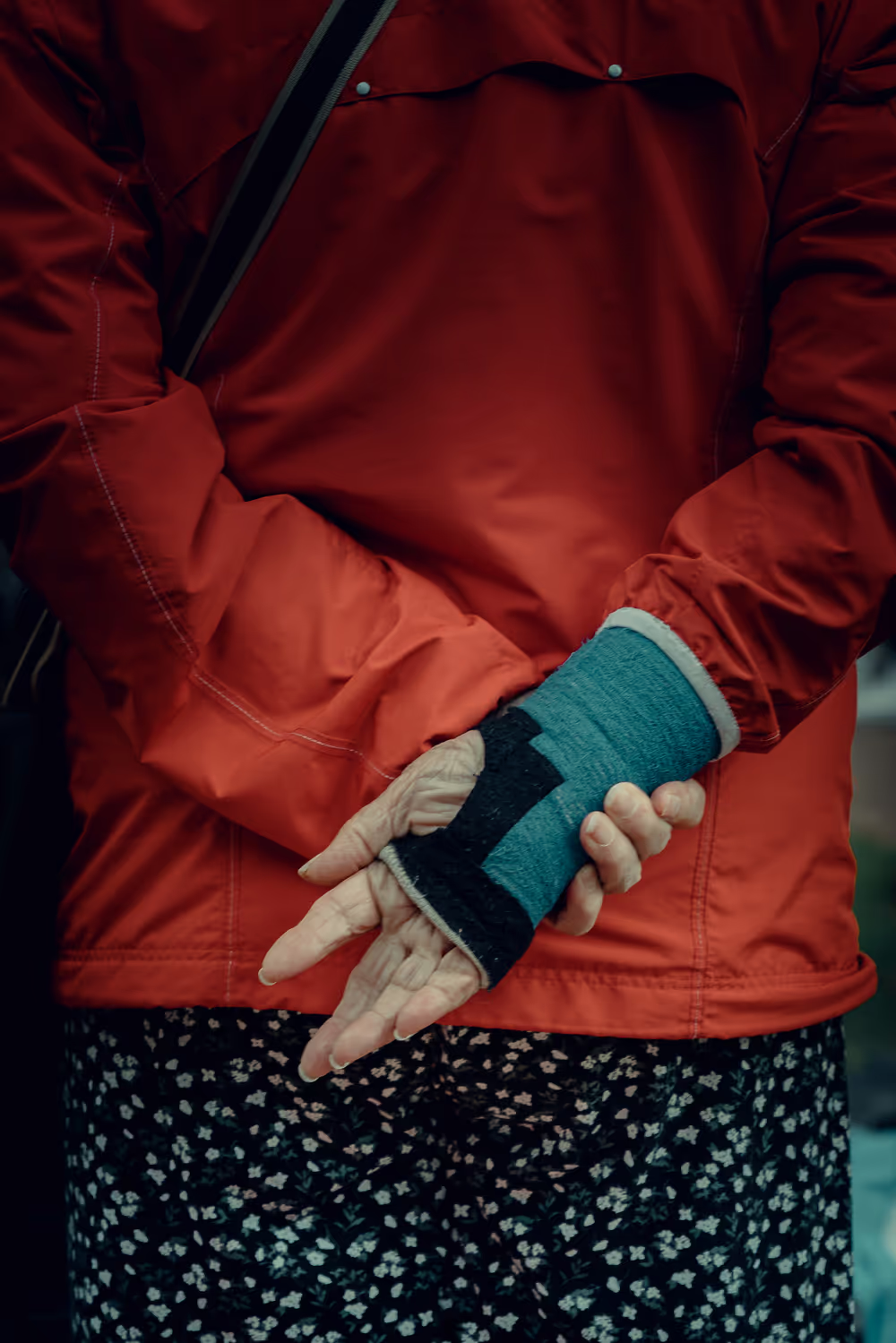
Each image here is a thread in a wider tapestry, parts to a whole, and with each repetition the story becomes more clear- our hands hold our humanity.
Thirty candid street frames, each built around the same recurring subject: the human hand. Held to one motif, gesture and touch accumulate into a portrait of people drawn entirely from how they hold the world.
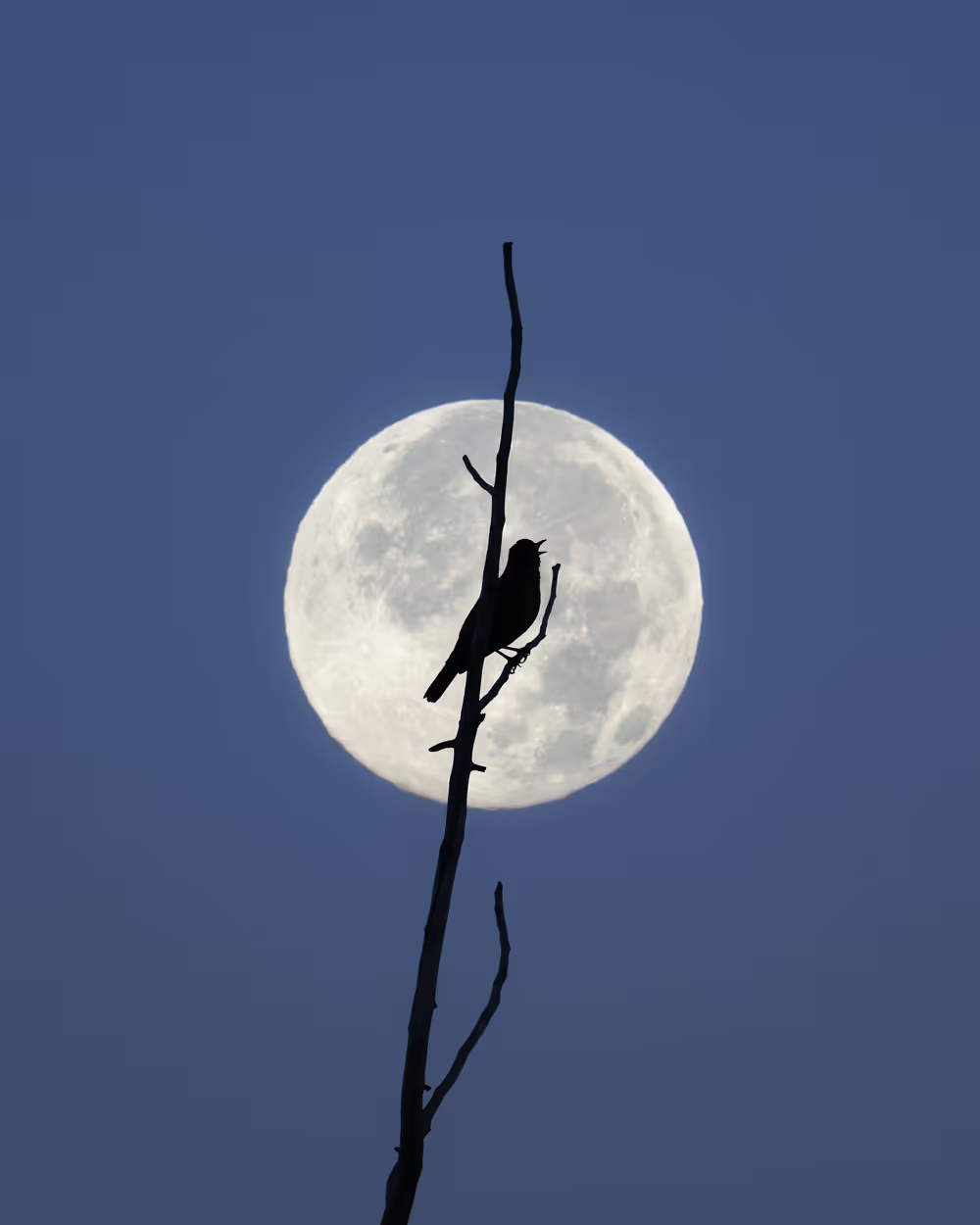
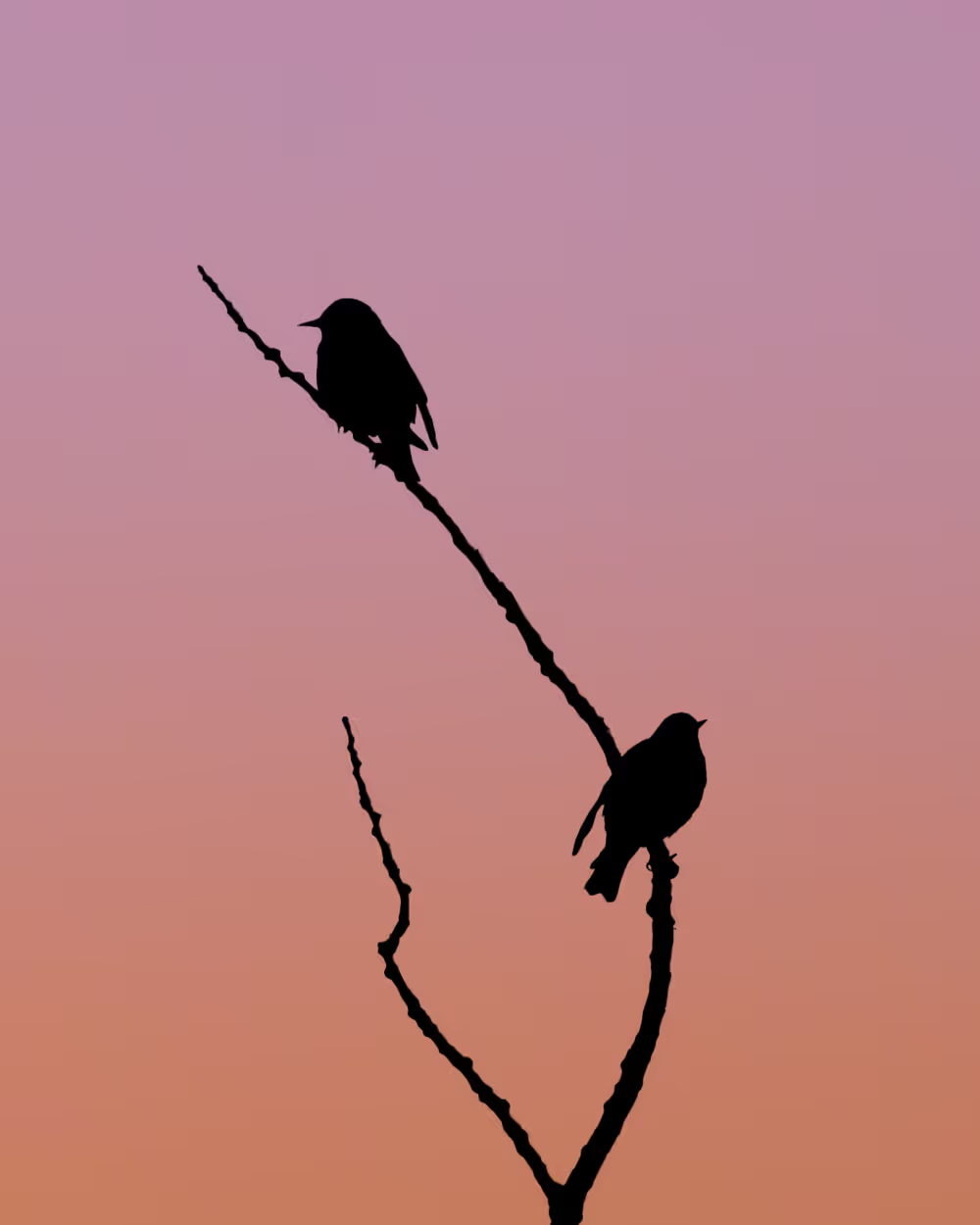
Transient8 worksMay 2026System
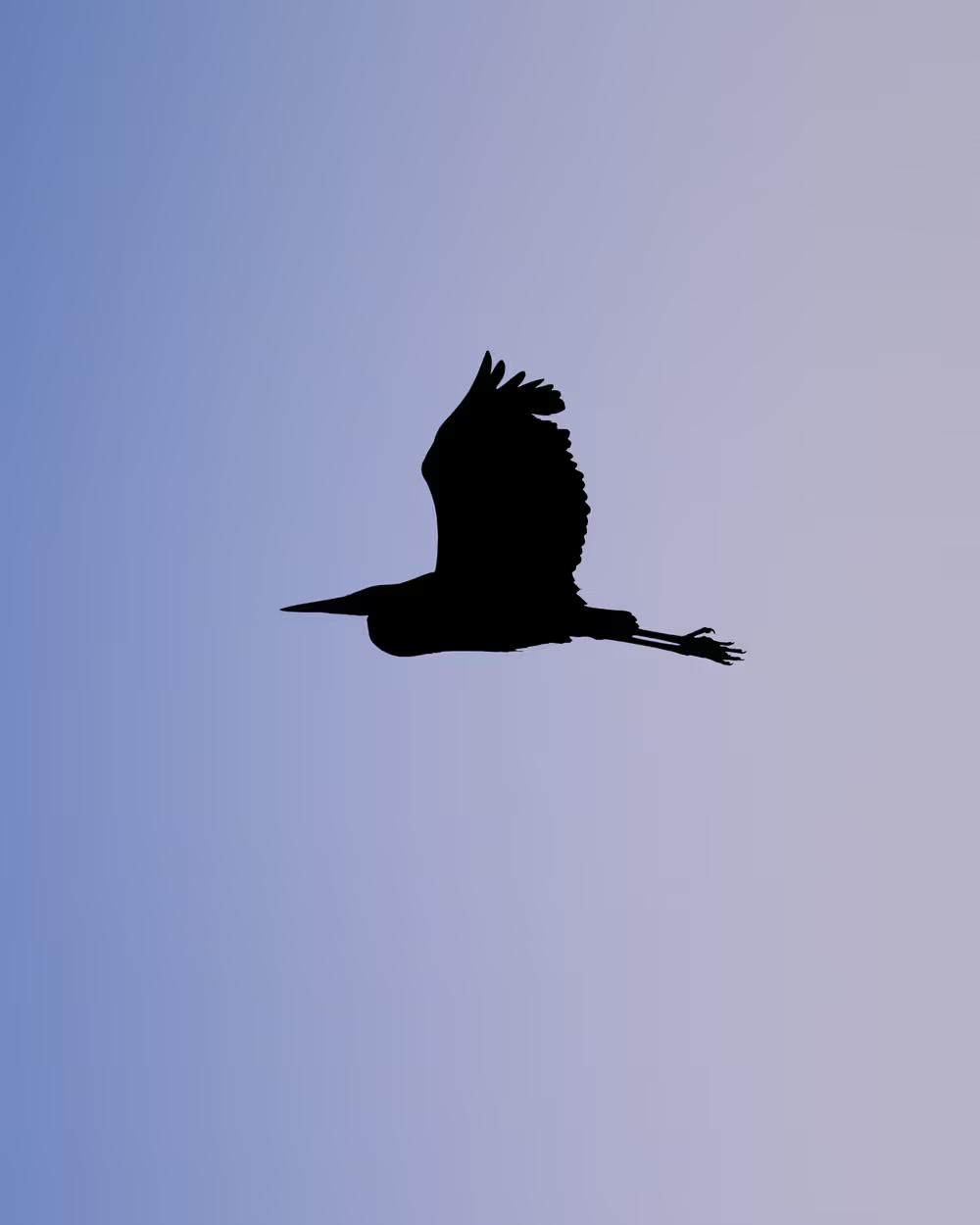
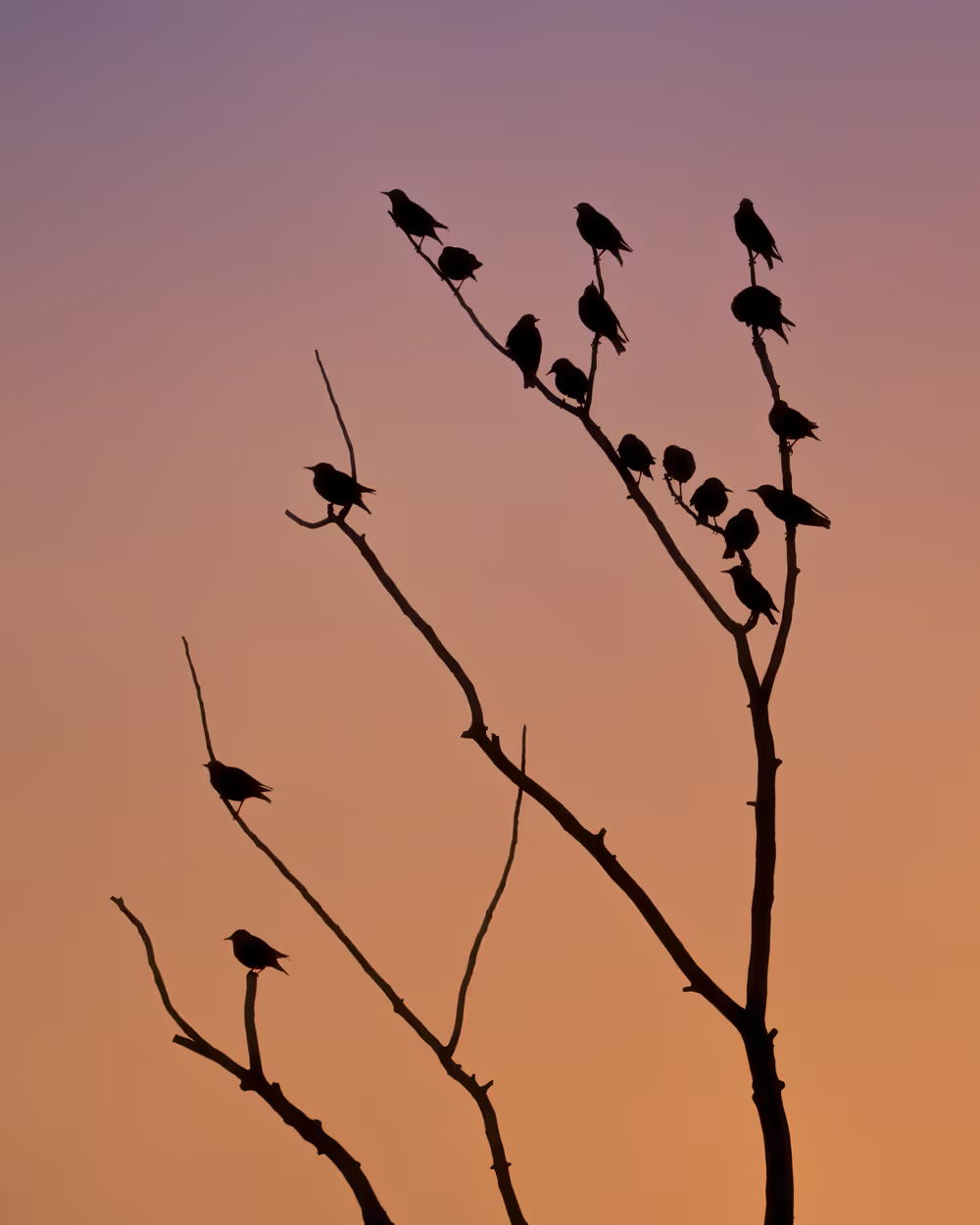
Each work is a silhouette of a wild thing going about its life in an open sky, indifferent to being watched. Presence can't be performed.
Eight wild animals, each reduced to a silhouette against open sky at the edge of day. The rule never changes — shape, sky, stillness — while the creature does. A typology built entirely on restraint.
OpenSea201 works177 collectorsApr 2022Method
About time, and the idea that our present is simply the point where the future becomes the past. From imagination to memory, we are all somewhere in between.
Two hundred and one nocturnal landscapes, each lit in-camera by drones carrying light into the dark. The thread is not a single subject but a single method — an unmistakable light-language laid across changing terrain.
OpenSea60 works36 collectorsJun 2022VernacularSubject
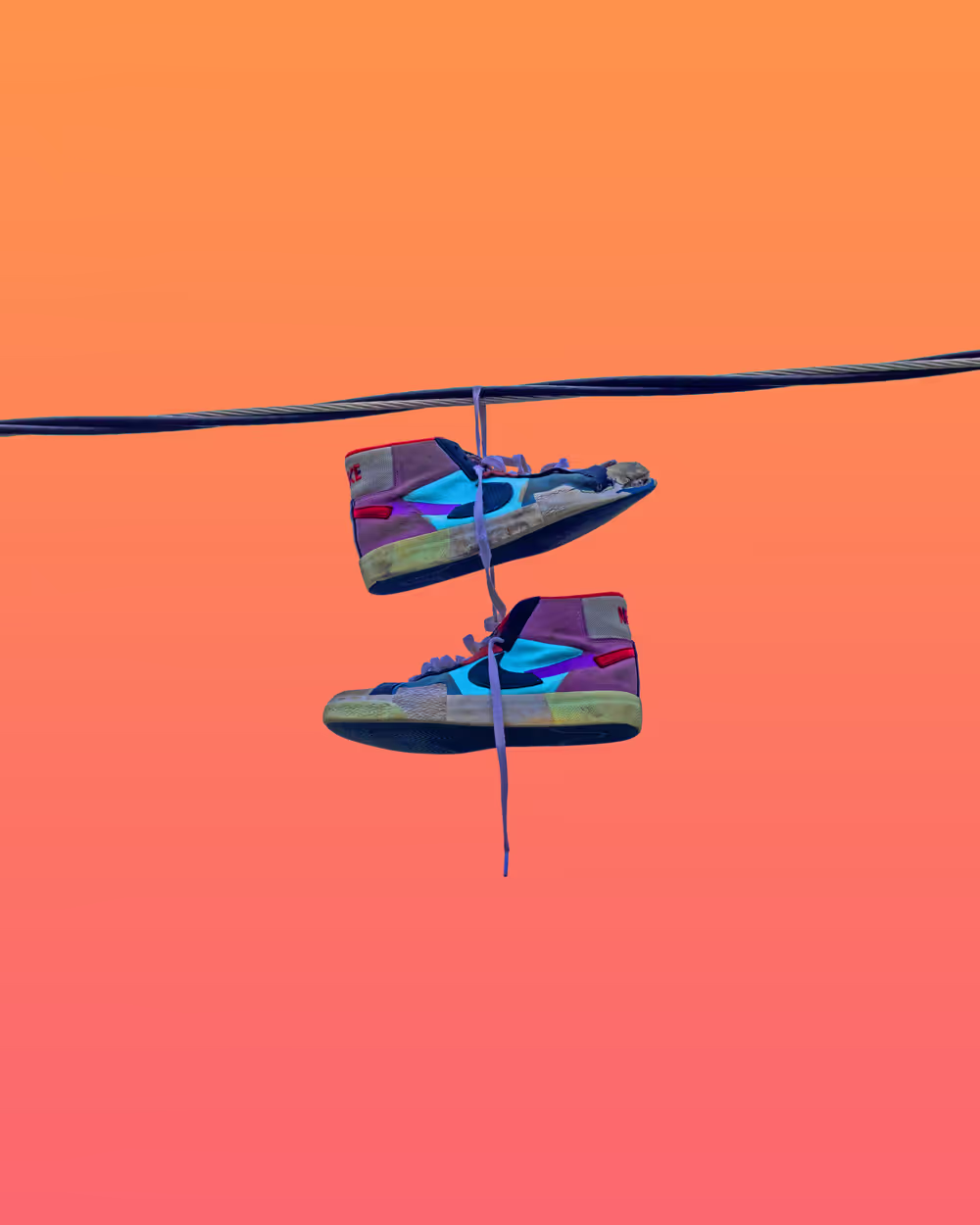
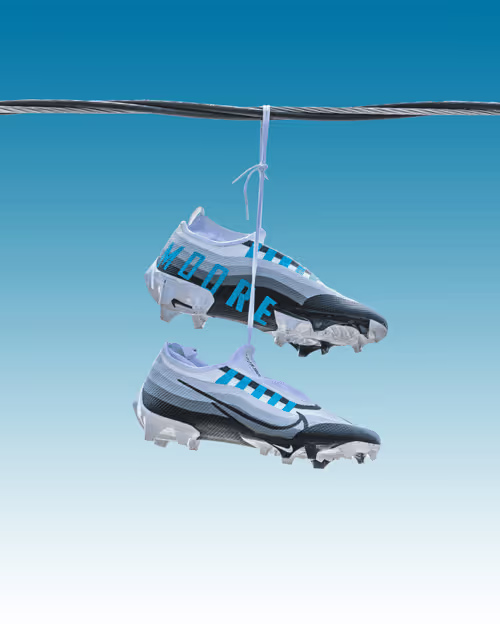
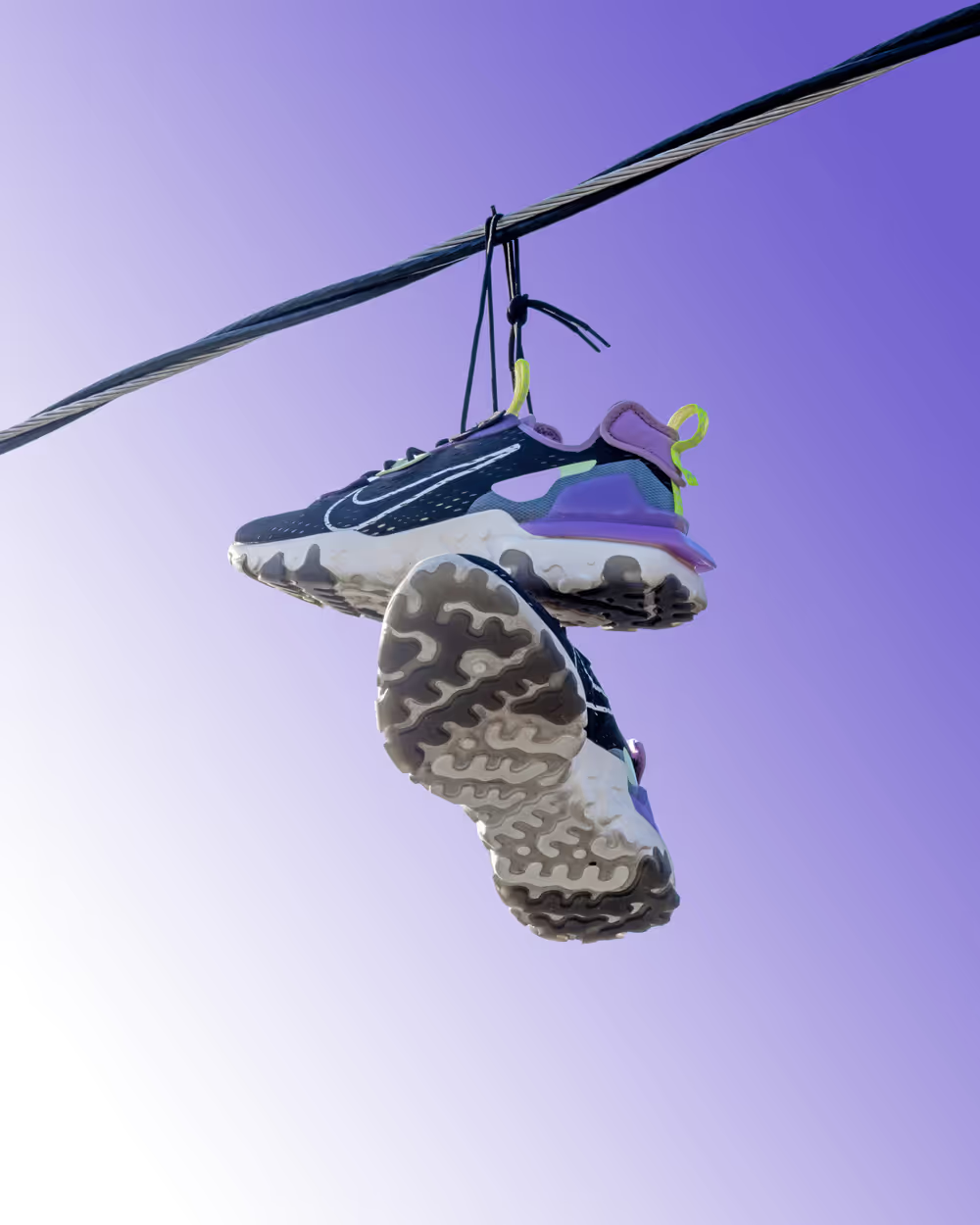
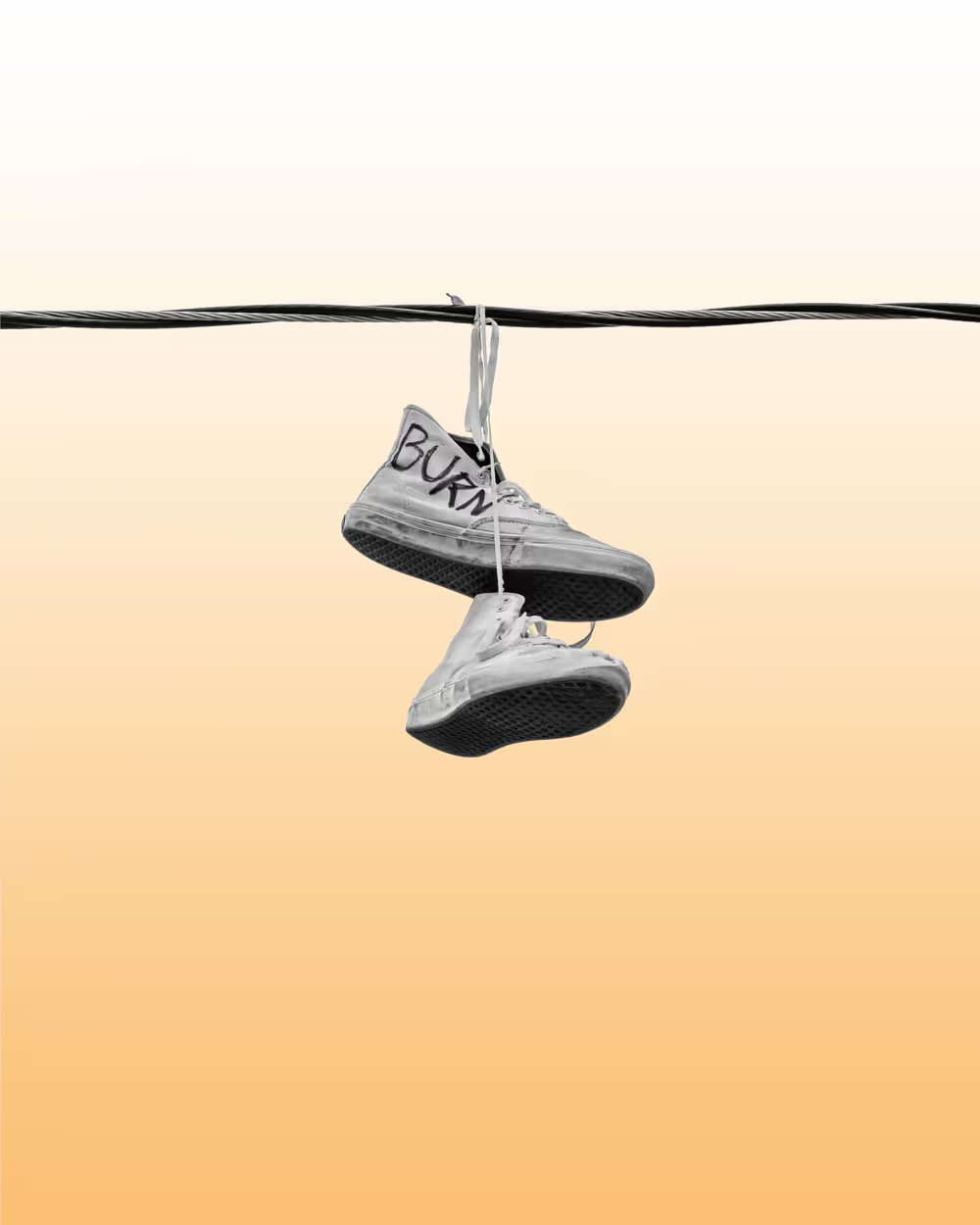
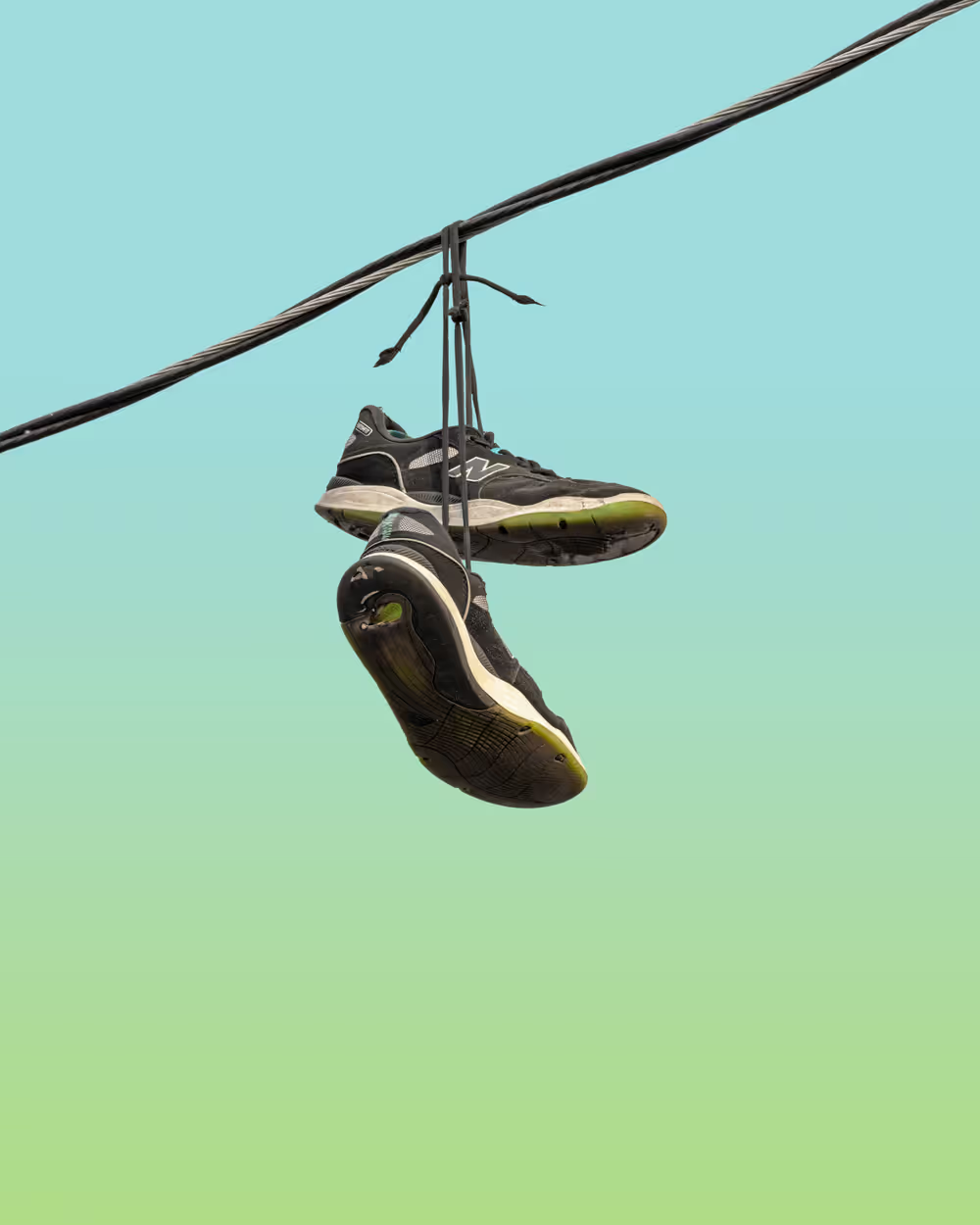
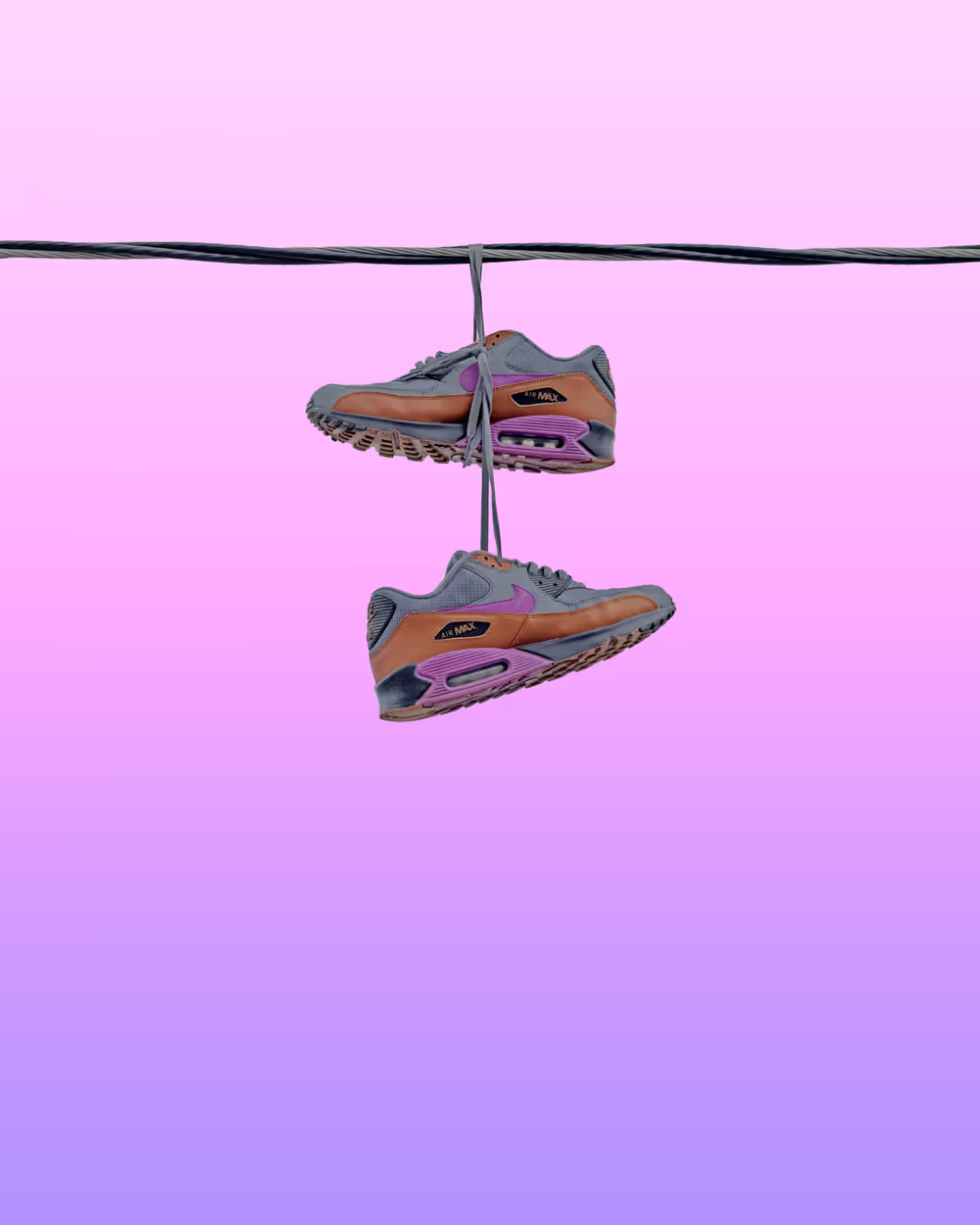
Aims to destigmatize the perception of SHOEFITI while bringing the artistic and creative elements to the forefront.
Sneakers slung over power lines, photographed wherever they hang. A piece of street vernacular most people dismiss as vandalism, gathered until the sheer accumulation reframes it as folk sculpture.
OpenSea100 works73 collectorsAug 2021SubjectSystem
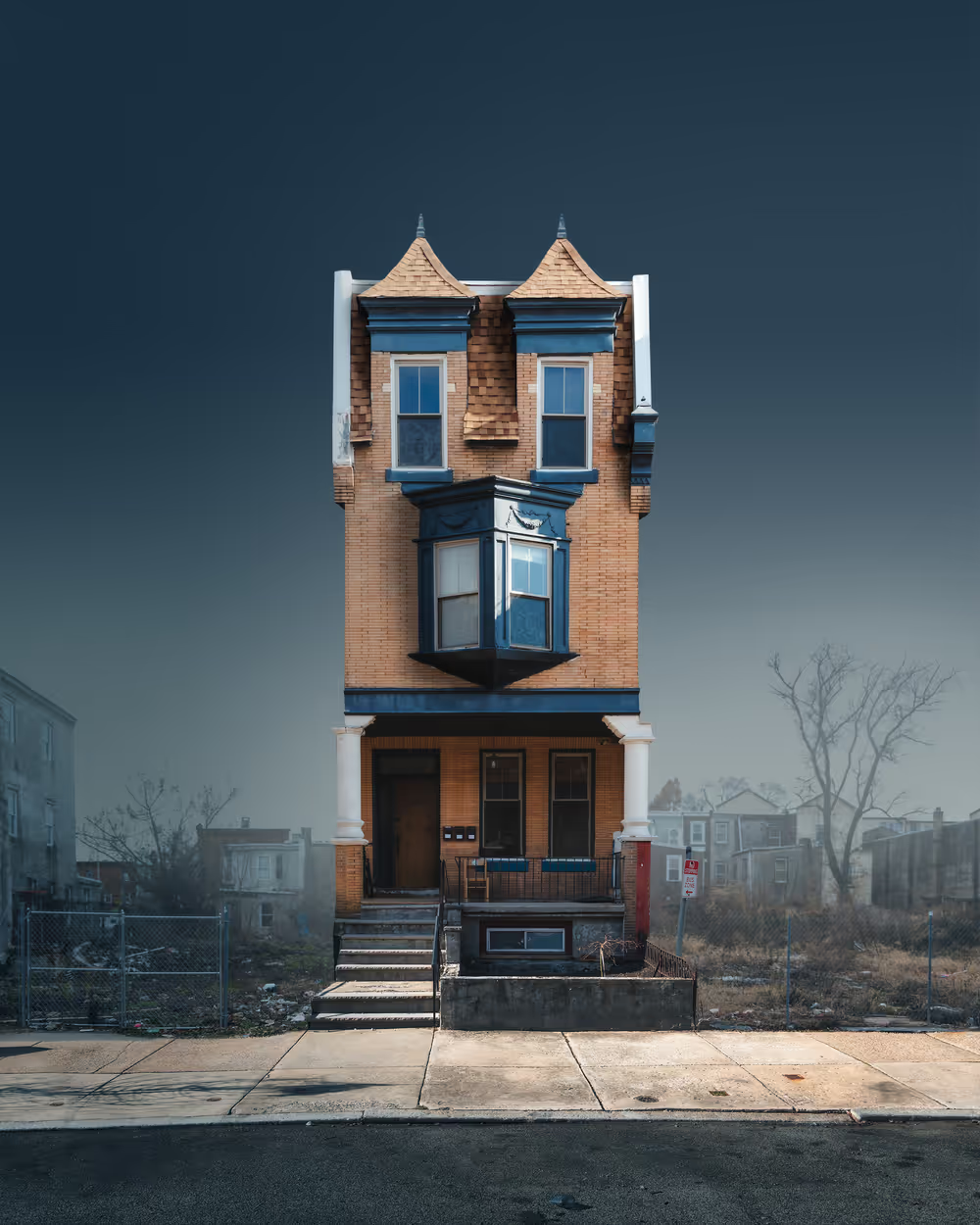
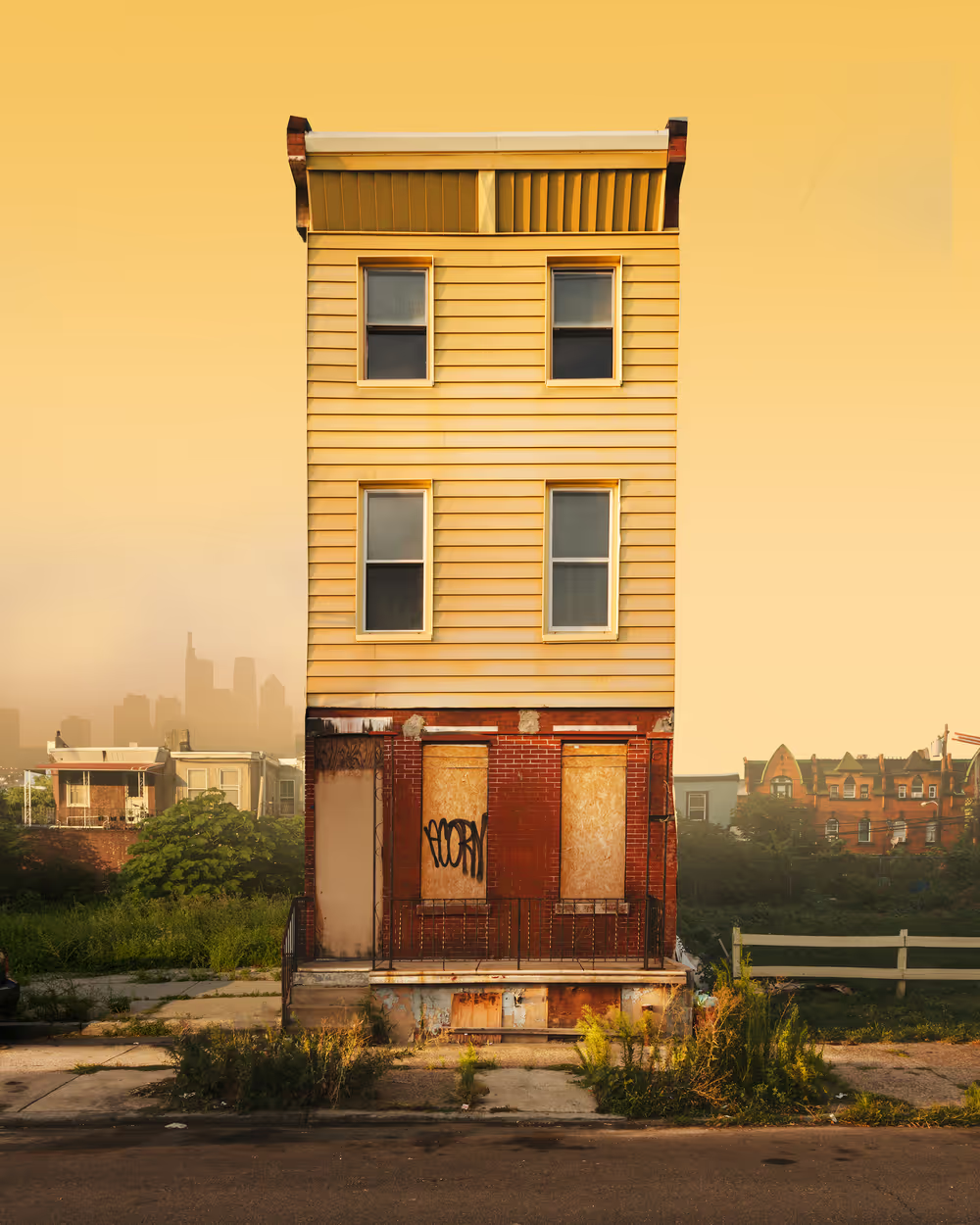
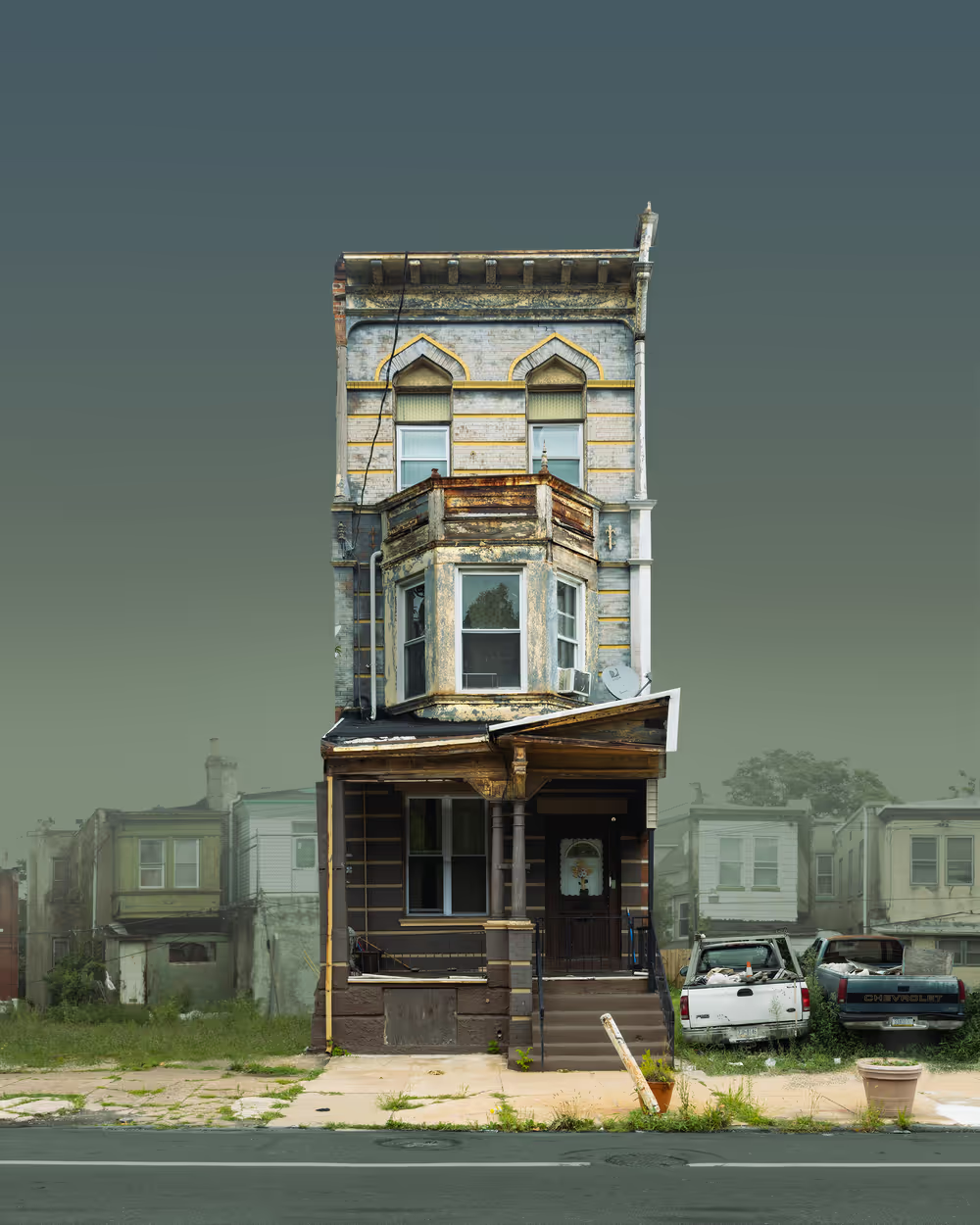
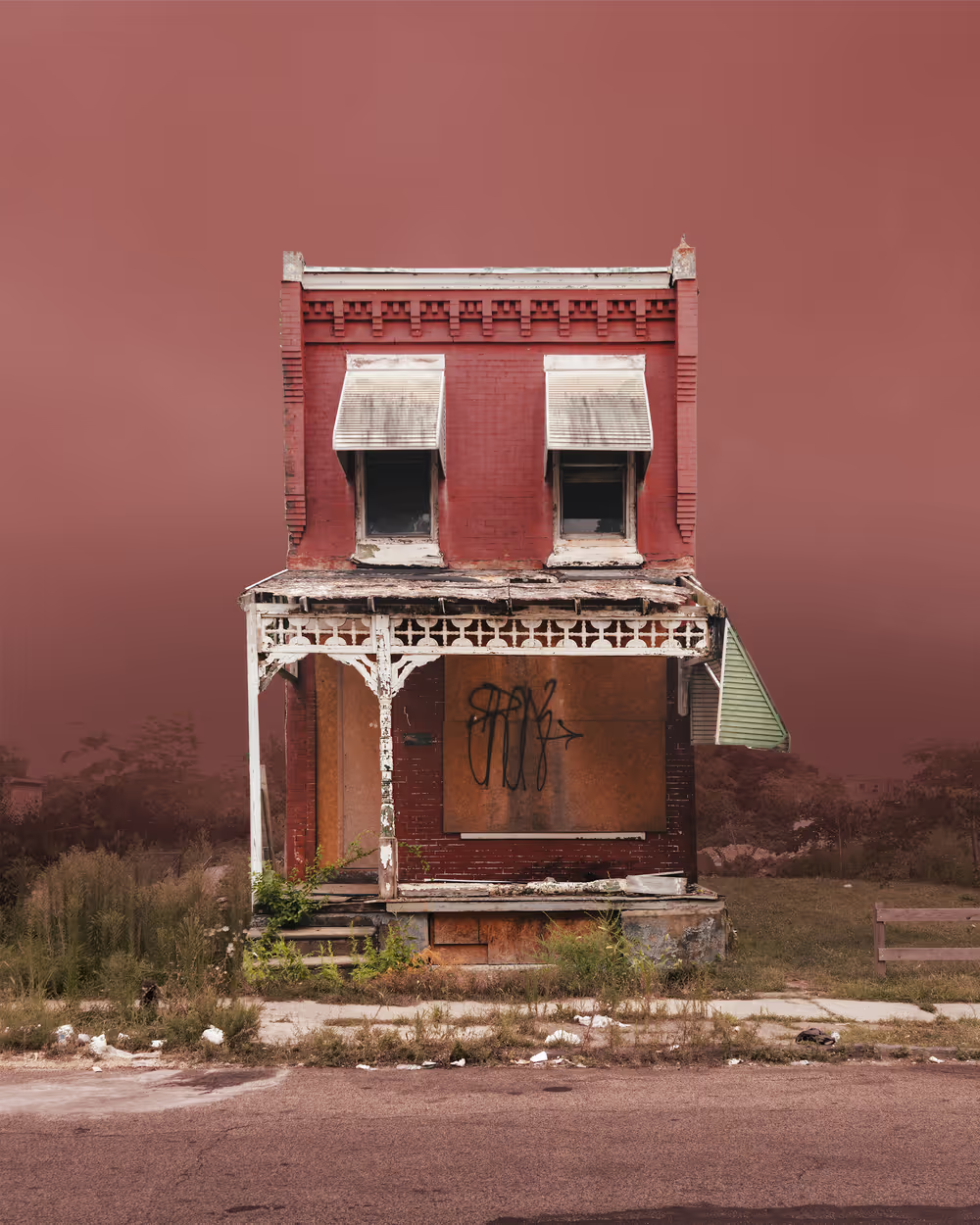
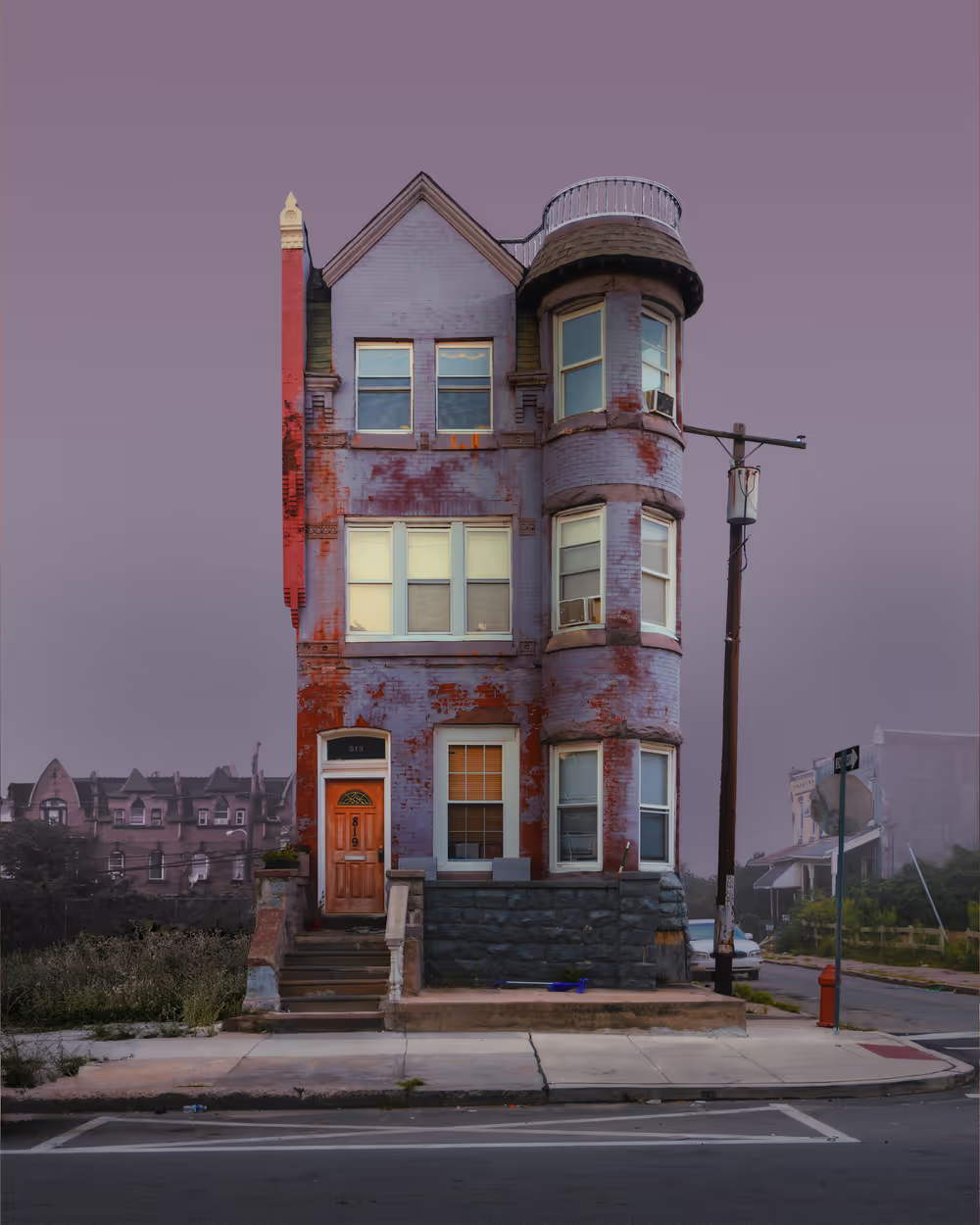
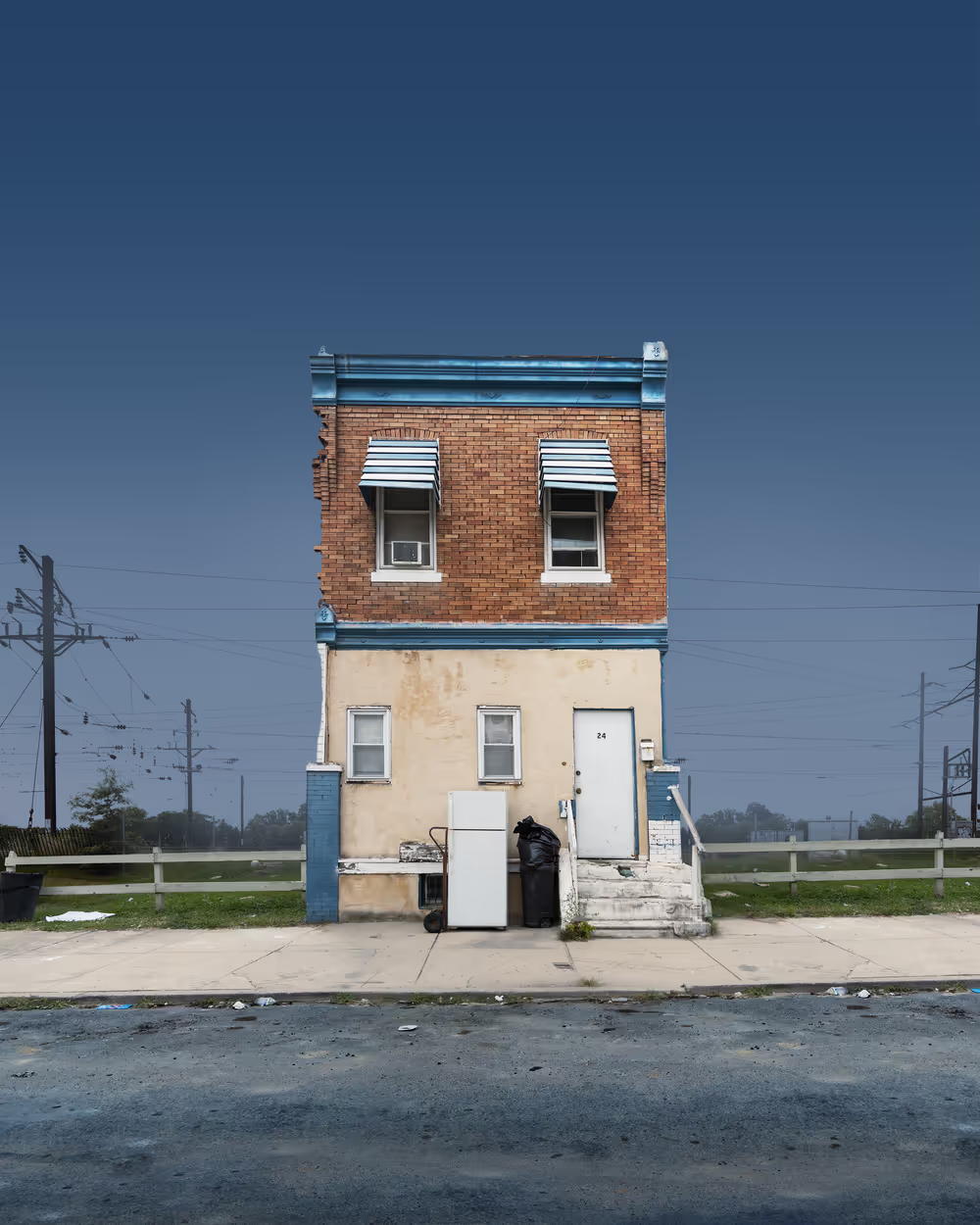
Highlights the remarkable amount of architectural variety within the city's seemingly standardized rowhome typology.
One hundred Philadelphia rowhomes, each shot head-on and cleaned of cars, wires, and neighbors so only the facade remains. Held to one rigid format, the city's endless variation within a single building type becomes legible — the Bechers' method turned on the American street.
OpenSea100 works14 collectorsDec 2021SubjectVernacular
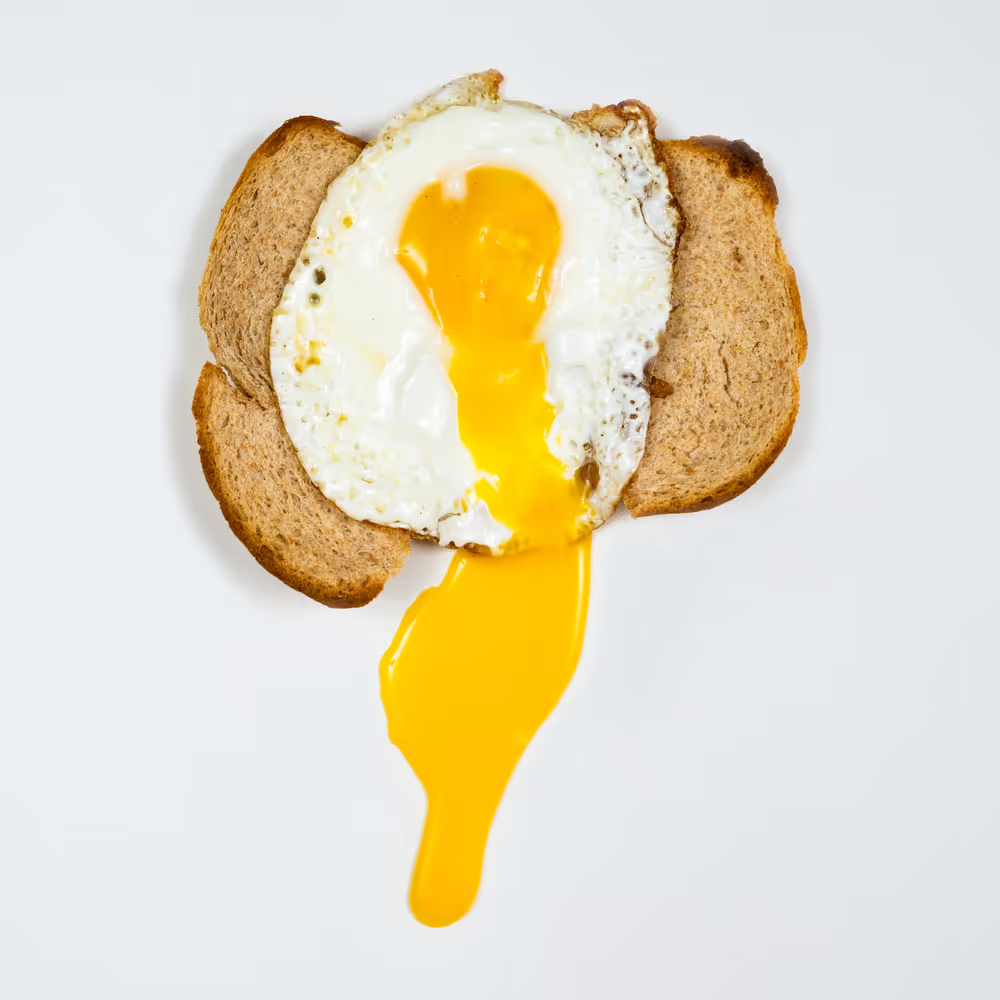
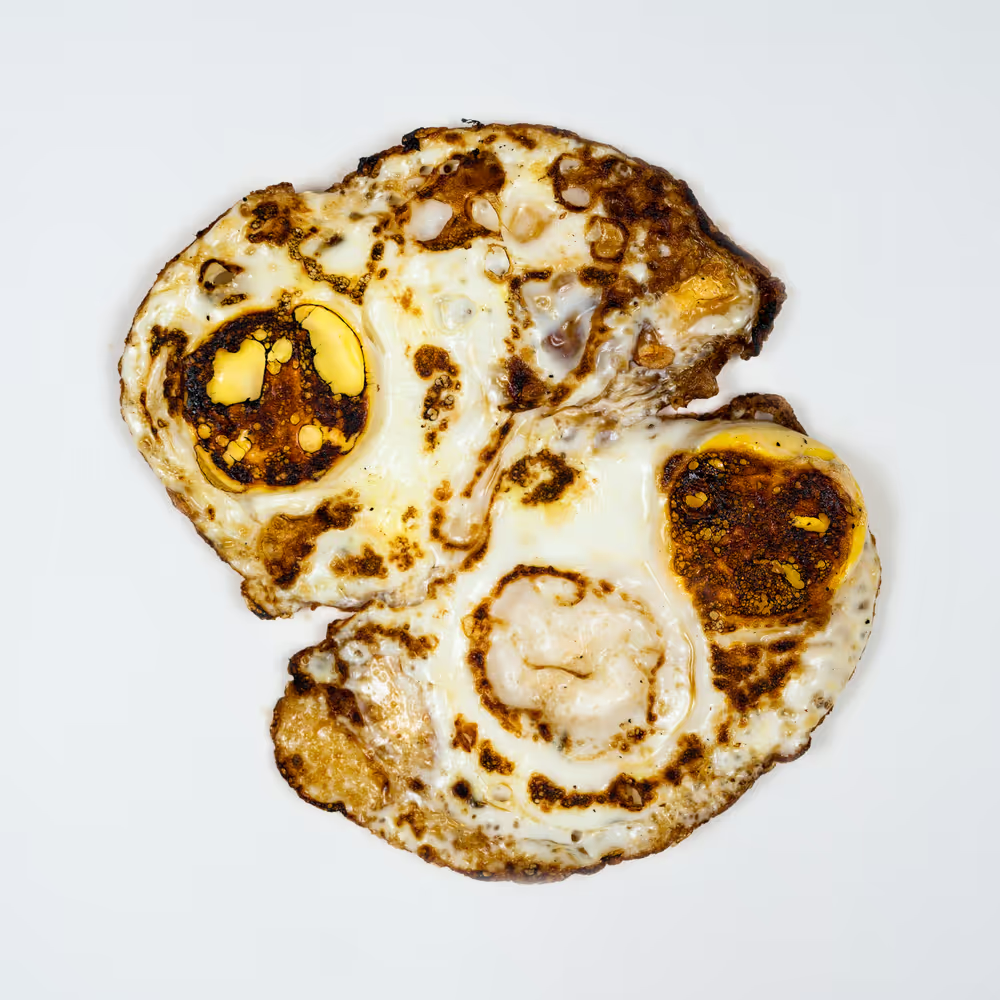
My playful take on the NFT space today — 100 unique photographs of fried eggs minted on Ethereum, made to do something joyful after years of serious work.
One hundred fried eggs, photographed one after another with none left out — the perfect, the broken, the overcooked alike. When the rule (shoot every egg) outranks taste, breakfast becomes a complete, deadpan record.
SuperRare16 works16 collectorsNov 2022SubjectSystem
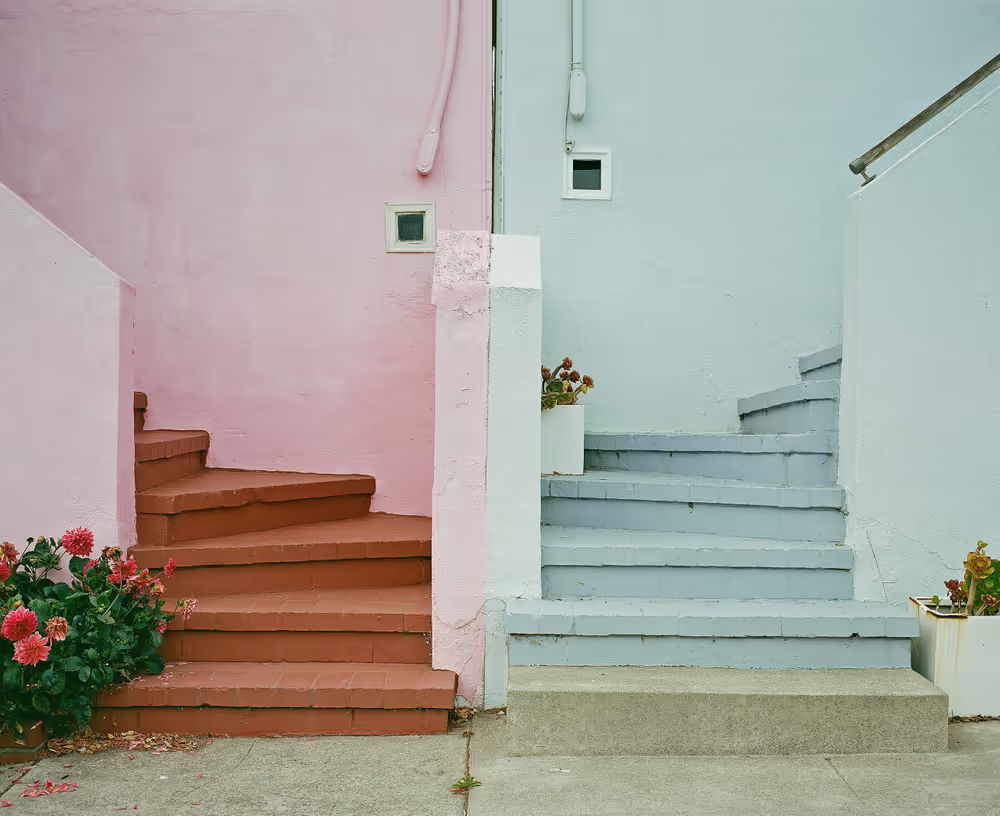
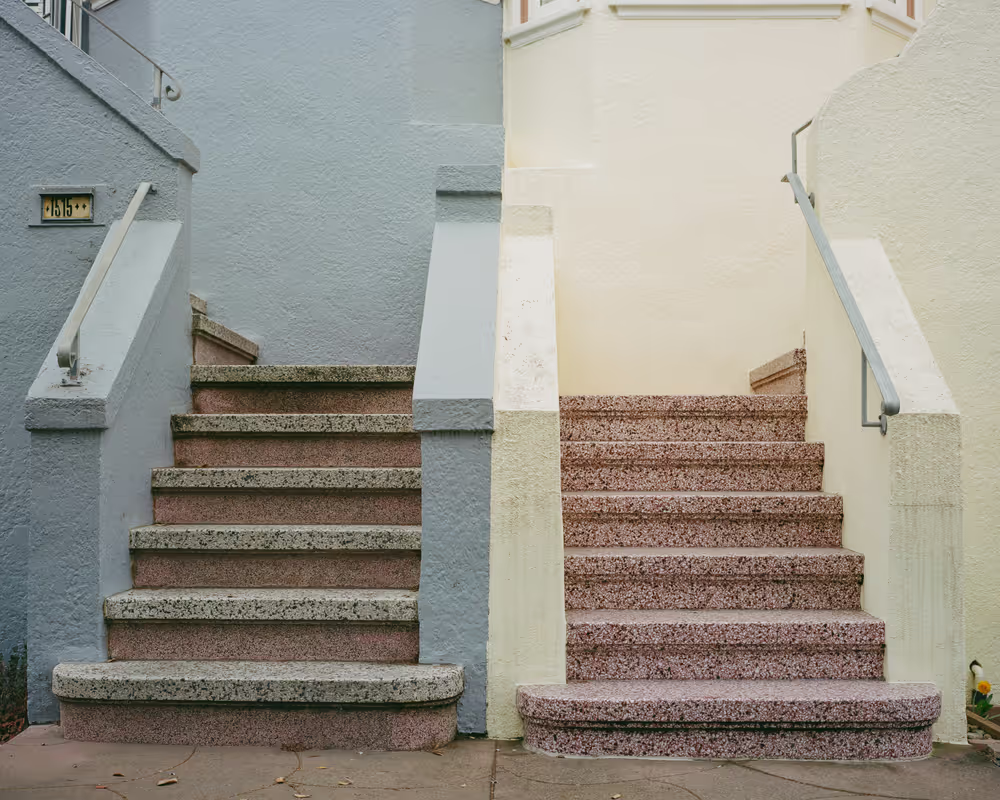
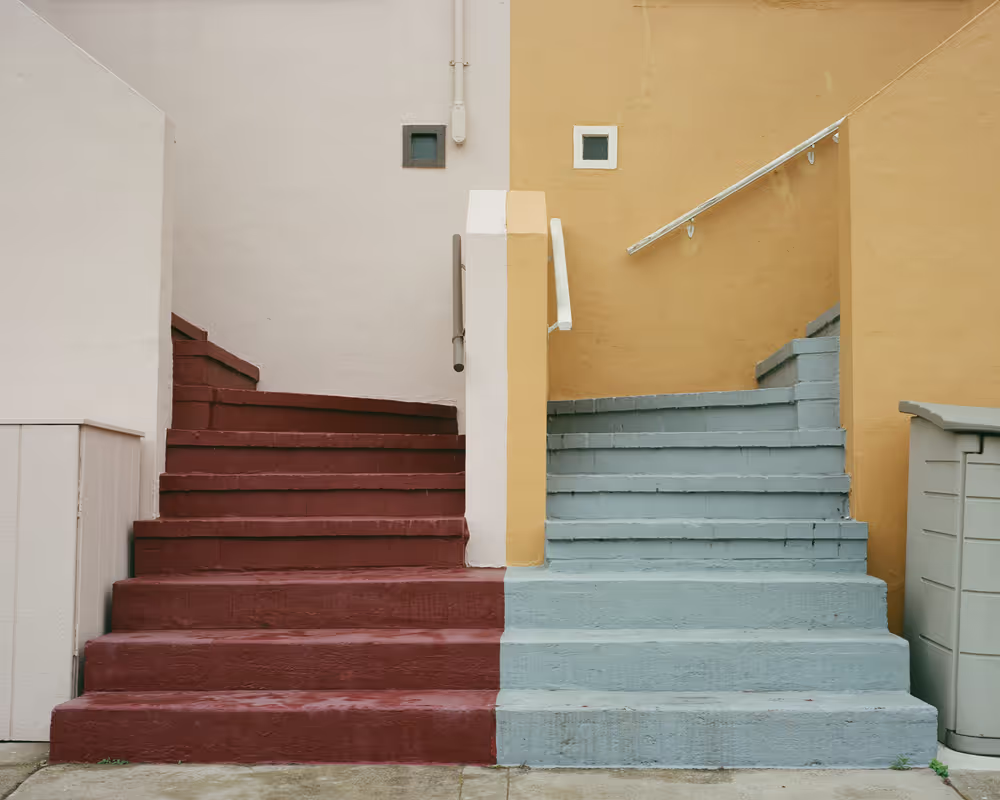
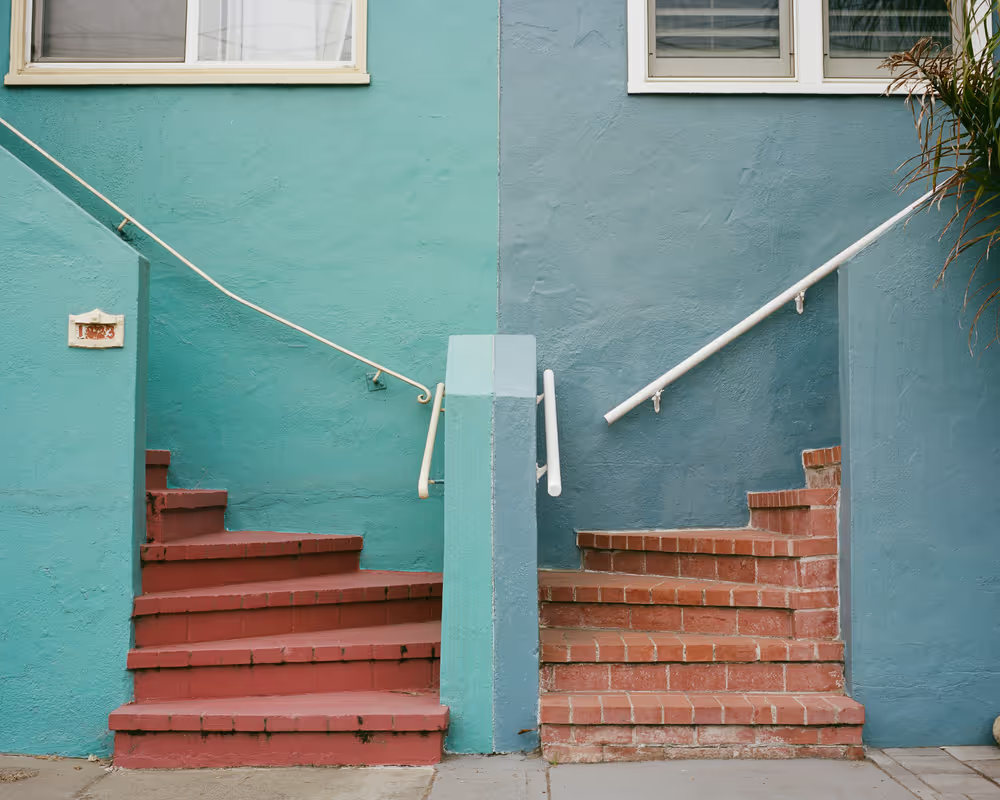
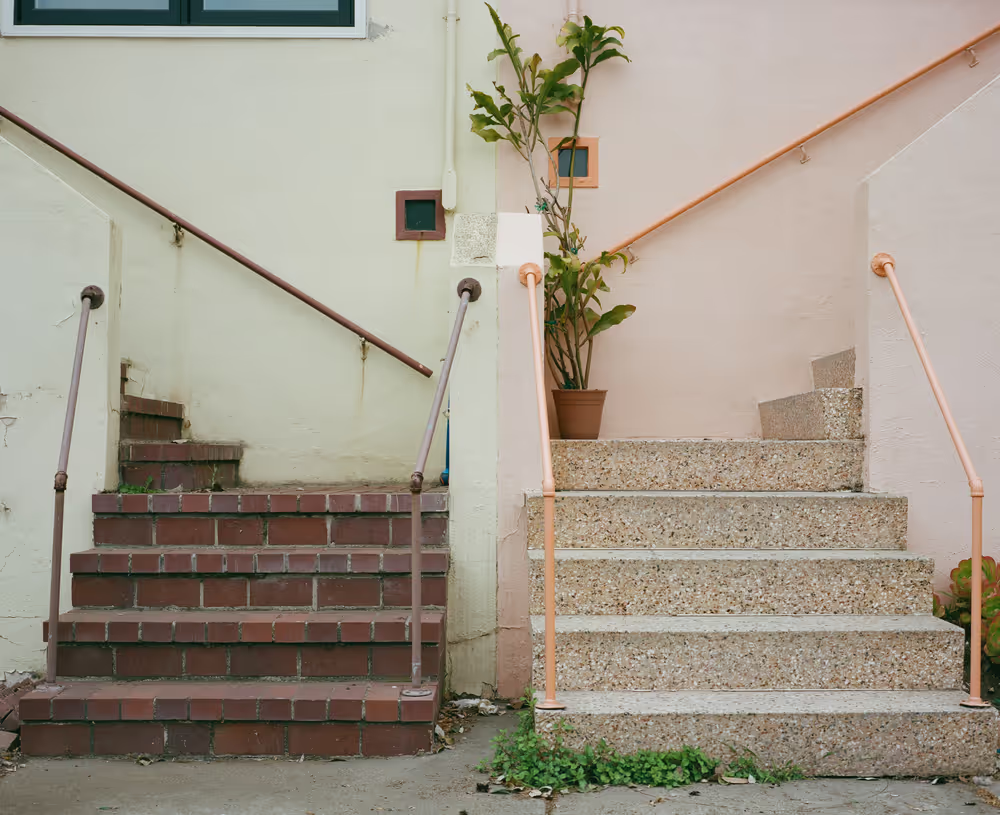
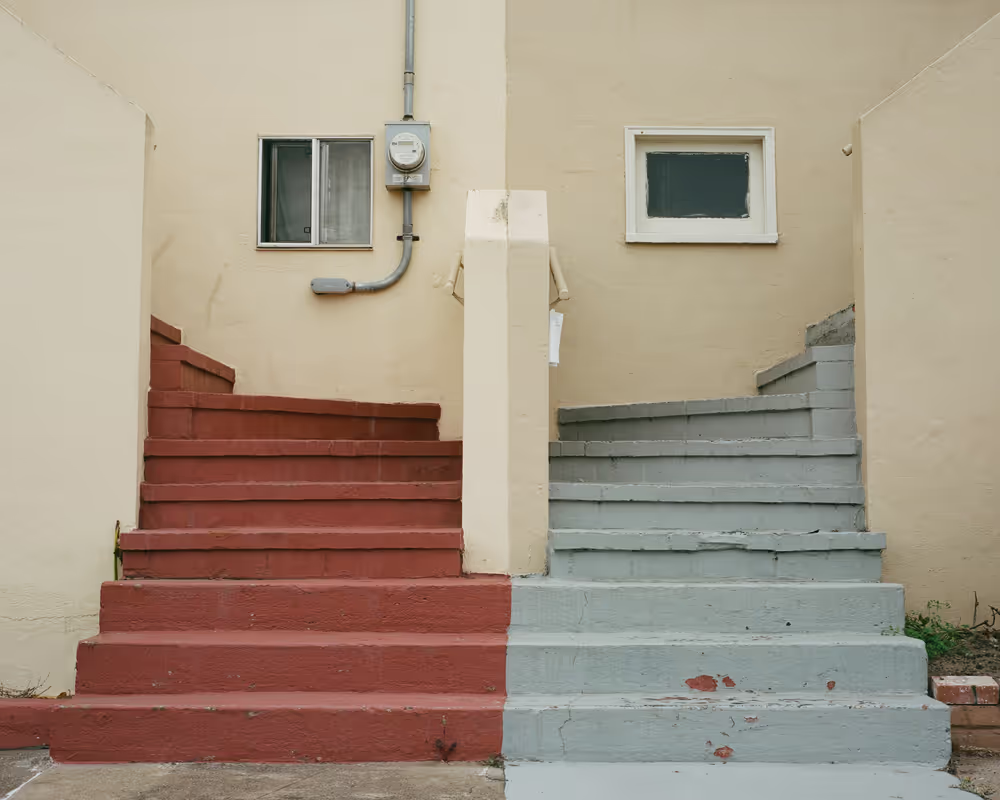
Across San Francisco's Outer Sunset, neighboring homes meet at a shared front stoop — two staircases, two pastel paint jobs, one dividing line. Shot head-on and named by street, the series turns a quiet civic detail into a study of color and coexistence.
OpenSea100 works82 collectorsFeb 2021SubjectSystem
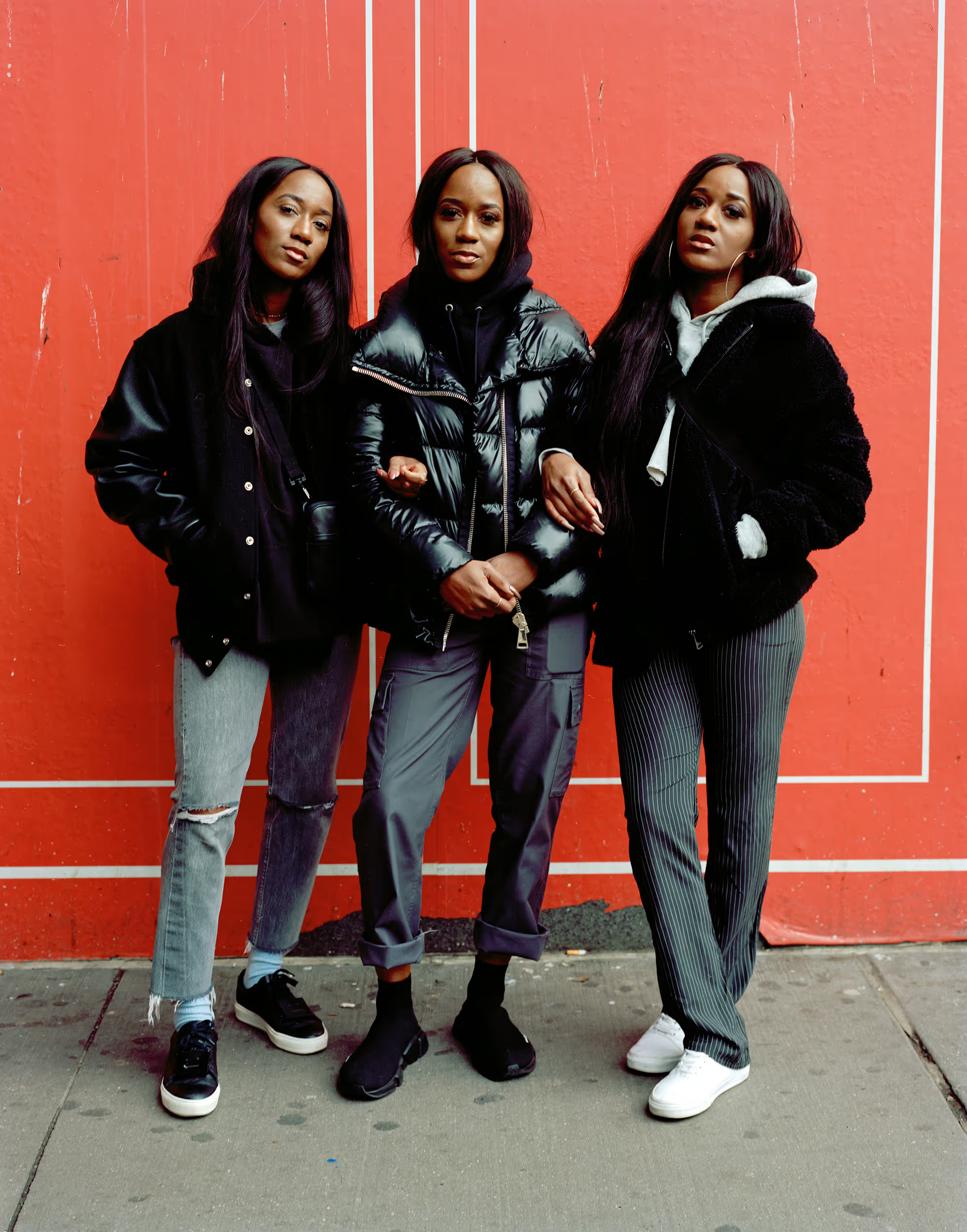
A homage to my fraternal twin by photographing 100 sets of twins, exploring the intricate concept of twindom through immersive portraits.
One hundred portraits of twins, made in homage to the artist's own late twin. A single subject — the pair — repeated a hundred times across three film formats; the work that, more than any other, carried the photographic typology onchain.
NINFADec 2025Subject
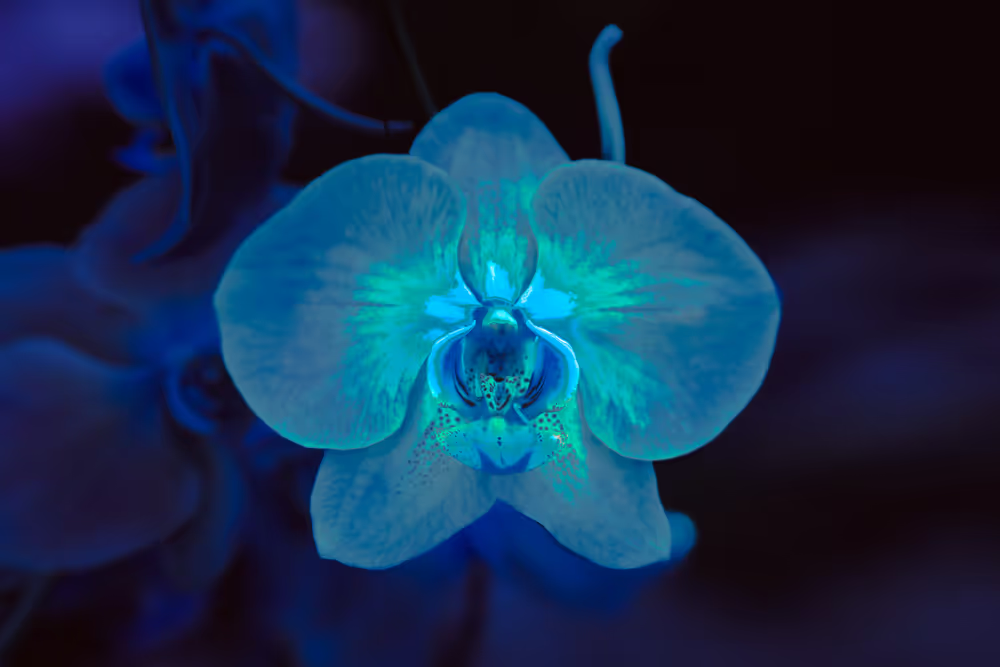
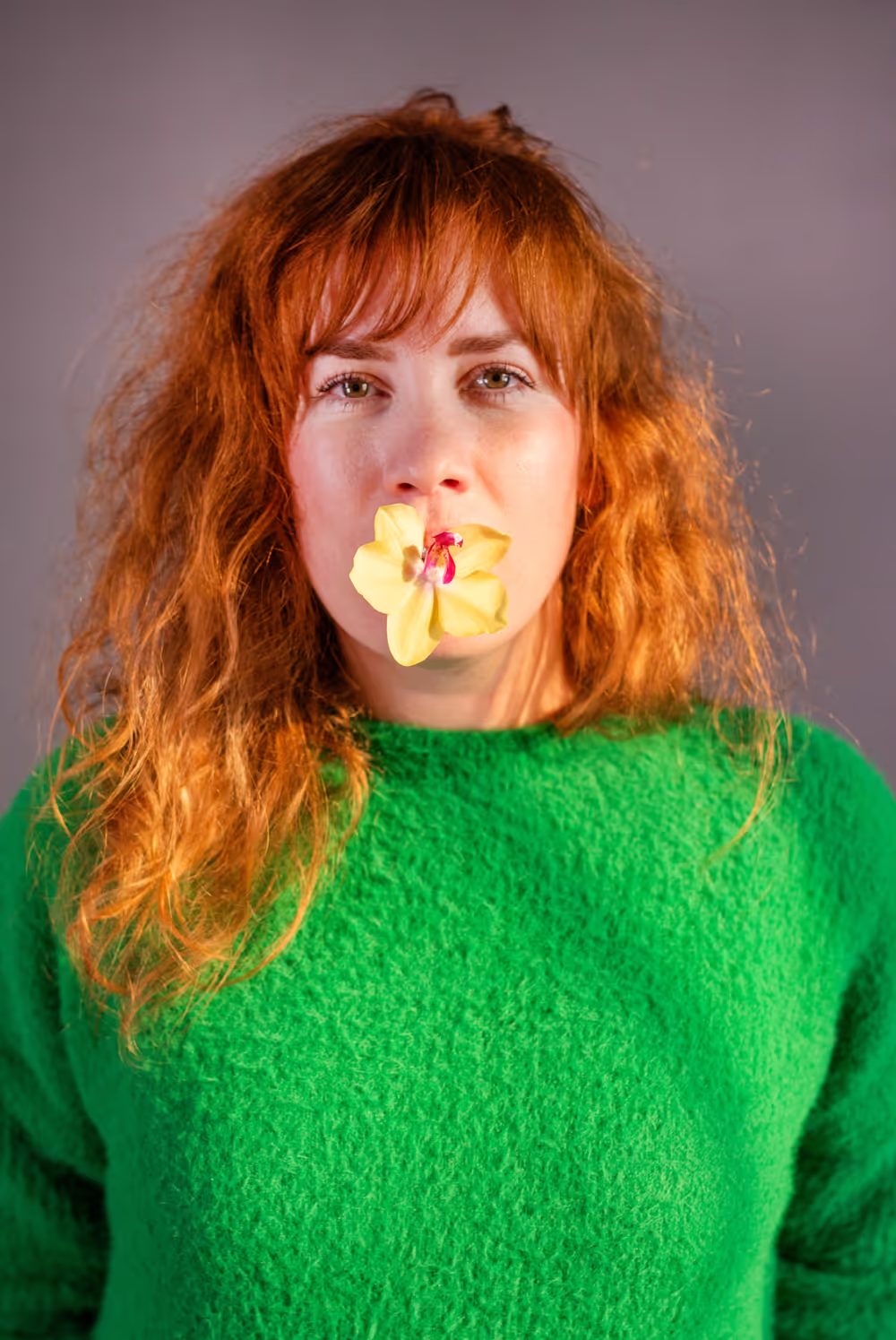
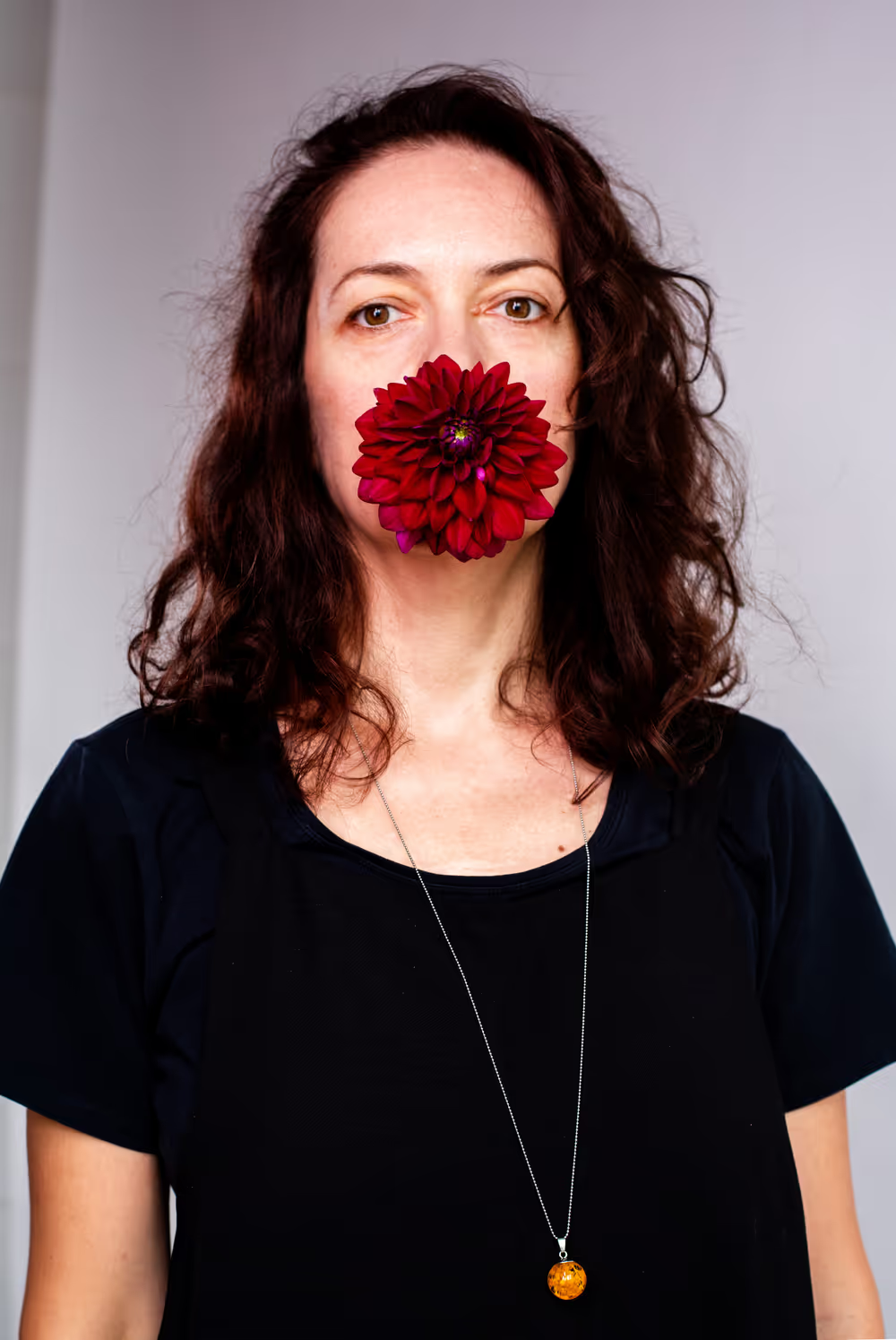
The Garden is an intimate exploration of transformation and impermanence through the small worlds of flowers.
Samantha Cavet returns to the garden as a recurring subject — a patient, repeated study of living, growing things, finding the pattern in what blooms and fades.
NINFAJun 2026SystemSubject
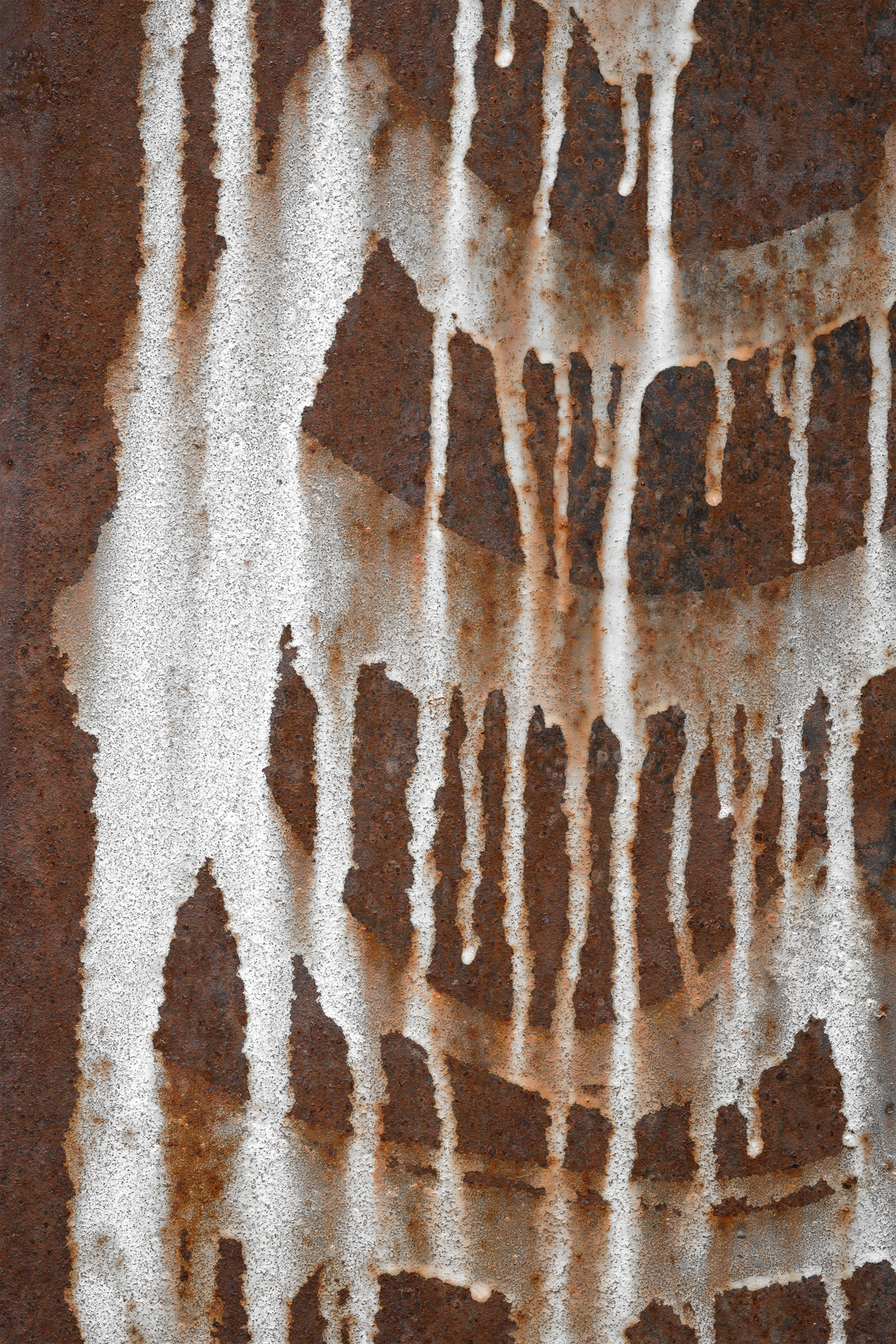
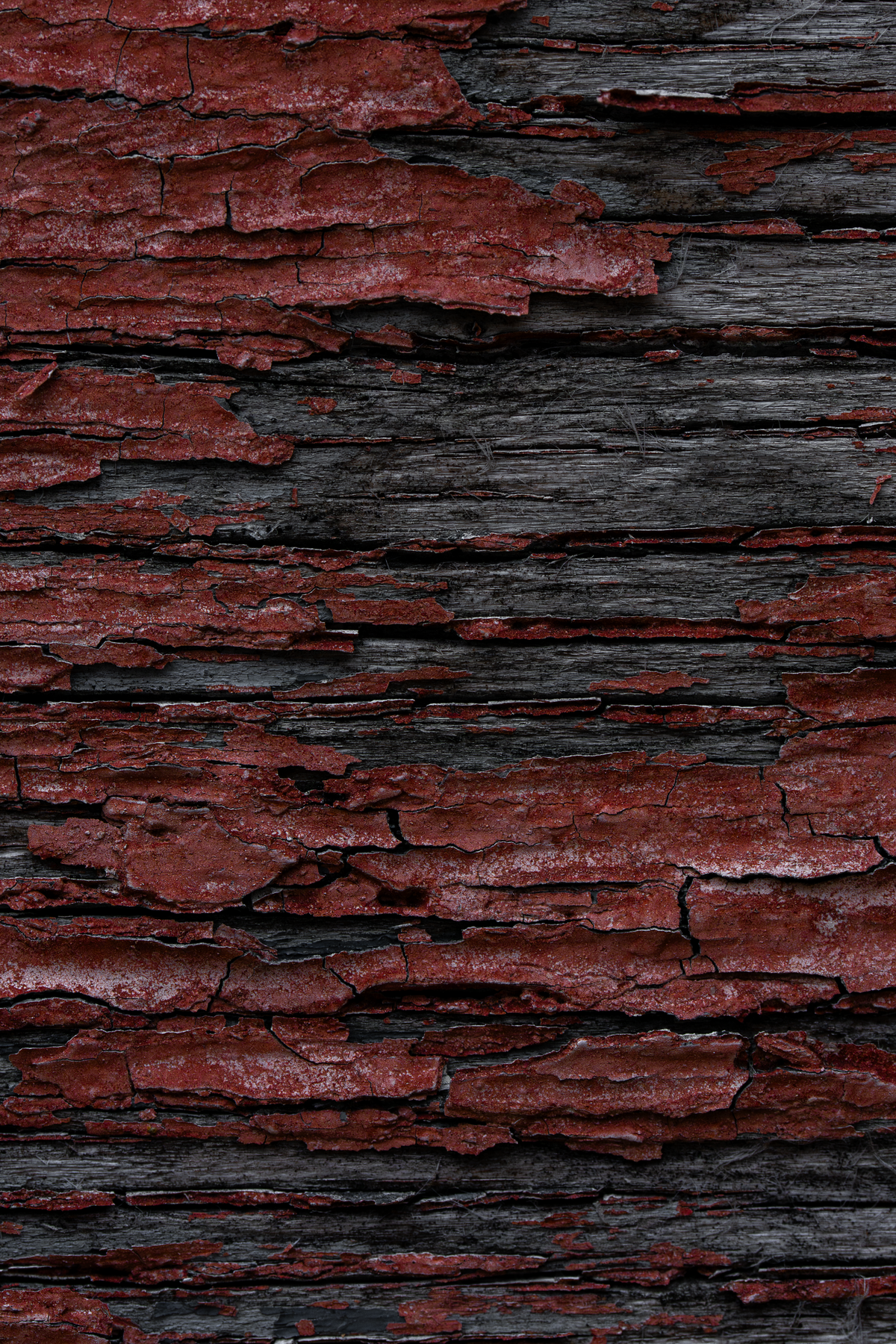
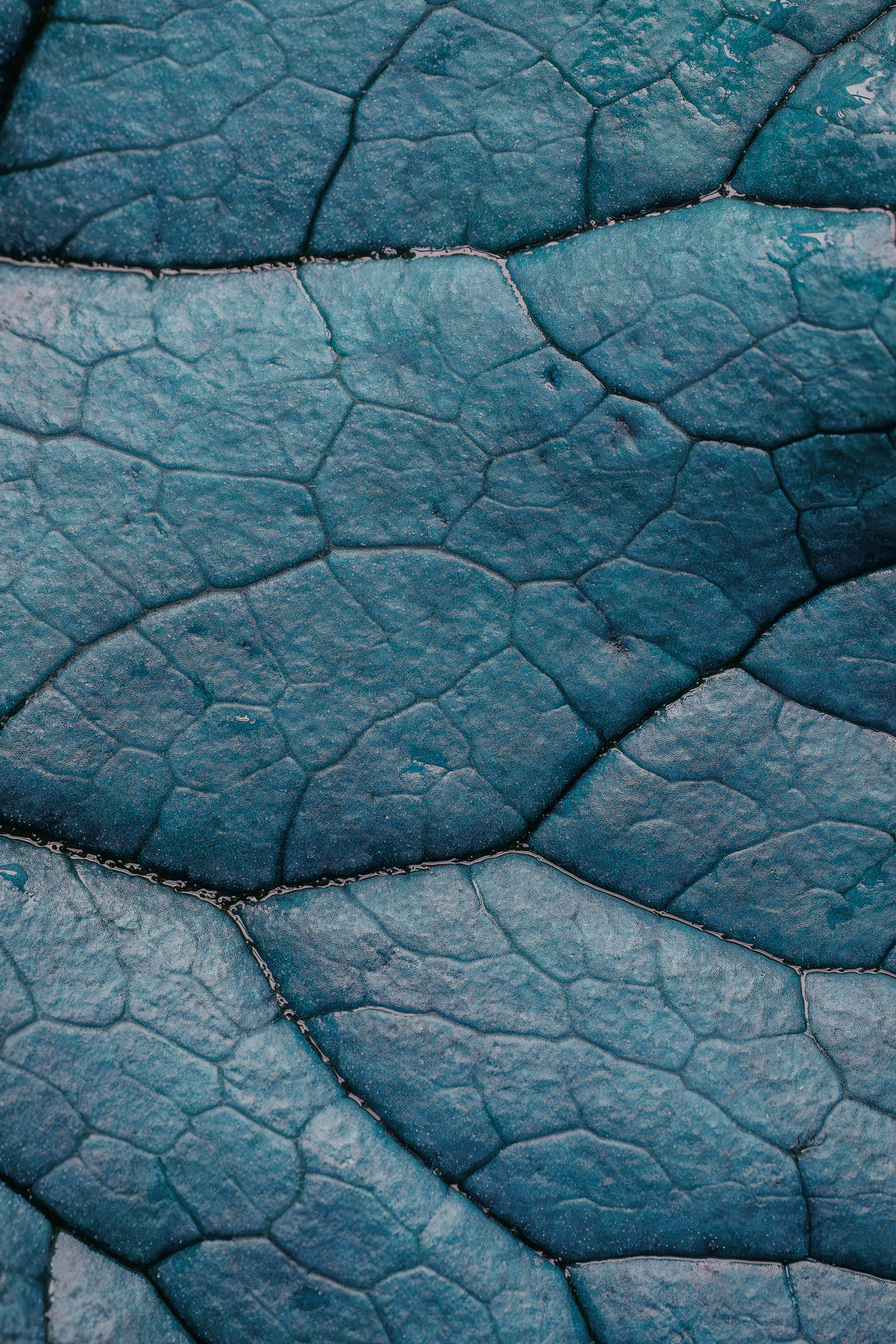
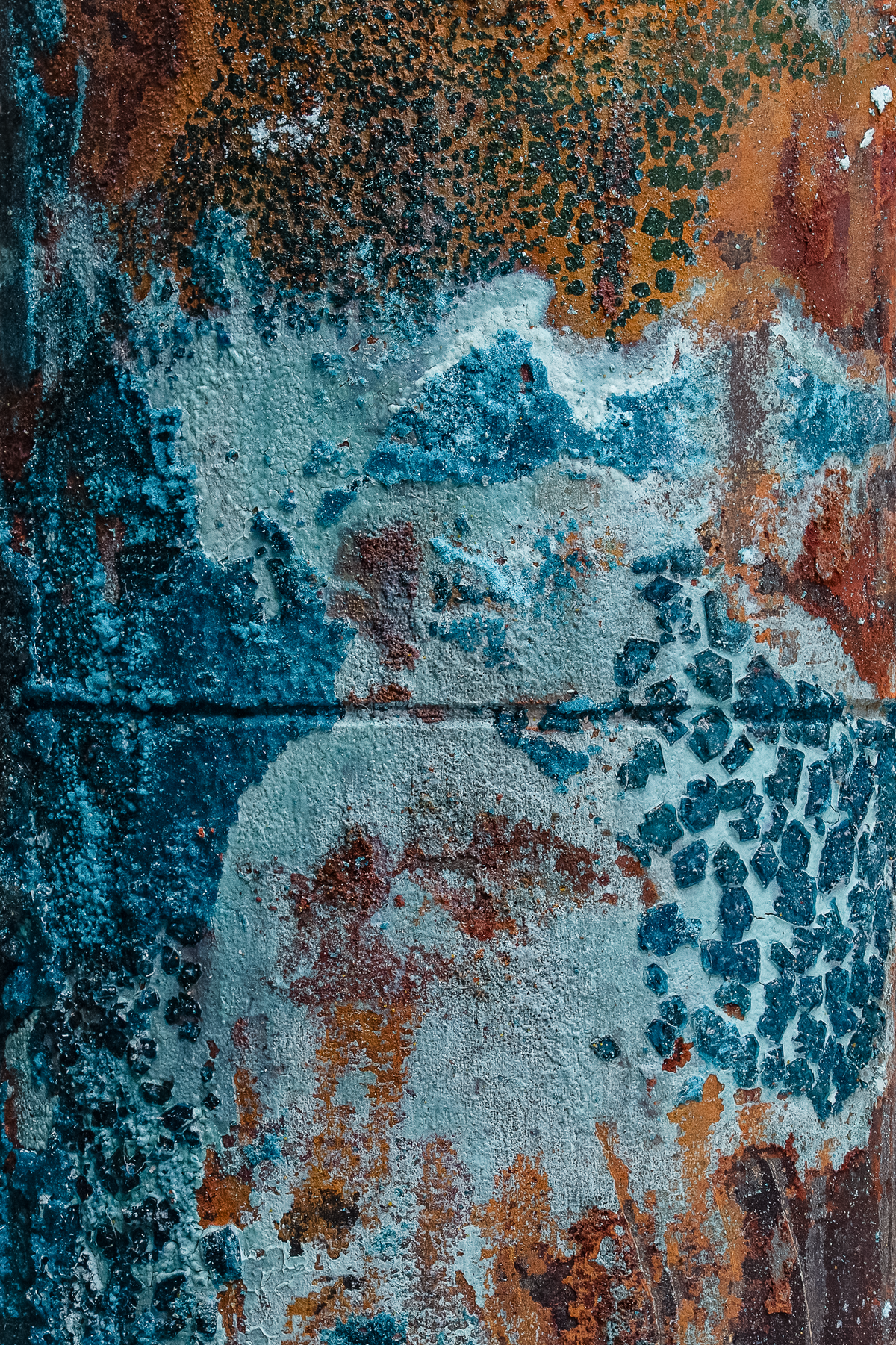
Étude de textures documents the patterns, surfaces, and textures found in both natural and urban environments. Fossils, bark, rust, patina, or the incidental beauty of oil swirling in a dirty pan are photographed up close, some losing their identity entirely under the lens. The series is driven by a fascination with decay and transformation, and by the way similar patterns appear across wildly different materials.
A study of surfaces — grain, weave, patina, and wear, observed close-up and in series. Here texture itself is the repeated subject, in the lineage of Blossfeldt's magnified botanical forms.
OpenSea1000 works152 collectorsNov 2025SubjectSystem
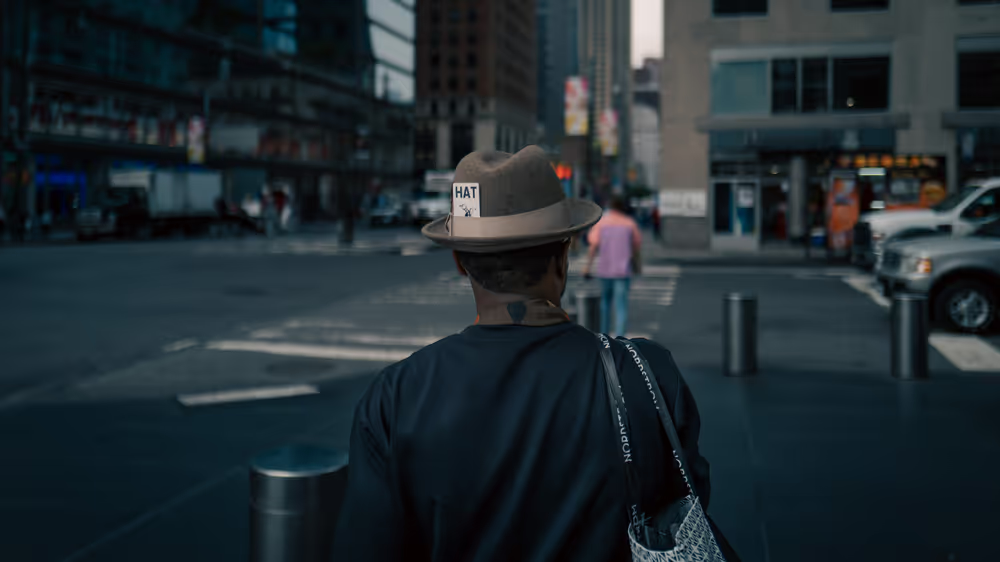
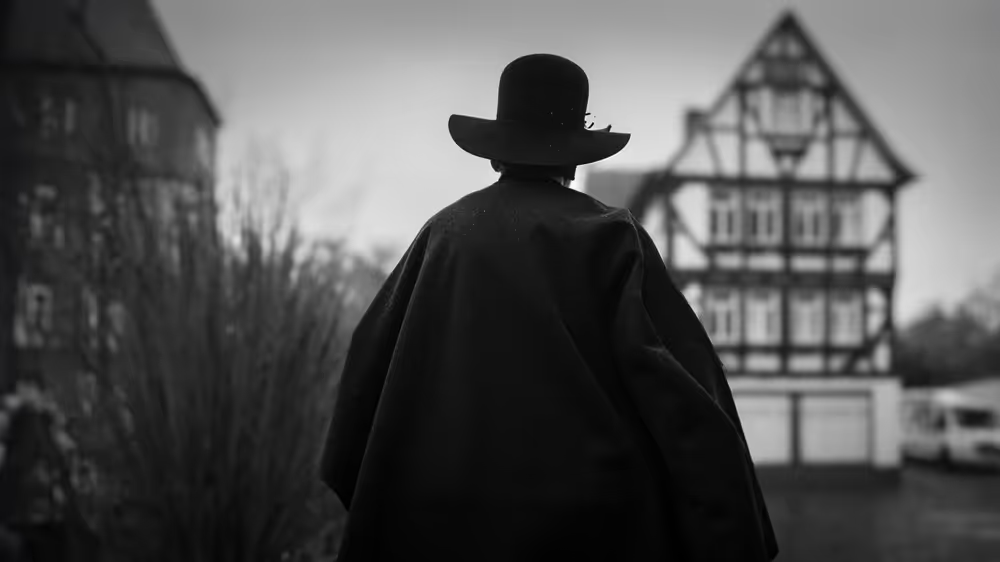
City Hats is a photographic exploration of identity and belonging through the things we wear on our heads. Each image portrays a stranger from behind, revealing how hats — whether crafted, improvised, or symbolic — speak of who we are, what we do, and where we stand. From expressions of individuality to signs of labor, protection, or unity, the collection observes how the simple act of covering one’s head becomes both personal ritual and shared language across cities around the world.
One thousand strangers, each photographed from behind in cinematic widescreen, each wearing a hat. With every face withheld, the hat and the posture beneath it carry the whole character — street style as a catalogue of anonymous lives.
OpenSea216 works83 collectorsOct 2022SubjectSystem
"I created a typological collection of Roads and Rivers." (MintFace, on X — the artist explicitly frames the work as typology.)
Two hundred and sixteen frames built on a single dichotomy — the road you steer versus the river you surrender to. The artist's own description is refreshingly plain: a typological collection.
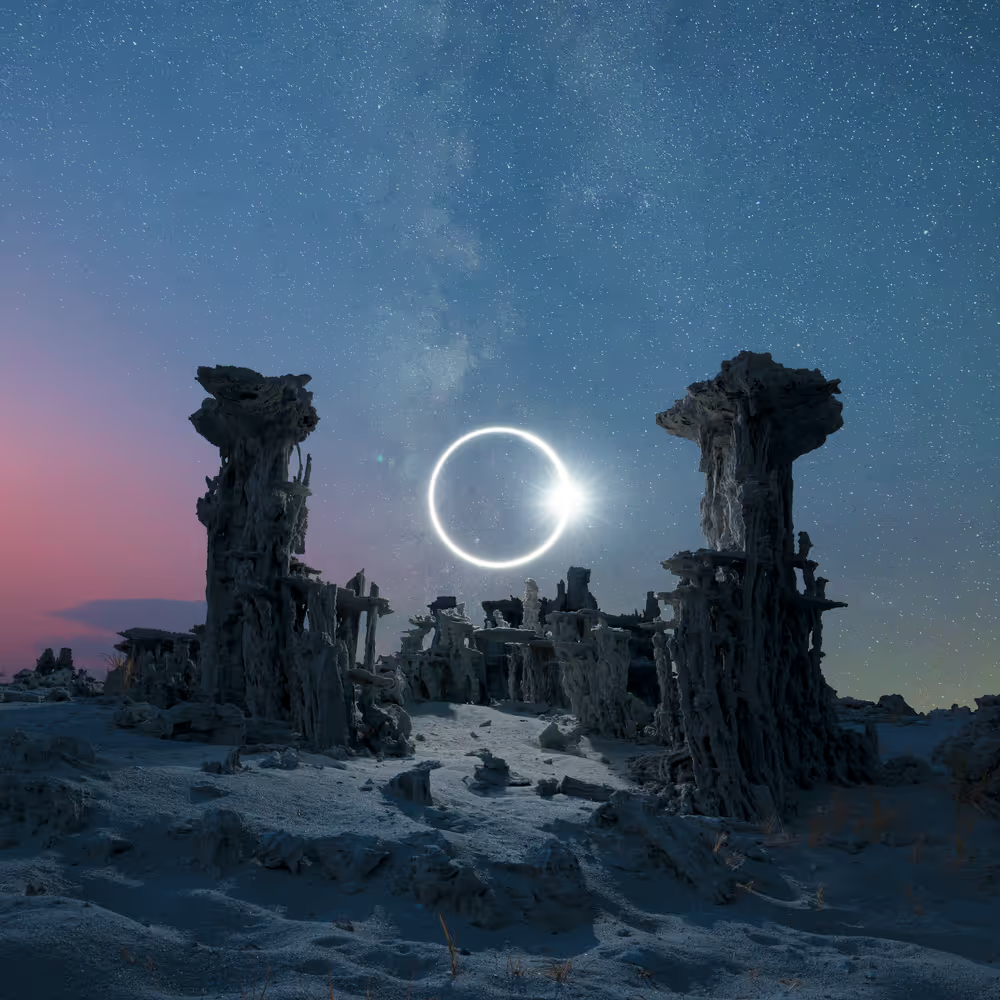
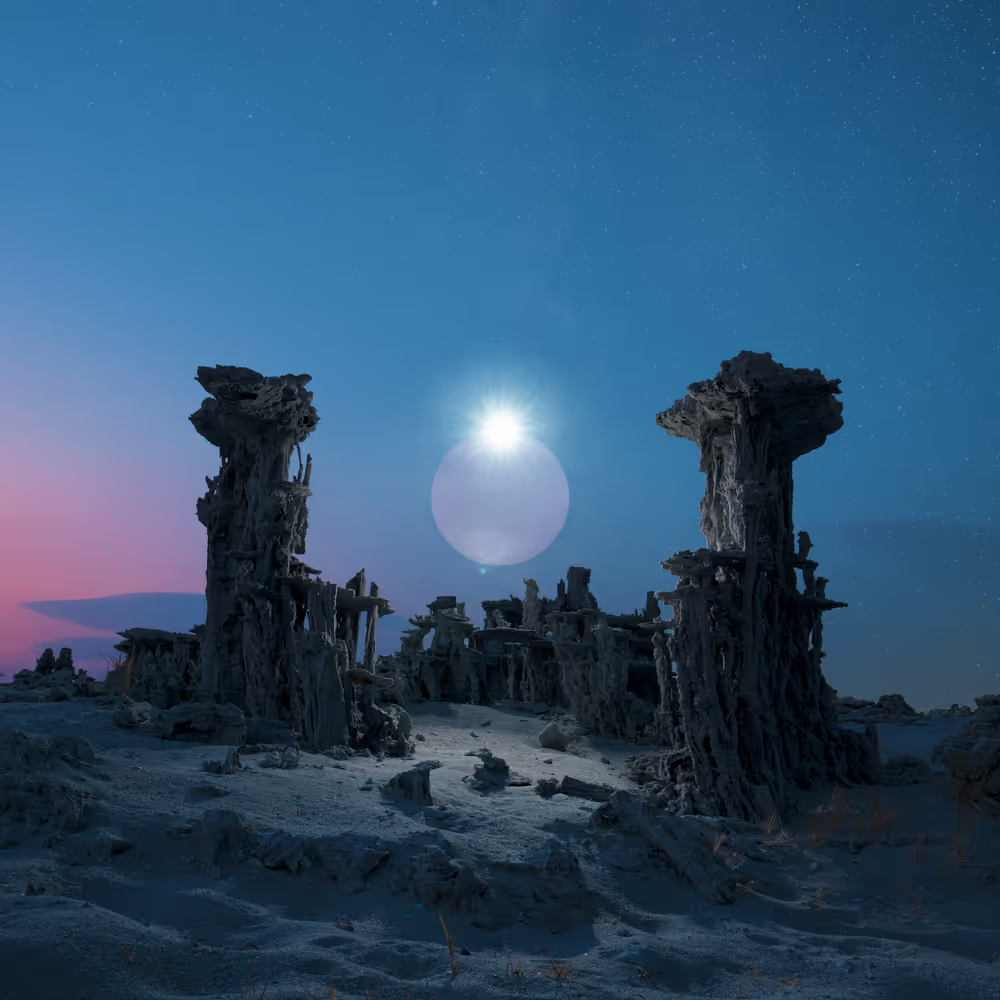
SuperRare8 works7 collectorsApr 2024SubjectSystem
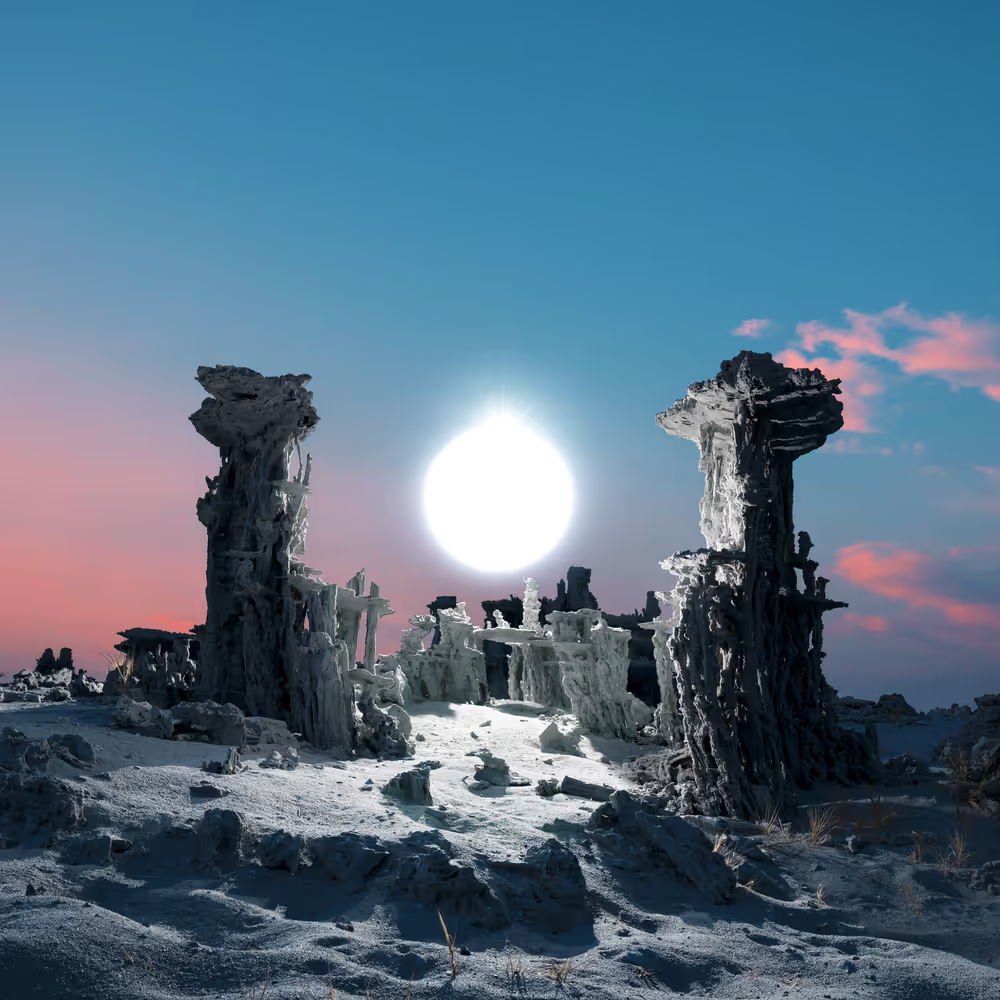
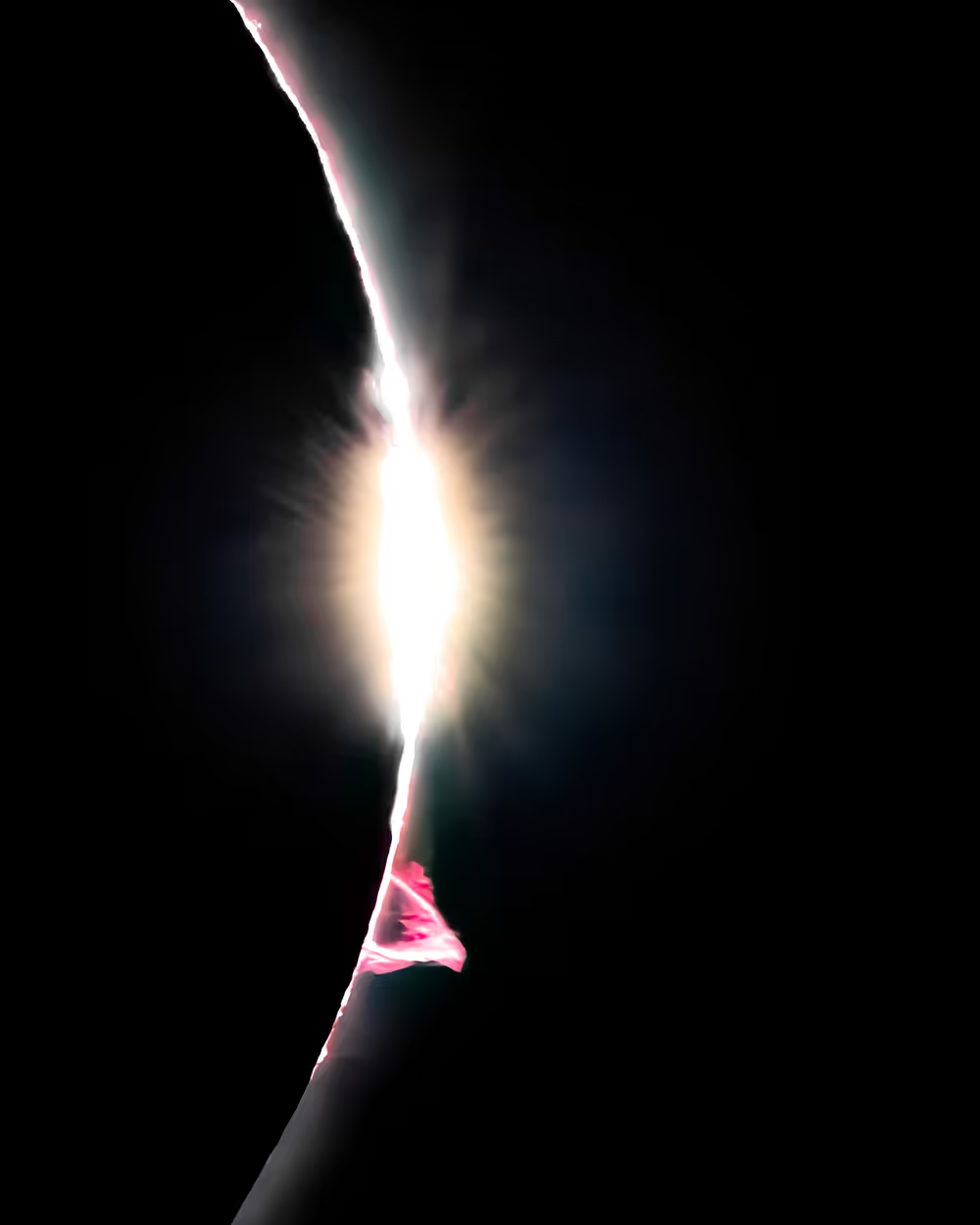
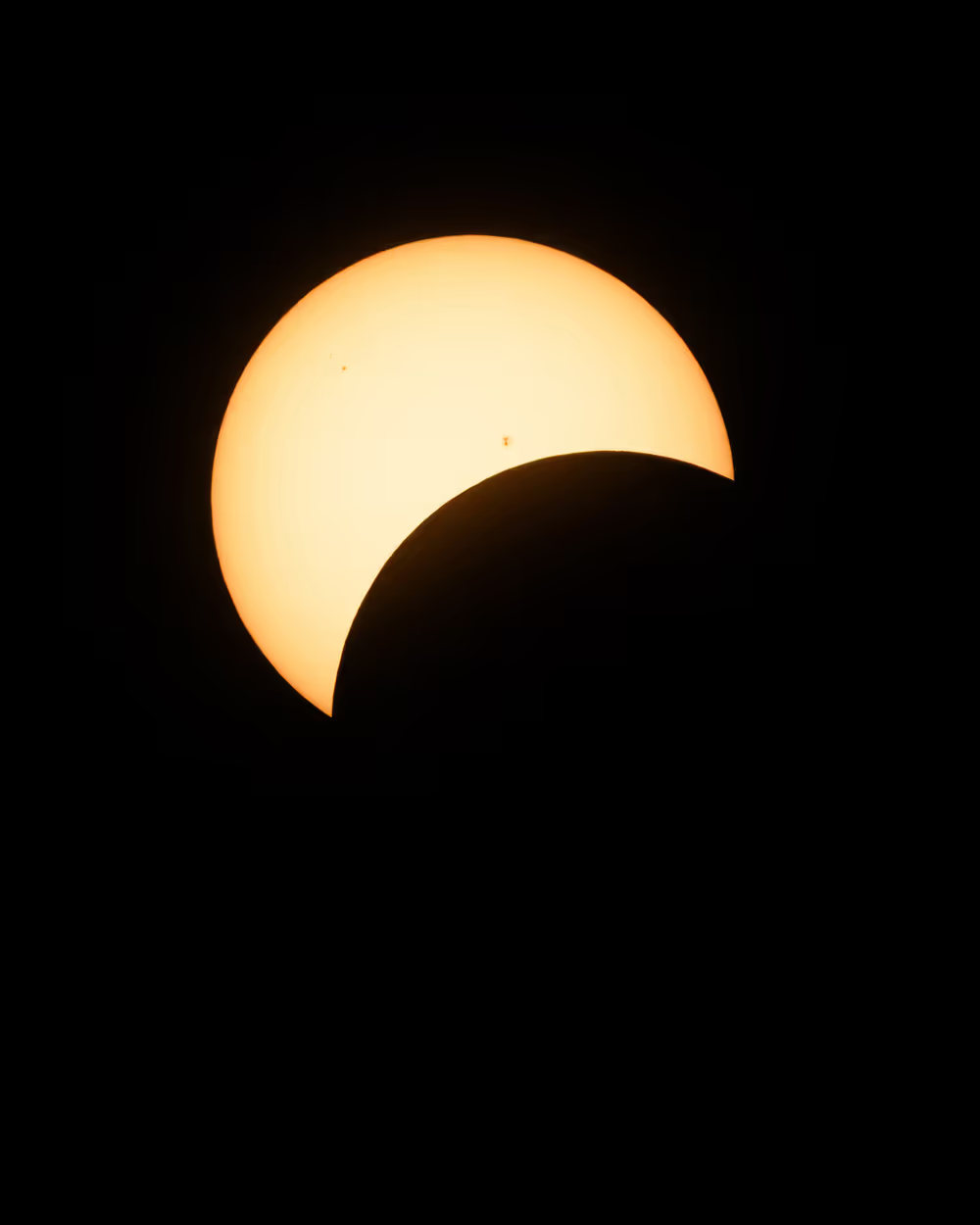
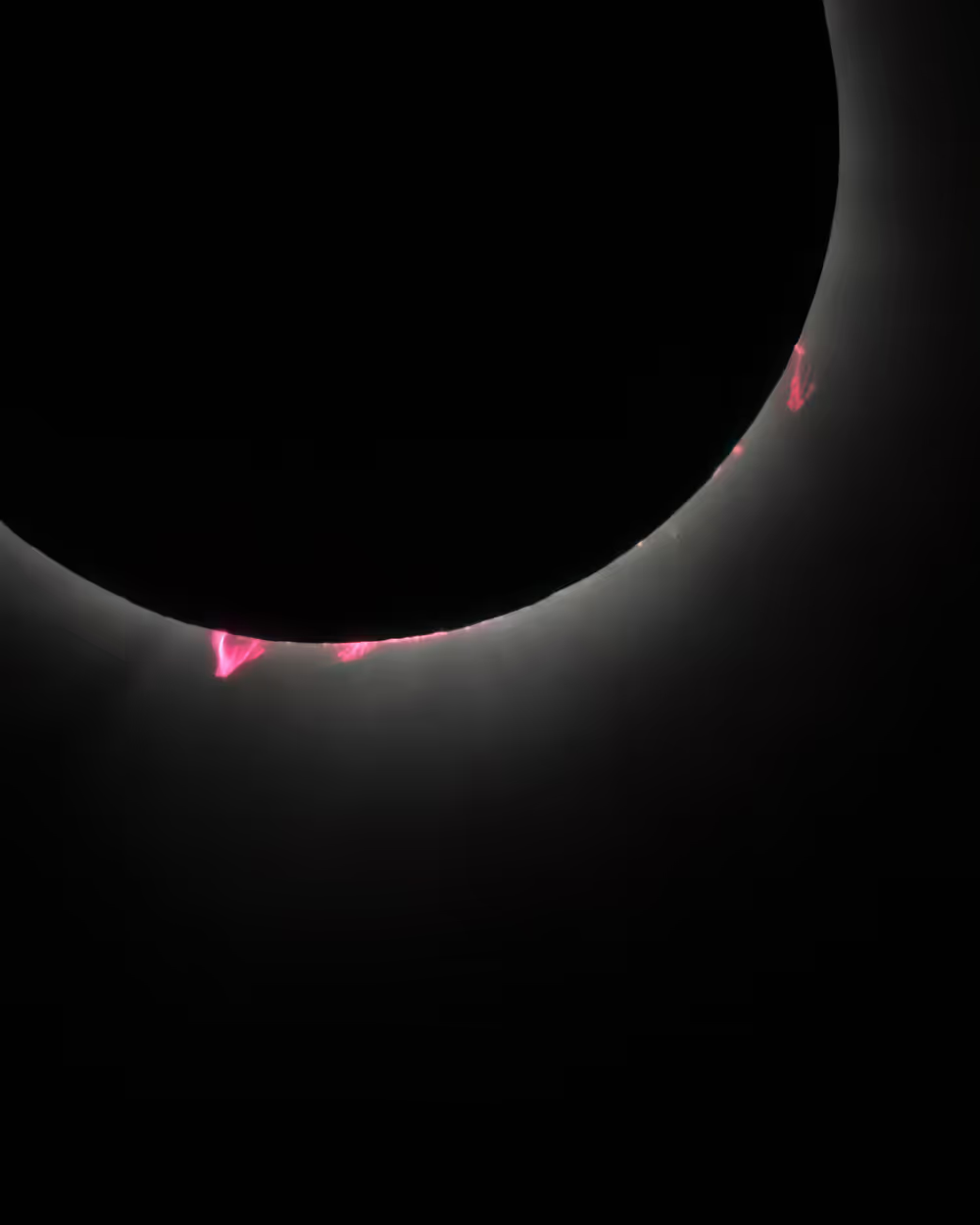
The sun breaks through its shroud of darkness, casting a radiant glow on the moon like a polished marble.
A single total solar eclipse, photographed across its phases — diamond ring, black moon ringed by white corona, pink prominences flaring at the limb. One cosmic event, sampled minute by minute as light becomes dark becomes light.
SuperRare10 works9 collectorsAug 2023SystemAbstract
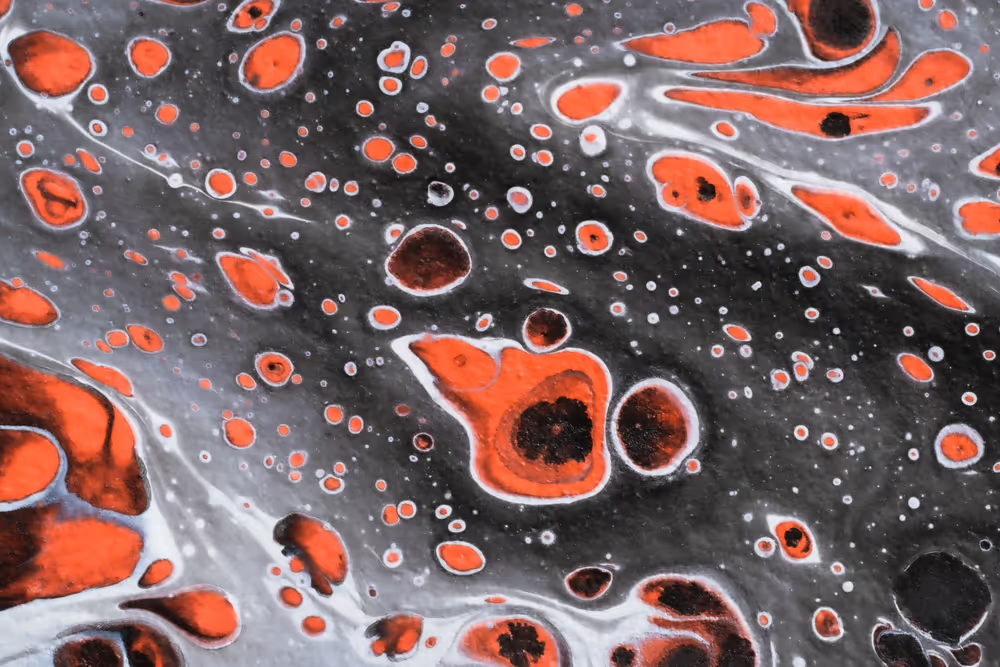
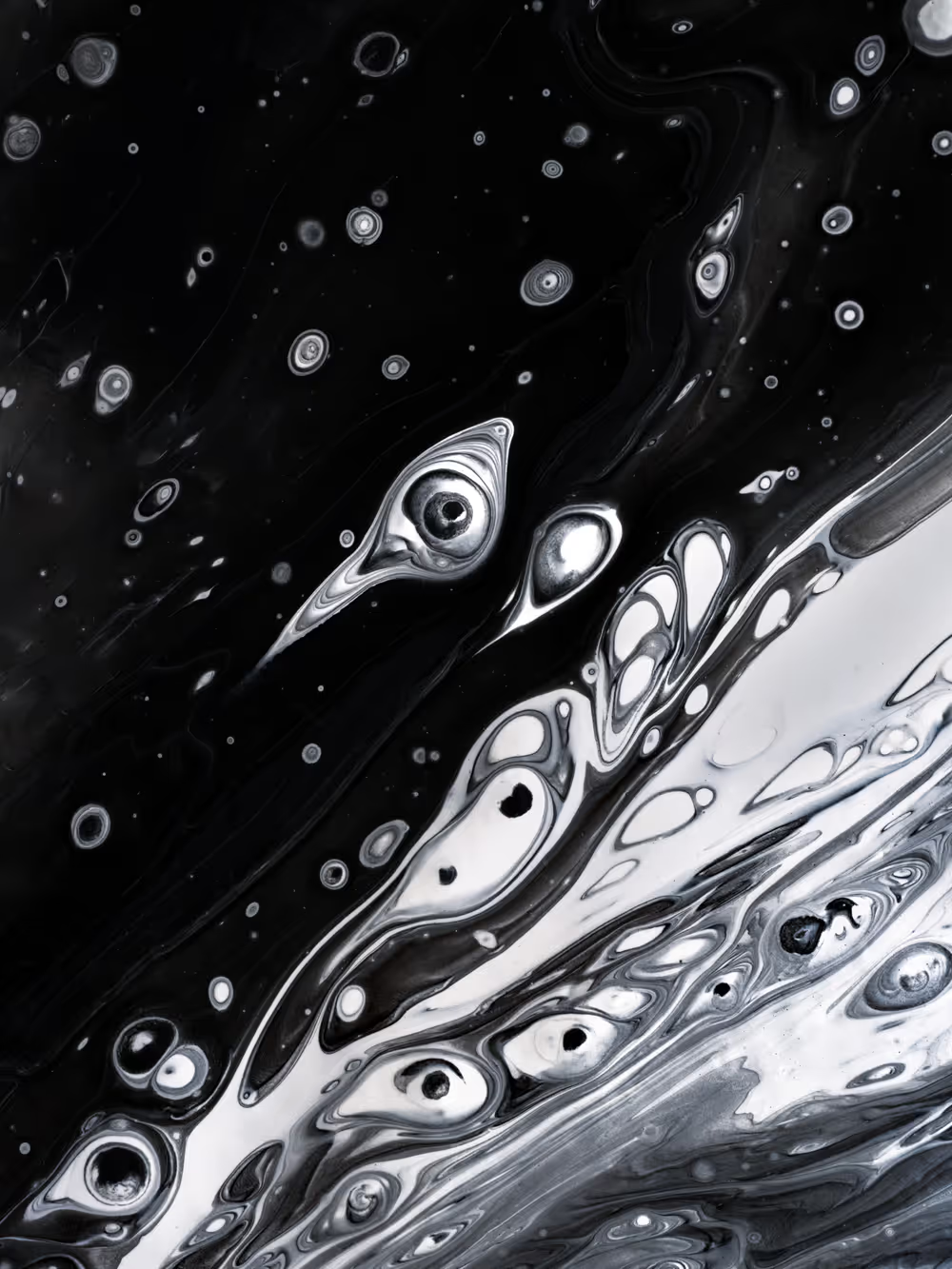
"Letting go of expectations and finally feeling free. Enjoying the process again. Life is good."
Ten abstractions in a single fluid-paint language, unified less by what they show than by a felt state of release. Proof that a typology can be of feeling — a catalogue of letting go.
Transient6 worksMay 2025SubjectAbstract
A Glacier's Breath is a visual archive of exhaled time. Each frame captures air that's been trapped beneath the ice for centuries to millennia, now released by light, but still held by pressure. These are not just photographs of ice. They are fossils of atmosphere. Echoes of ancient climates. The breath of a world that no longer exists.
Six macro studies of glacier ice, each a pocket of atmosphere held under pressure for millennia and named for the cosmos it resembles — Wormhole, Nebula Within, The Constellation. A typology of exhaled time: the same act of release, a different breath of a vanished world.
Manifold20 worksJan 2025Subject
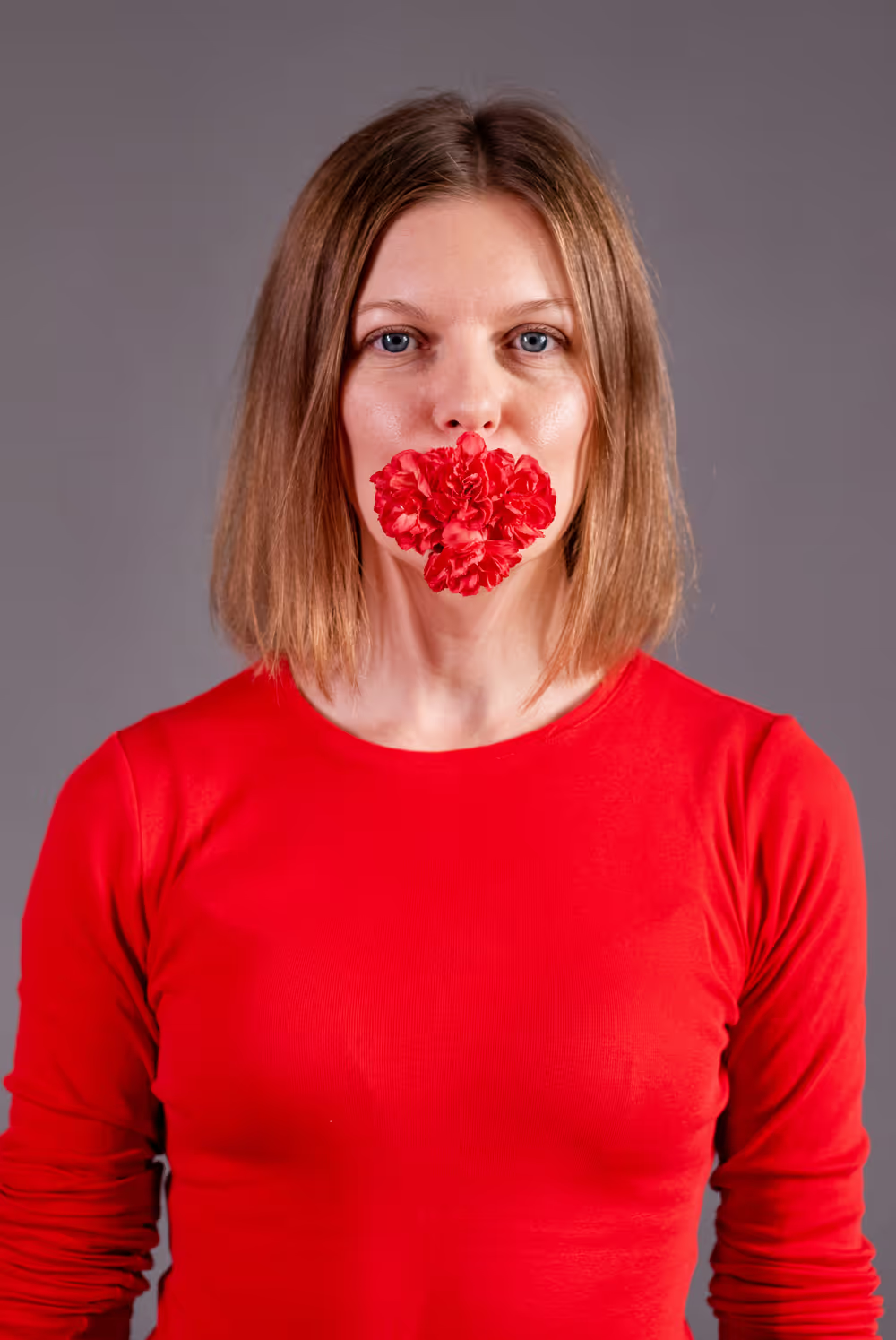
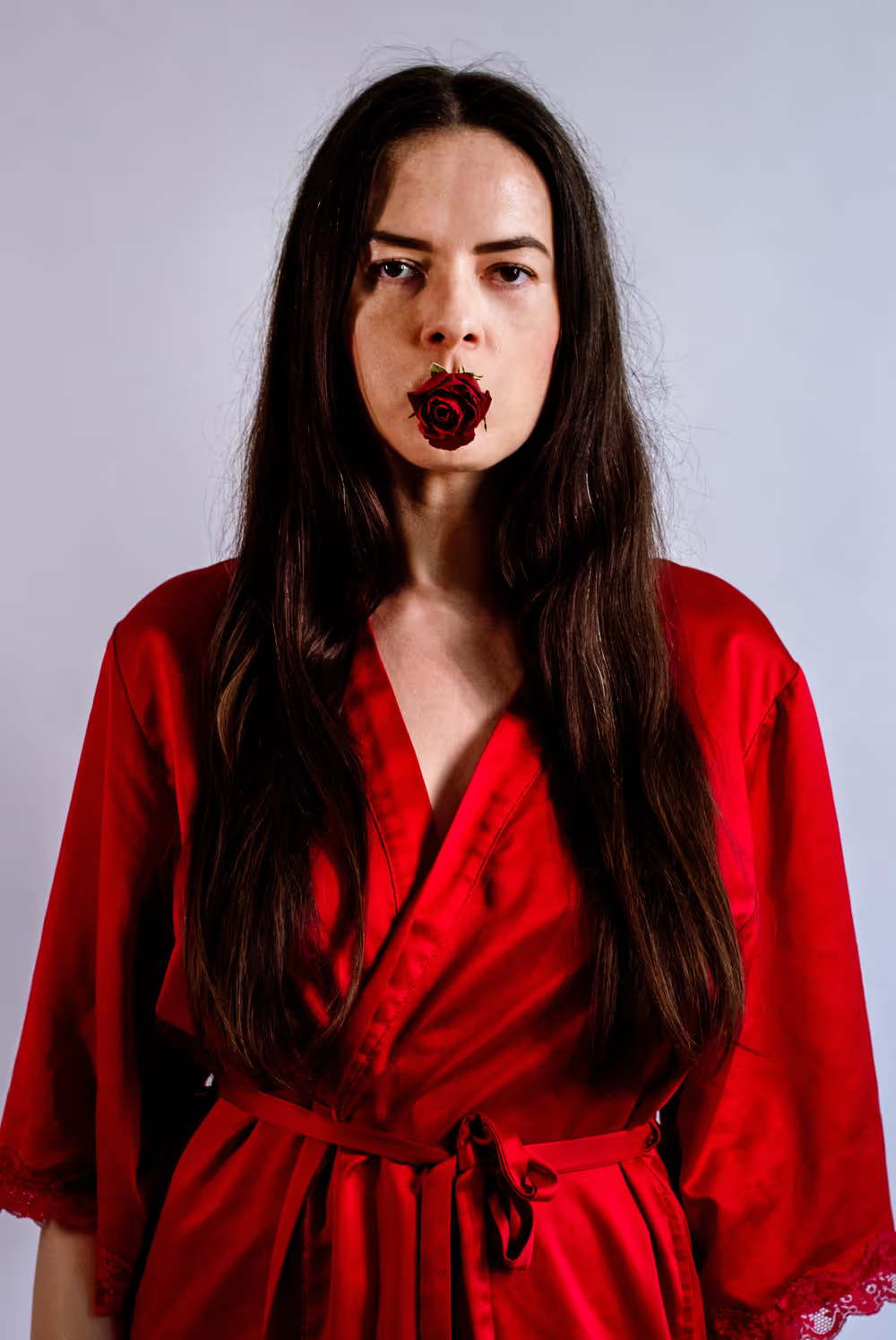
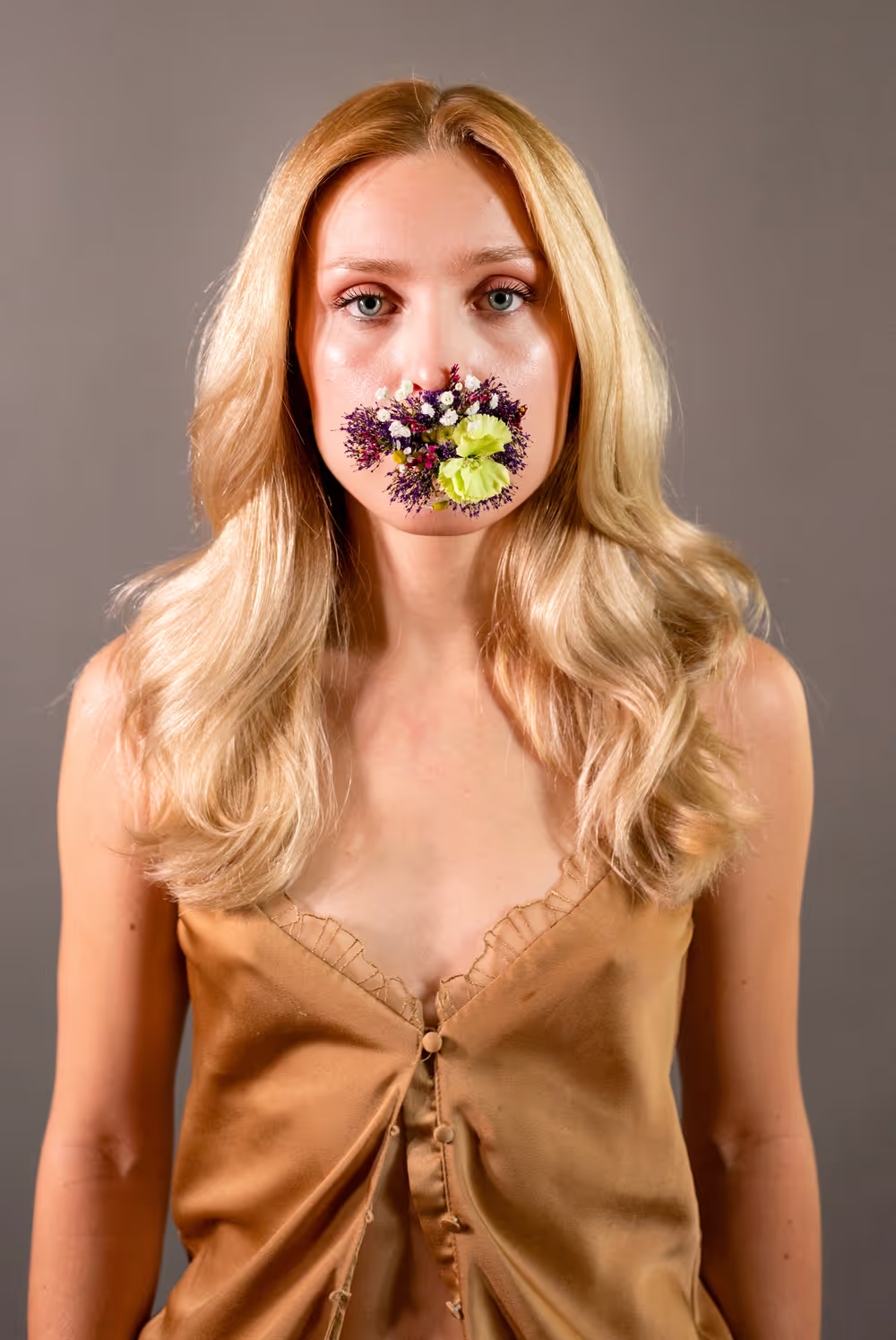
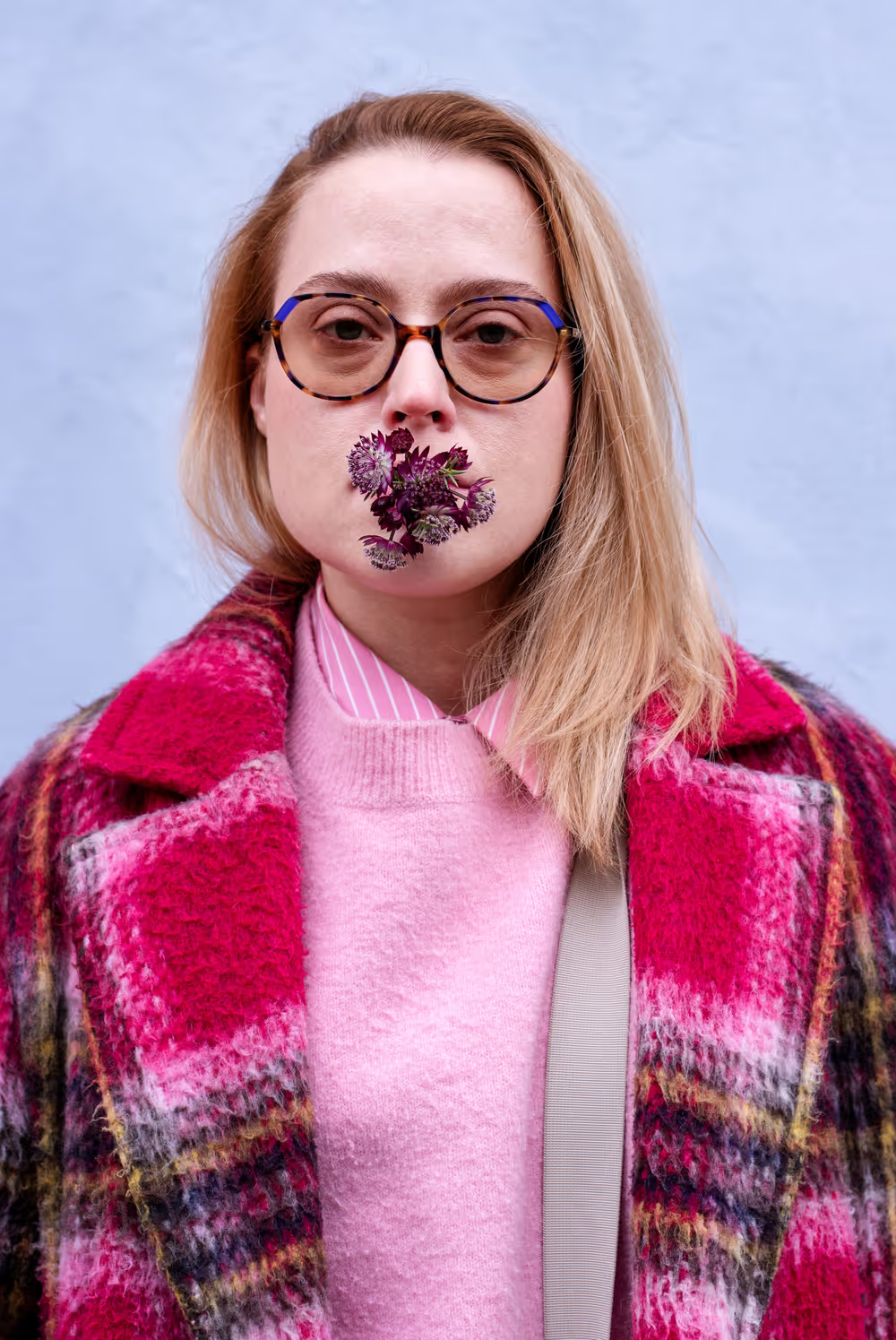
"This is My Voice" - a project born from the belief that we, as human beings, are more alike than we realize. Despite nationality, religion, or language, we are all human beings—connected by rights, responsibilities, struggles, and strength. This project started when Afghan women were silenced from speaking outside their homes. It made me reflect: aren't women silenced in some way or another everywhere? It was a call to action. I started photographing women to explore their untold stories.
A portrait typology of twenty women, each held as an individual and as a member of the whole. The frame holds steady; the person — and her name — is the variable.
SuperRare70 worksApr 2025SubjectAbstract
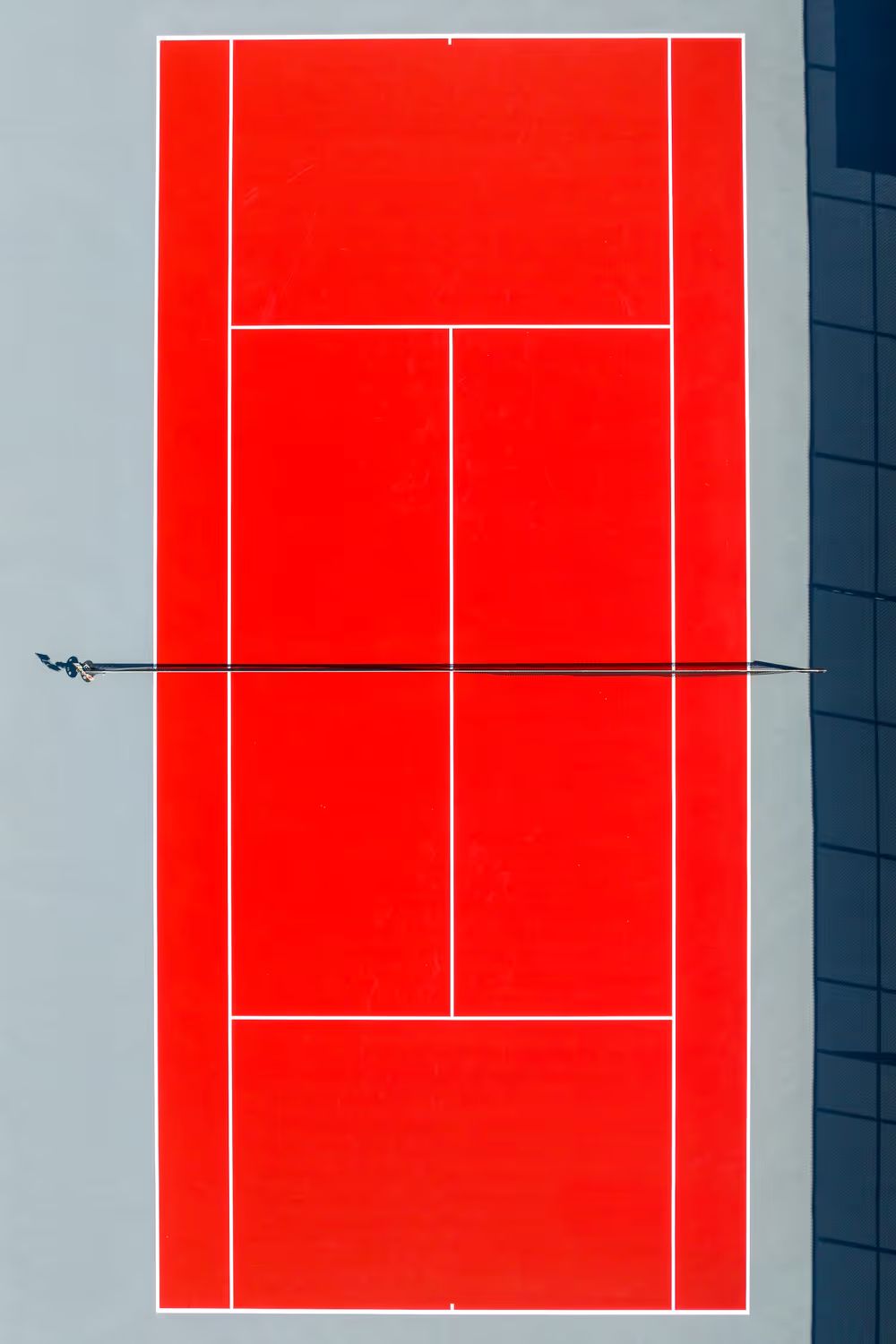
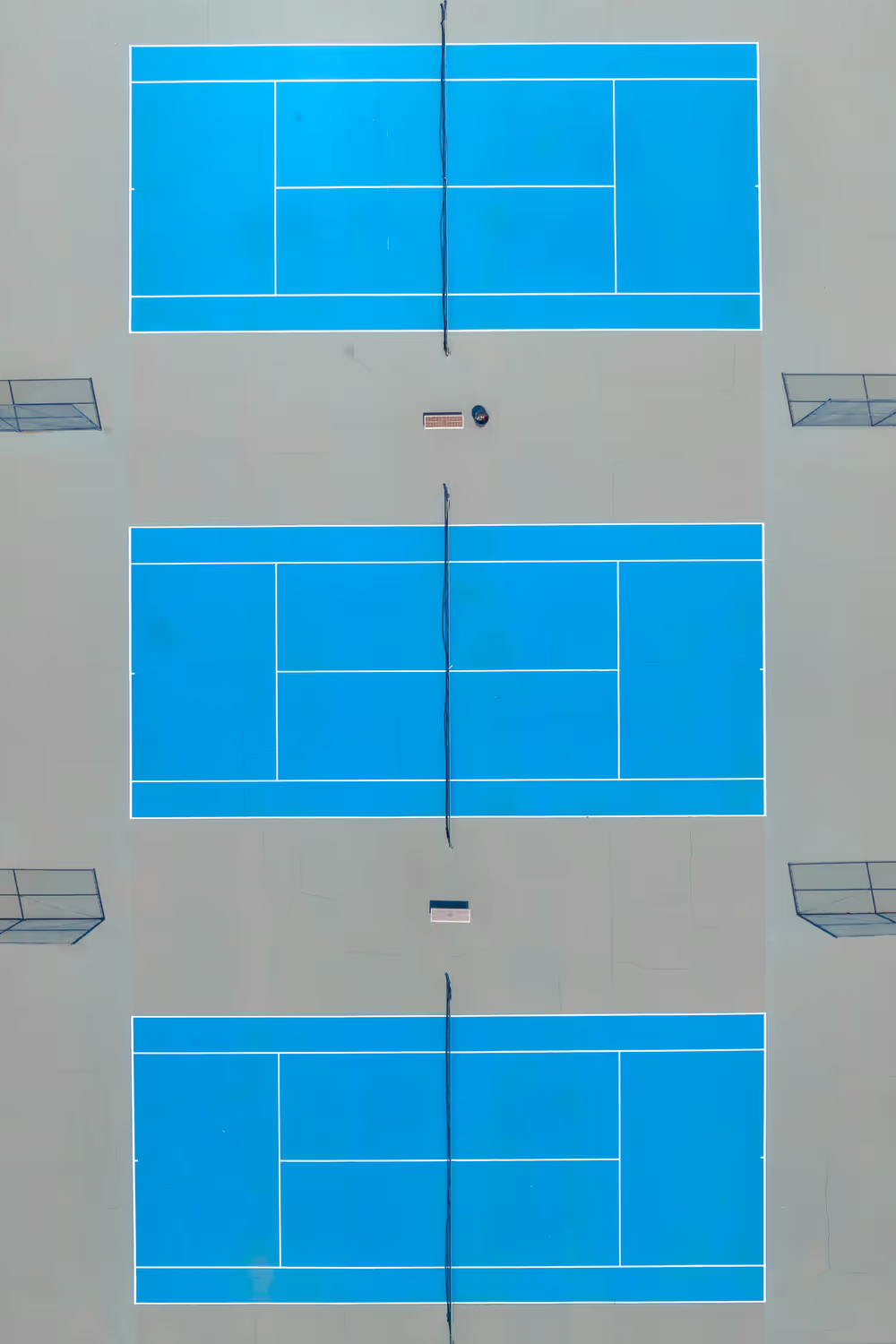
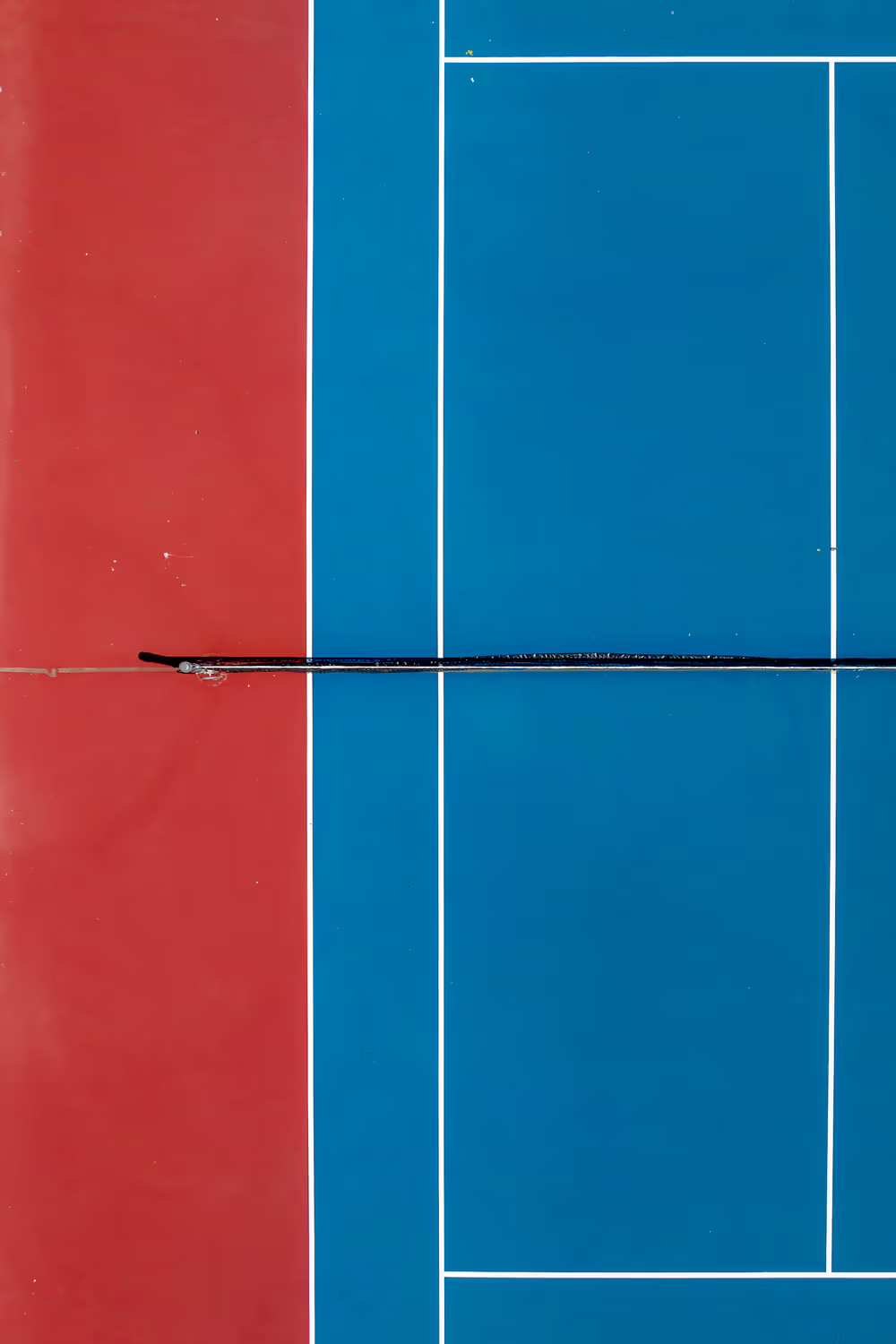
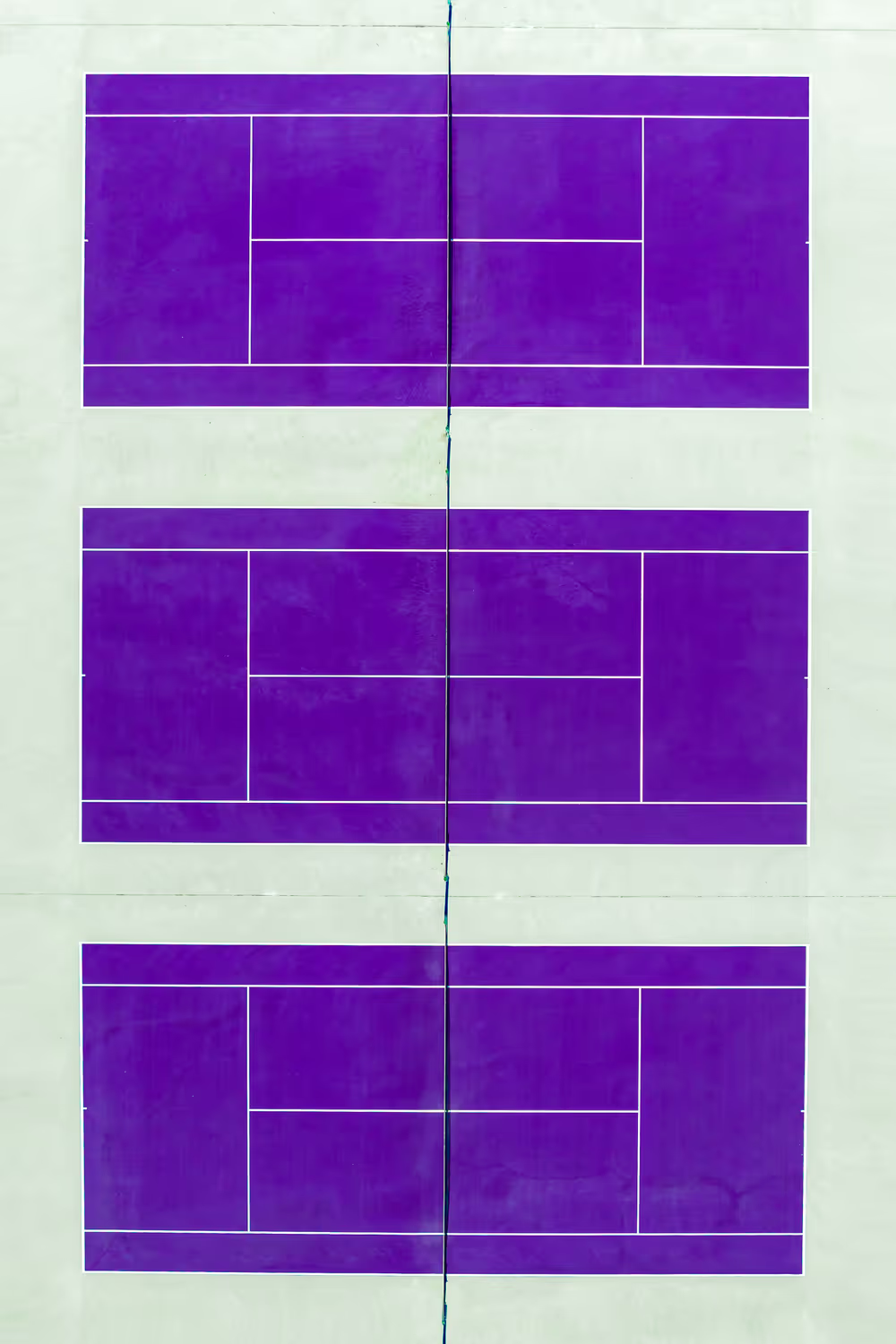
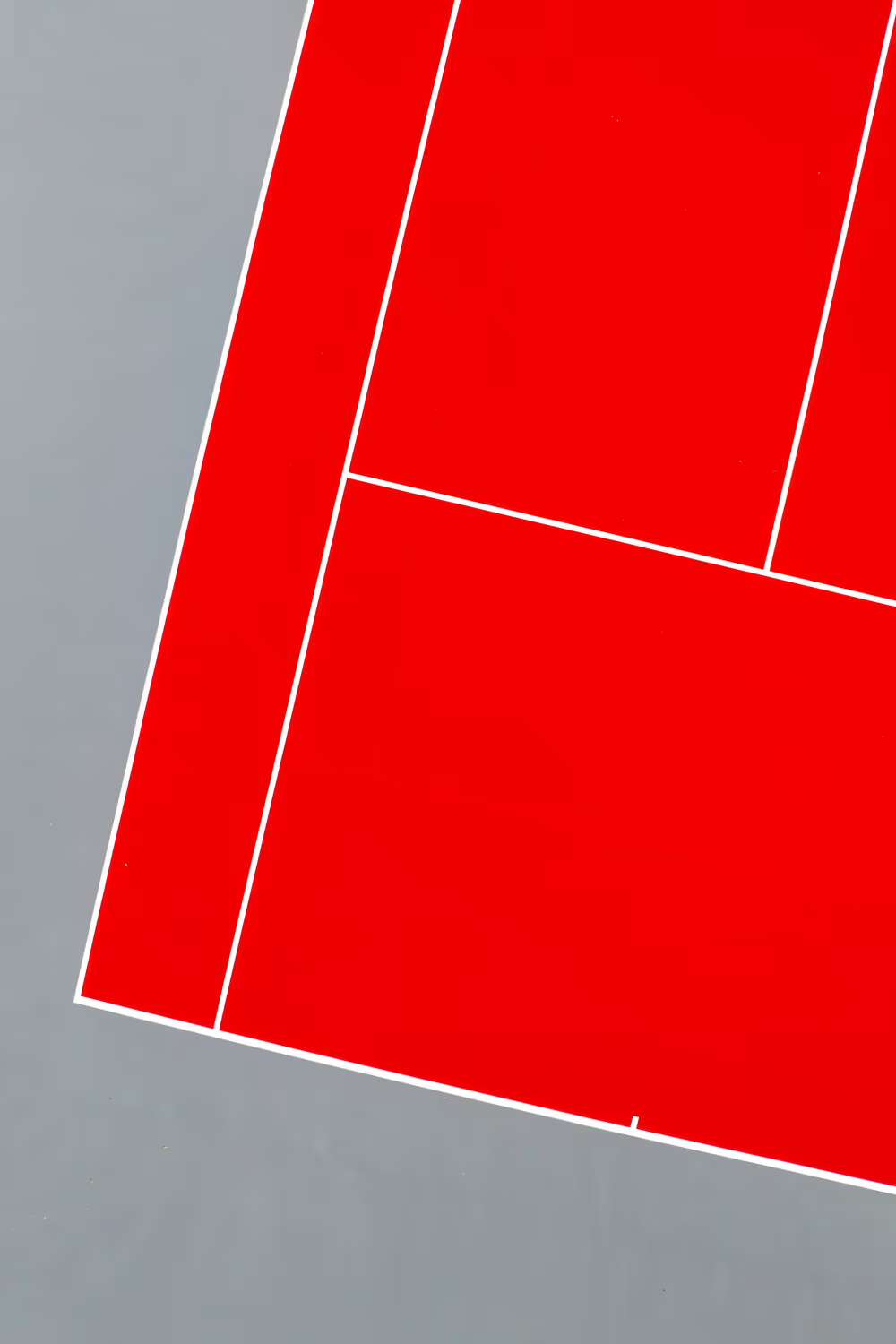
The Art of Tennis is a study and appreciation of the colors and geometry of Tennis Courts when viewed from above.
Seventy tennis courts shot straight down by drone, each flattened into a study of color, line, and wear. The subject never changes — only the court — turning a sport's plainest surface into a catalogue of geometry and palette.
All art is part of a communal conversation, feedback loops that span the centuries, our modern ideas are rooted in things that humans have been doing for so long that their original instances predate the written record. Typological studies are no different- from our earliest evolutionary instincts on the savannah to our hyperconnected internet ecosystems- these ideas inform each other and rhyme across the chasm of time.
There are countless examples to sift through, and I couldnt include them all- I sourced most of these from a call to action i posted on X, so add your own ideas to that thread below.