"in our shared bed" · Bhare
In depth with BHARE
On the internet we lost, painting at scale, and making meaning by hand.
01Origins
I'm so, so excited to be here with you, Bhare. I'm a big fan of your work. I just think it's so distinct and unique. The mark of a great artist, in my opinion, is when you see their work, you don't even need to see their name. You're like, "This is a Bhare piece."
And, you know, I think you've just done a really good job. You have some great patronage. You have people that are really interested in your work, and they're great proponents of what you do.
I think your work is also woven with meaning, whether it's meaning people apply for themselves or meaning that you embed into it. And I kind of want to just get to know your work a little better and get to know you a little better.
So, I would ask, just to start: can you introduce yourself to our readers? Where are you from, and how did you first get started?
So, my name is Bhare, and I'm from southern Maryland. That's kind of where I grew up. I was born in New York, a child of immigrants, so first-generation American here. But now I reside in North Carolina, and that's where my practice is based out of right now.
I started doing art in school, like primary school, and then I ended up stopping to do some band classes. Then I stopped doing the band classes to go take culinary classes. So I was kind of jumping around, doing a lot of different creative endeavors.
I remember when I got into high school, my parents were like, "Yeah, so when you leave, you need to do something practical with your life." And I was like, "I guess that makes sense." I can't really make a living off of art. I didn't really see a path for that.
So I was like, okay, I can do culinary, because I was already making food for myself, mainly because I had a lot of allergies, so I was always cooking for myself anyway. I was like, I can continue doing this.
So I did that all the way from high school up until college, and I was still working a lot of restaurant jobs after that. But toward the midway point of my college career, I actually picked back up doing a lot of art by myself, kind of as a therapeutic thing for me.
And in doing that, I realized, OH, I still really like making visual art. It's still something that means a lot to me. But even from there, it took me another two-plus years to really even post anything online.
Everything I made was kind of tucked underneath my bed. It never saw the light of day. I showed it to some people, but it was more of a thing that I just used in conversation with people.
I had a lot of emotions building up, but I didn't really understand how to communicate that with people. So I would paint a picture and kind of use it as a guide marker between me and this person, like, "Okay, I felt this way because of this."
@BHAREBOY
And then after about two years, I started posting some stuff online and found a community of friends through Twitter, back when it was still called Twitter.
I found a group of friends there because they were all posting art. I was still doing traditional art at the time, and they were doing a lot of digital stuff. So, just being intermingled with them started getting me introduced and acclimated to digital art as a concept and as something people actually do.
For me, digital art was like, oh, you just have people who animate TV shows, and that's pretty much it. And I was just like, "Oh, there's this whole big world outside of my small little bubble of thinking."
Then that kind of just led up to what I'm doing now. I went full-time into art around late 2023, and I've just been trying to have some real steady, consistent progress ever since.
"chasing shadows" (detail) · Bhare
02The network
Well, you're doing a great job. I'm curious; did getting familiar with digital art as a medium also coincide with using social media as a network?
For me, a lot of my experience with digital art is this duality between the network and the creation. I joined Instagram in 2012, and my art practice has always been kind of woven together with having an audience. Not that I'm super reactive to that audience or pandering to what they want to see, but I'm always aware that digital art often means having a community form around the ideas we're creating.
So I'm curious about your experience with social media and how it intersects with your digital art practice.
At least for me, I think so. I've also been a person that was on a lot of those different apps back in like 2012, 2013. I had random Instagram pages, random Tumblr pages and stuff like that. And this was for different types of communities, though. I had one specifically for movies, I had one for books, and had little communities formed through there.
But I guess when I started making digital art, the community and network aspect was kind of an afterthought. I kind of went in just saying, like, hey, I'm building an art practice for myself. This is the stuff that I like to make. This is stuff I like to share.
And I think putting the network as an afterthought almost helped me build that network a little bit more organically than just being very hyper-aware of it. Because at least for myself, when I am hyper aware of some things, I tend to let it almost get to me a little too much.
Like literally every single thing, I'm like, "Okay, I need to do this, I need to do that, I need to do that." And I'm just like, "Oh, I'm a confusing hot mess."
But because it was more of an afterthought, I started doing visual art mainly because I had friends that were doing it. I was like, "Oh, okay. You're doing something cool. I think that's really nice. Let me try my hand at that."
So we were sharing things back and forth. And naturally I was getting acclimated with the people that they were talking to, and then the people that they were talking to were talking to other people, and then those people would come back to me and be like, "Oh, I like what you're doing here."
I used social media more as a network for information in terms of gaining technical ability, rather than just building a business network. There was an energy from 2012 to 2022, where everyone was almost hyper-online. You could just reach certain information super, super quick and get responses from people.
And so I think that was very formative in terms of how I saw digital art. And even now, every time I post stuff, I mainly post it to certain communities because I'm like, "Oh, this is the community that's looking for digital art."
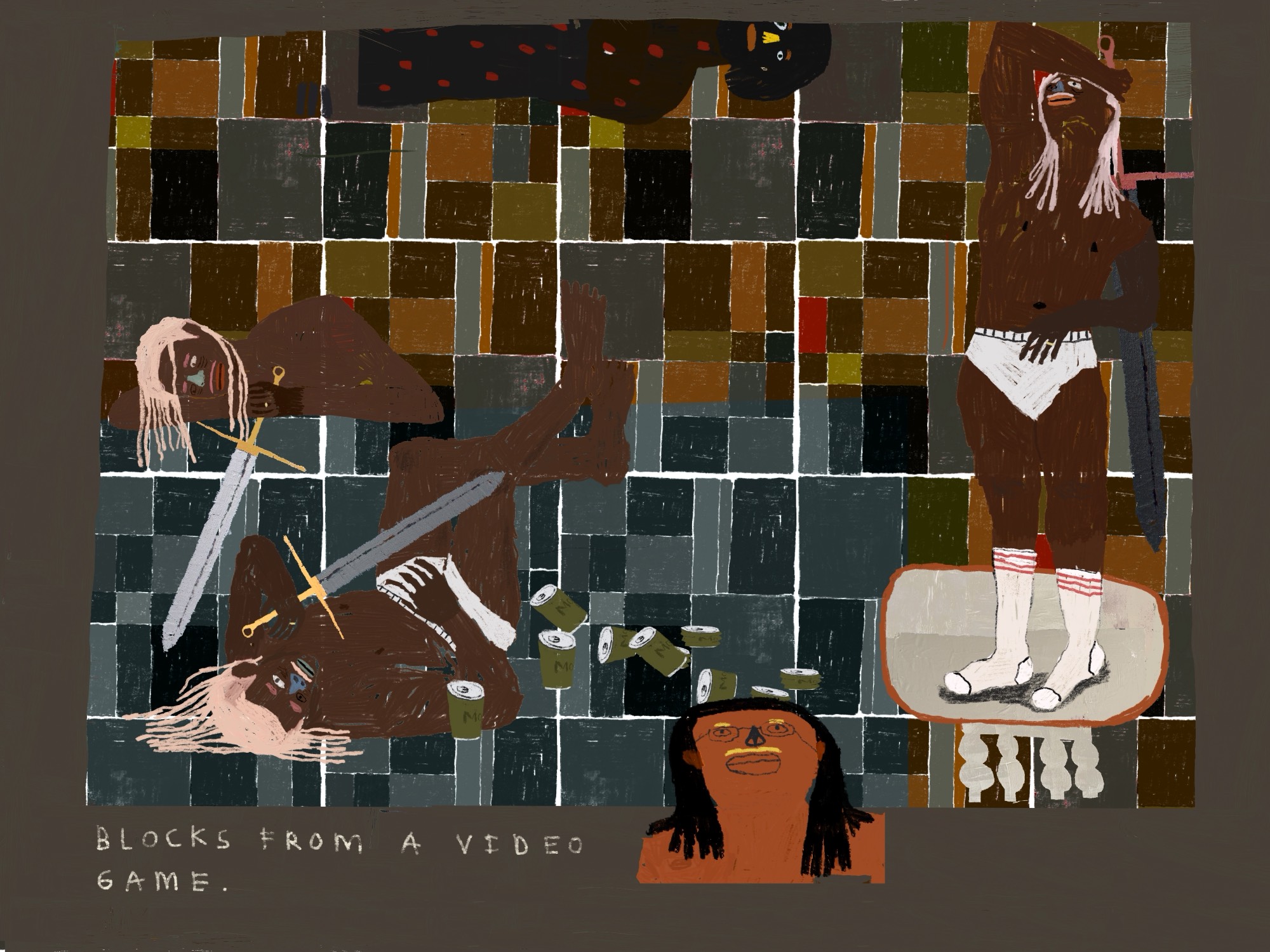
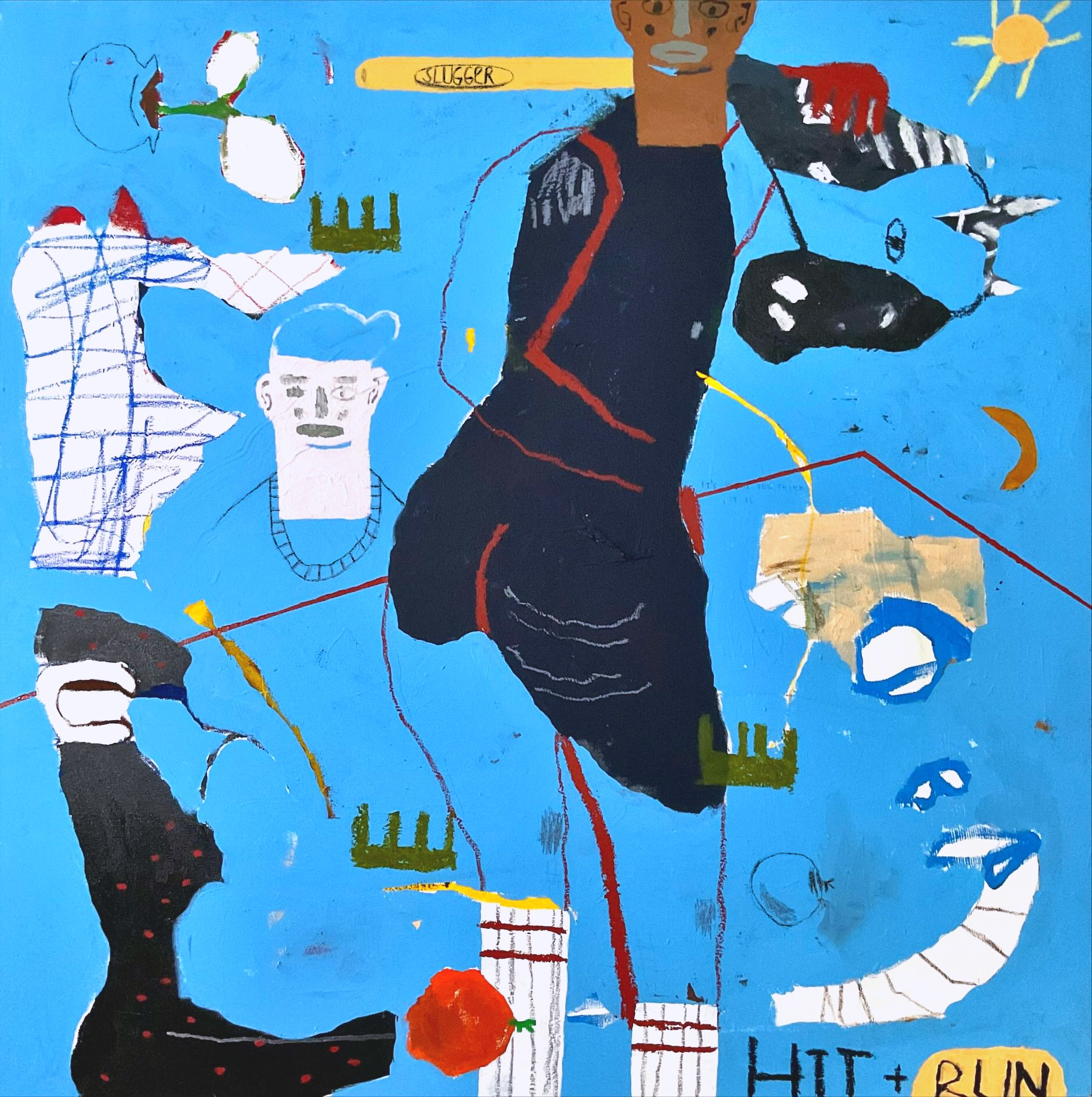
“I had a lot of emotions building up, but I didn't really understand how to communicate that with people. So I would paint a picture and kind of use it as a guide marker between me and this person, like, ‘Okay, I felt this way because of this.’”
03The internet we lost
I feel like a sensation I have had a lot recently is that we're almost losing the internet that we grew up imagining, in a sense.
I think there was an era of the early internet, the early days of social media and blogs, where it felt like this super egalitarian meritocracy of ideas. Like, if you could just put your ideas out into the world, an audience might find them, and you might have success as an artist or as a writer or whatever you wanted to be.
And now it feels like so many of those systems have become walled gardens and have been captured by capital, with much different intentions than the intentions we might have had as the people making the art and making the experience of being online.
But also, what would you improve about the experience of the internet? If you had a magic wand and were like, "I'm going to make the internet better tomorrow," what are a few of the things you would want to adjust?
I guess, talking specifically about stuff that I really enjoyed about the internet when we were growing up, even from the time period when I had more of a conception of it, let's say from around 2010 to 2016, there was this certain sense of wanderlust over the internet.
People were putting out really creative ideas. They were putting out creative websites, and there was a lot of unknown before it got really touched by capitalists and stuff like that.
So for me, I think one of the first things I would really like to see is that organic creativity coming back to the internet. I feel like a lot of us, even myself, log on to the internet because it pays the bills. There are certain things that we need to do. We go on Google Docs, we're talking to people on Teams, we're going to different websites, we're building different websites so people can see the work that we're doing.
I almost don't find myself going on the internet because I enjoy it. I go on it simply because it's just a necessary evil for what needs to be done in my day-to-day.
Even with building my websites and stuff like that, I'm like, okay, I want to be creative, but I don't want to be too creative because now some people might not stay on the website too long. They might click off and do something else.
I just remember specifically loving the Cartoon Network site when I was in middle school and going through and seeing all the Flash games and everything. There was a lot of effort put into just making the website itself extremely unique, and it felt like every single place you were going to was a different corner of the internet.
Everything felt like its own sector of the internet. It felt almost super niche to be doing different stuff. You could be telling your friends, like, "Oh, I went to this one site to look at this thing," and then it's like this whole entire universe that's kind of unlocked on this one singular website.
Now it's more like everything is super interconnected and interwoven, like how Facebook leads right into Instagram, and you can't really use one without using the other.
I guess the goal of the internet was to have a lot more stuff connected, but it's almost too connected in a sense. As if there is nothing "pretty."
“It's all highways with no back roads.”
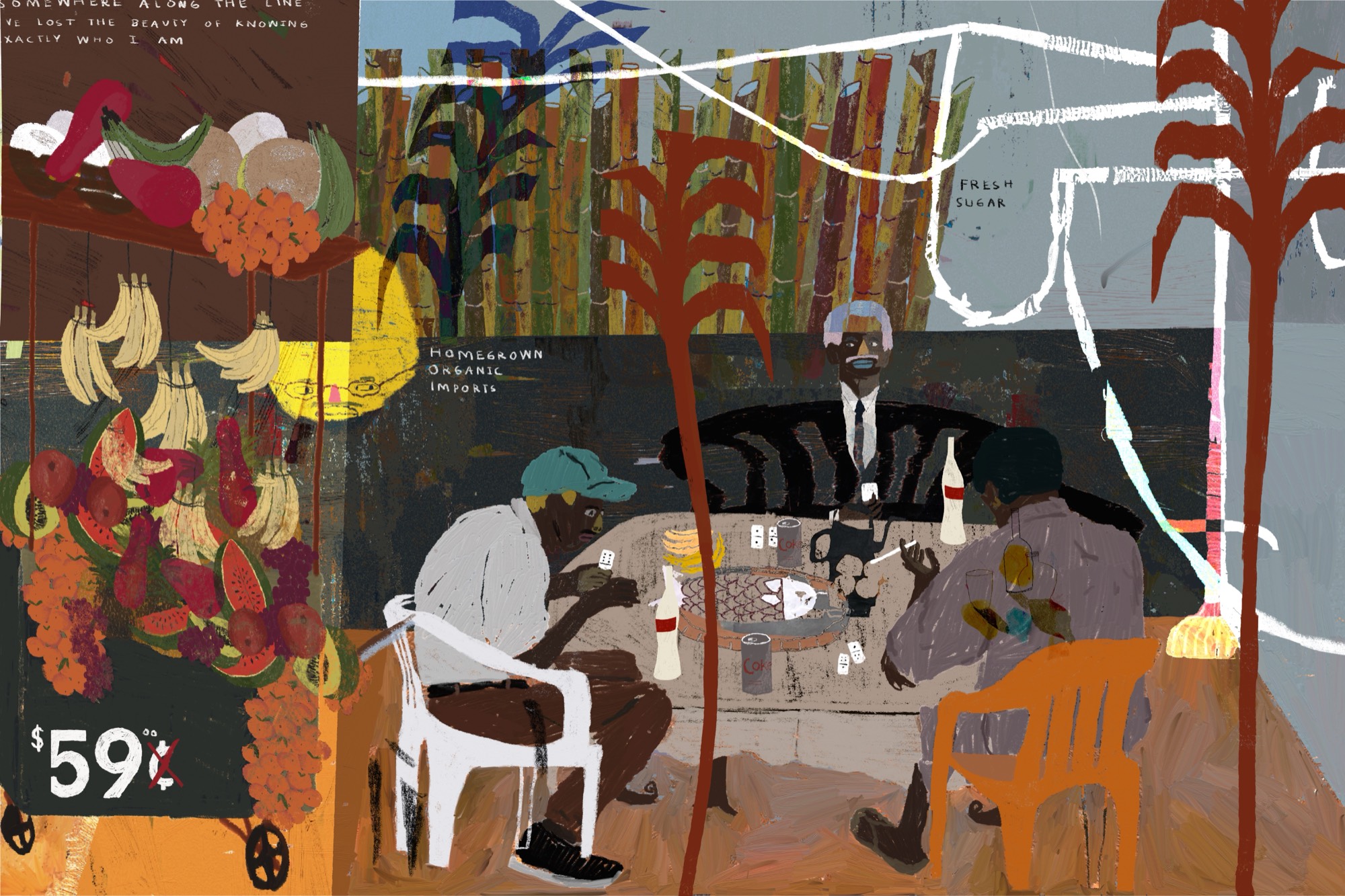
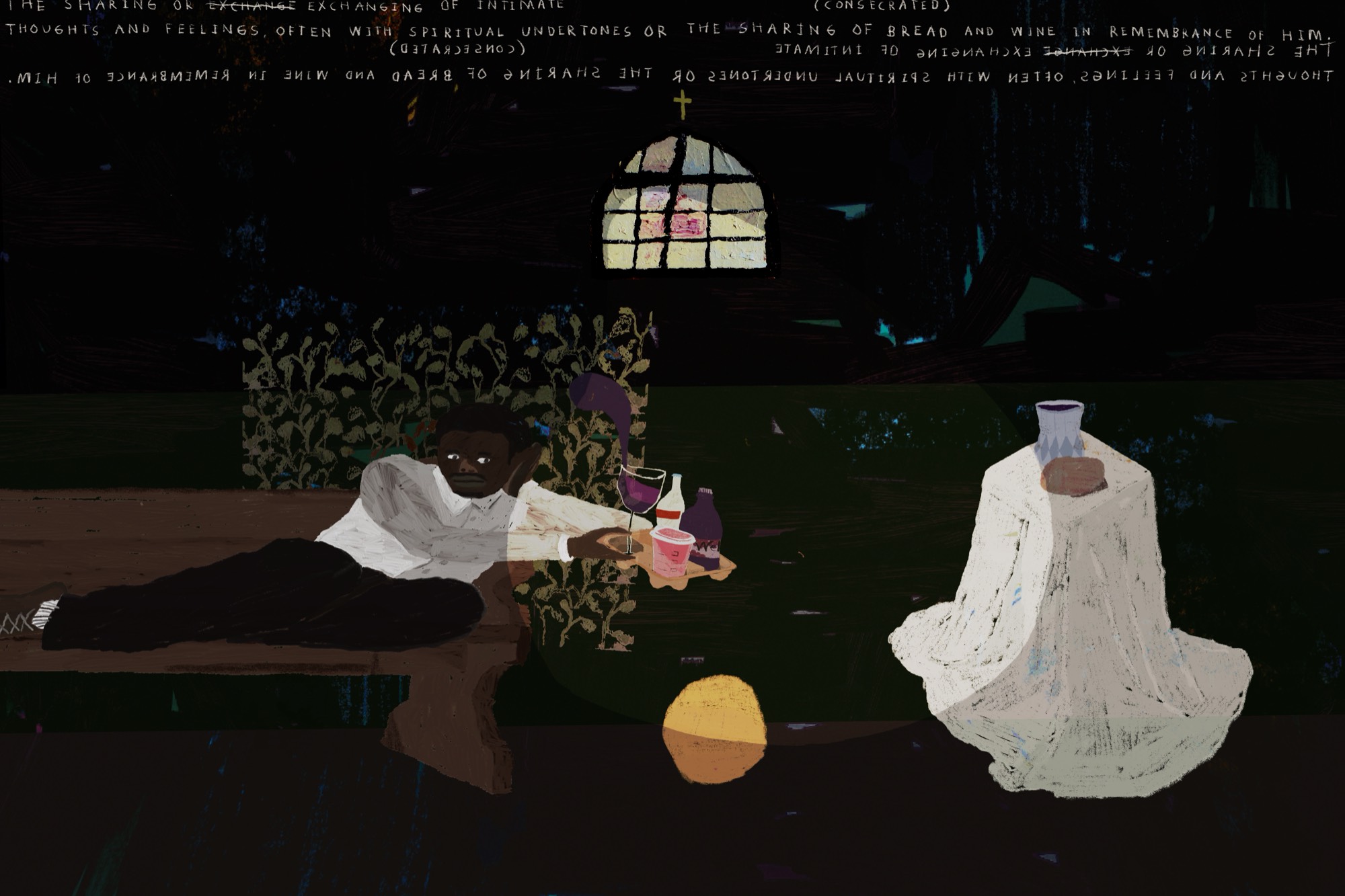
It's all highways with no back roads.
It's funny, that's kind of what I'm trying to do with ALLSHIPS. I'm trying to recreate this experience where you go to allships.co and it's this little weird terminal on the internet, and it's like, oh, this is a place. You know, this is like an old blog that somebody found on a server in 1999, and now we're still doing it.
So I really resonate with everything you're saying about that.
We have so many new tools. There are two ways to think about AI coding and all this new AI stuff that's coming out. For me, I'm really not interested in using AI to generate my art. Personally, I like my practice. The practice is the point. The work is the point. Going out into the world and making photographs—you know, I'm a photographer. I want to make photographs.
But I also find it really, really cool to build experiences on the internet with Claude and different tools so that people can experience the art in new and novel ways.
And I'm hoping that online biodiversity will return as people experiment and recombine things in new ways. But I also hope it doesn't create this insane ubiquity where everything looks the same because the same AIs built all these different things, right?
So I think we're at a really critical time, and I hope more people push into this version of the internet that I think a lot of us had in mind, or could imagine it being, before the Metas and the Elons and everybody just gobbled up all the different components and homogenized them.
04At scale
I don't want to nerd out about the internet too much, but one of the things that really strikes me about your work, and one of the reasons I reached out to speak to you, is that I've been seeing you and other people sharing these big, large-scale installs of your work, whether they're in collectors' homes or, I think, there was one in what looked like a restaurant.
So your work is getting displayed at scale, and I think your work in particular looks really beautiful at scale.
As somebody who operates a lot in digital spaces, what does it feel like for you to have these big physical pieces? And I know you started as mostly an analog artist, so maybe this is just a natural fit for you, but tell me about that process of making big commissions or big work and getting your work up into reality.
I would say the process usually runs a lot smoother than me making smaller works. I recently wrote about this in my newsletter, but I have such a soft spot for these very big, grandiose works.
I think it comes from all the different times I went to the Smithsonian museums, because I lived in Maryland, so we were pretty close to D.C. You were able to see these super larger-than-life pieces. And for me, I always thought it was really cool to see something just so blown up, so big.
Whenever I do smaller works, I find myself struggling to really put an idea to the page. I think having such a small space almost limits my perception of it. I feel like I can't think outside of that small little box that's there.
But when I have these larger-scale works, I have them thrown out across the floor. I'm walking all around them, looking at them from different angles, getting up on top of a ladder, seeing everything. And with that, I kind of find myself almost diving into the work, in a sense.
“But when I have these larger-scale works, I have them thrown out across the floor. I'm walking all around them, looking at them from different angles, getting up on top of a ladder, seeing everything. And with that, I kind of find myself almost diving into the work, in a sense.”
In the studio · Artwork by Bhare
In the studio · Artwork by Bhare
At this scale, I'm able to touch on one idea in this corner, and then in the middle of the piece I can tie it into something else. It almost feels like a map that someone could go across and see different points of the process and how I was thinking throughout the whole thing.
For me, it's honestly a very normal thing now. I would say the very first time I did it, I was just like, "Oh my gosh, this is insane." I was able to actually get this whole big thing blown up and really see it on this grandiose wall.
Now, I almost feel more impressed to show a very small work rather than a bigger work, because I feel like, at least for myself, the smaller works I make aren't as strong as the larger works.
But it always is really nice. I think right now I'm trying to upscale it a little bit more. For the majority of those larger pieces, they've been longer widthwise, with maybe a max height of about five or six feet. So I'm hoping to at least get to maybe a ten-foot-by-ten-foot range and really have something that takes up a lot of surface area.
05Meaning
When people ask you what the meaning is, why you make art, or what message is at the burning core of your passion for creating these things, what do you say to them?
I think more so about just existing. I grew up in a very religious space, so a lot of the time there were a lot of existential questions and conversations being had about, like, what is your place here? How are you treating people? What are you going to be doing here?
And I think I naturally just attuned myself to thinking a little bit more introspectively about my own place in different situations.
So primarily, a lot of my work touches on smaller experiences that I have, whether it's something as simple as going to the grocery store or going to a funeral. It's almost like, at the exact moment that I'm painting it, how do I envision myself within that perspective?
And if I'm touching on something that happened five years ago, how have the experiences that I've built up to this point shaped how I view that exact moment? Do I still place myself in the same situation? Do I place myself as a victim? Do I place myself as the hero of the situation?
It's almost just being able to take a step back and really understand my day-to-day. Because for a long time, when I started, it was a therapy thing. It was, how can I come to terms with my emotions?
And now that I've kind of moved past that point, in a sense, I look at it as, okay, am I able to see myself in this situation still? Am I not able to? How can I envision myself moving forward? What could something look like in the future?
It's really just placing myself in these different situations. And sometimes it's just to look really cool in a painting or something like that.
But definitely a lot more introspection, and just understanding my own idea of what the human condition could be like.
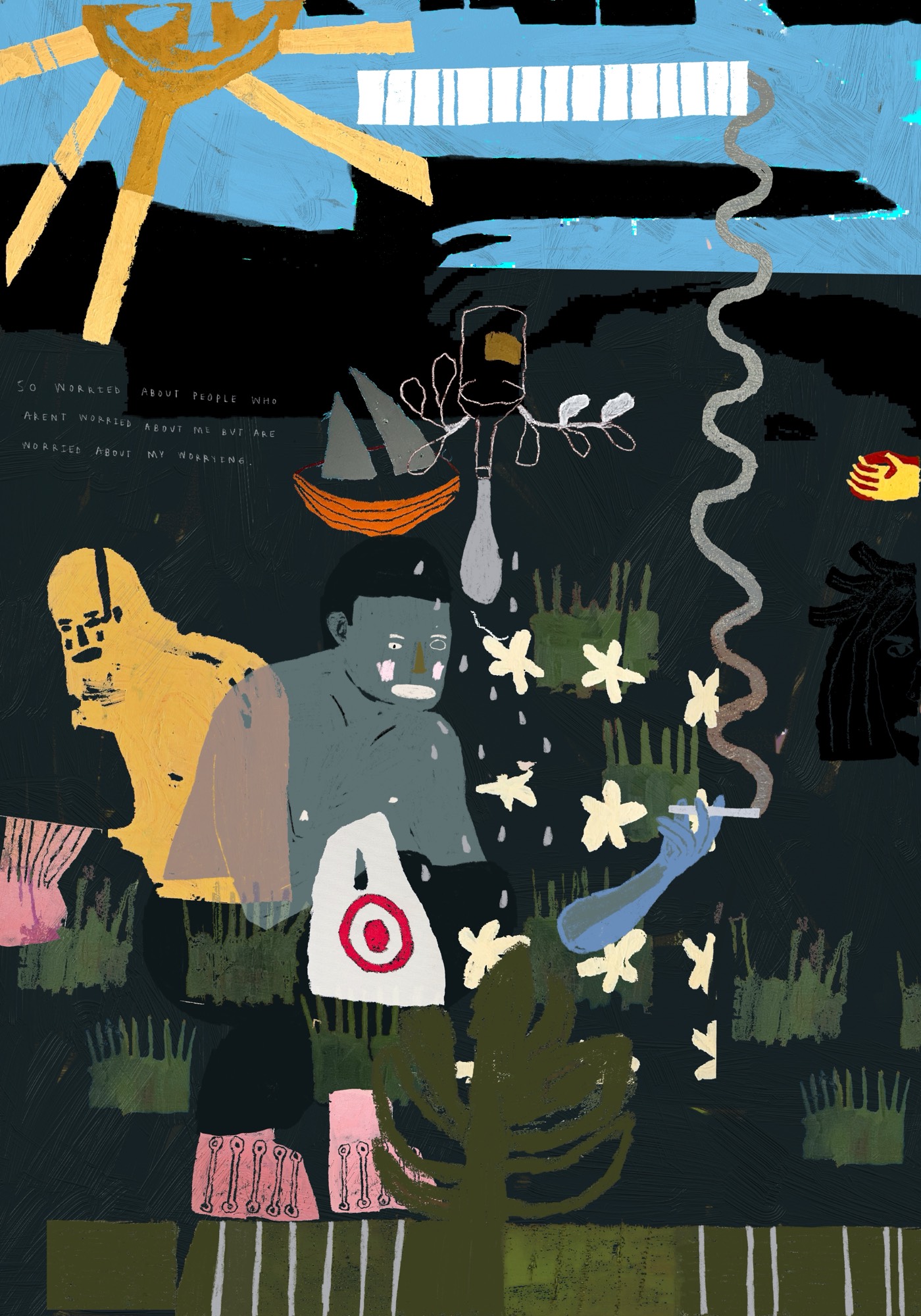
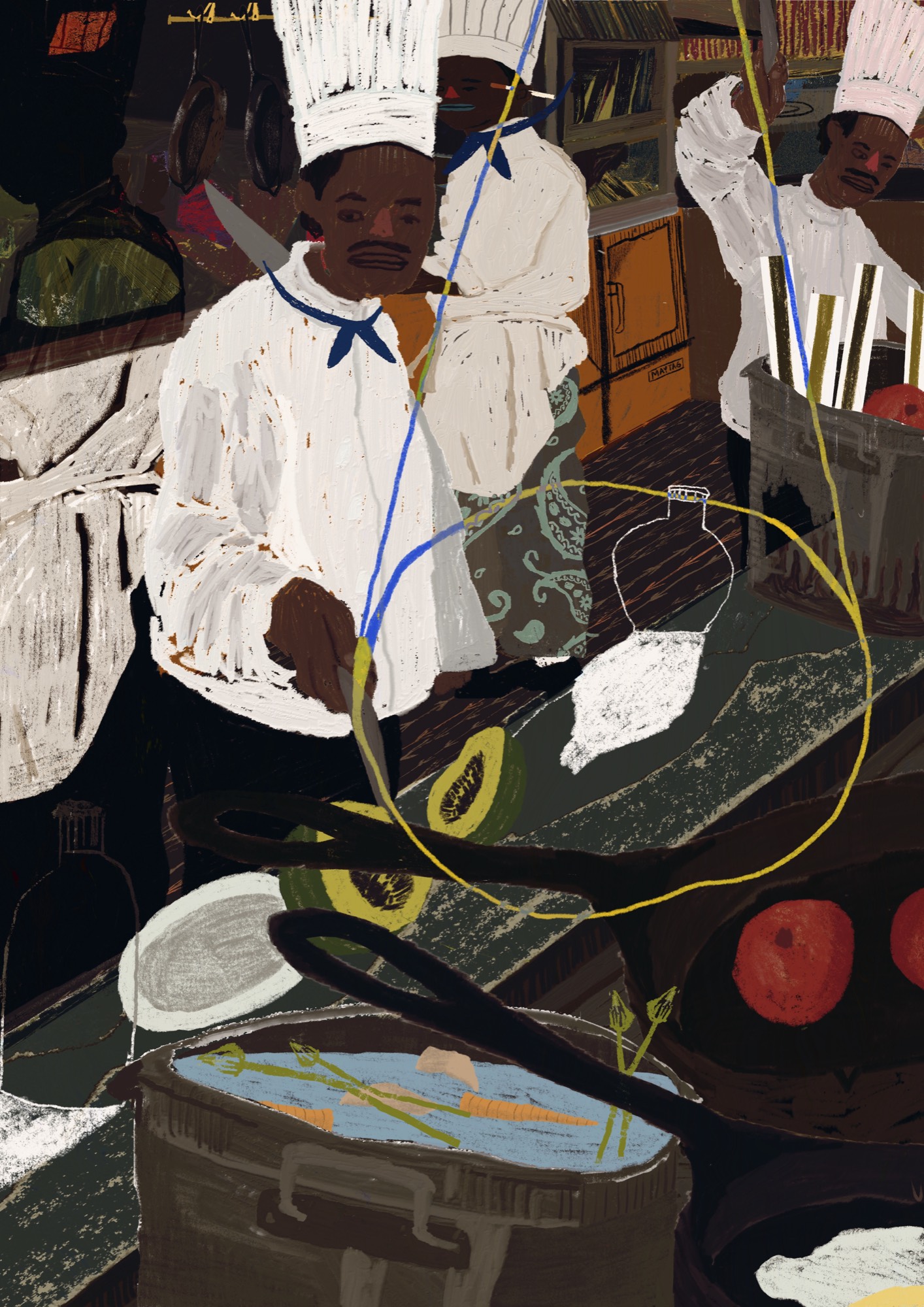
“It almost feels like a map that someone could go across and see different points of the process.”
Wow, that's beautiful. I love that. Well, thank you, for taking the time for such an in-depth conversation, for your support of ALLSHIPS and for the beautiful work you bring into the world. I look forward to watching you continue your journey- and to the reader, connect with BHARE here, and please share out this article so we can spread the word about his work.
Spread the wordShare on X